
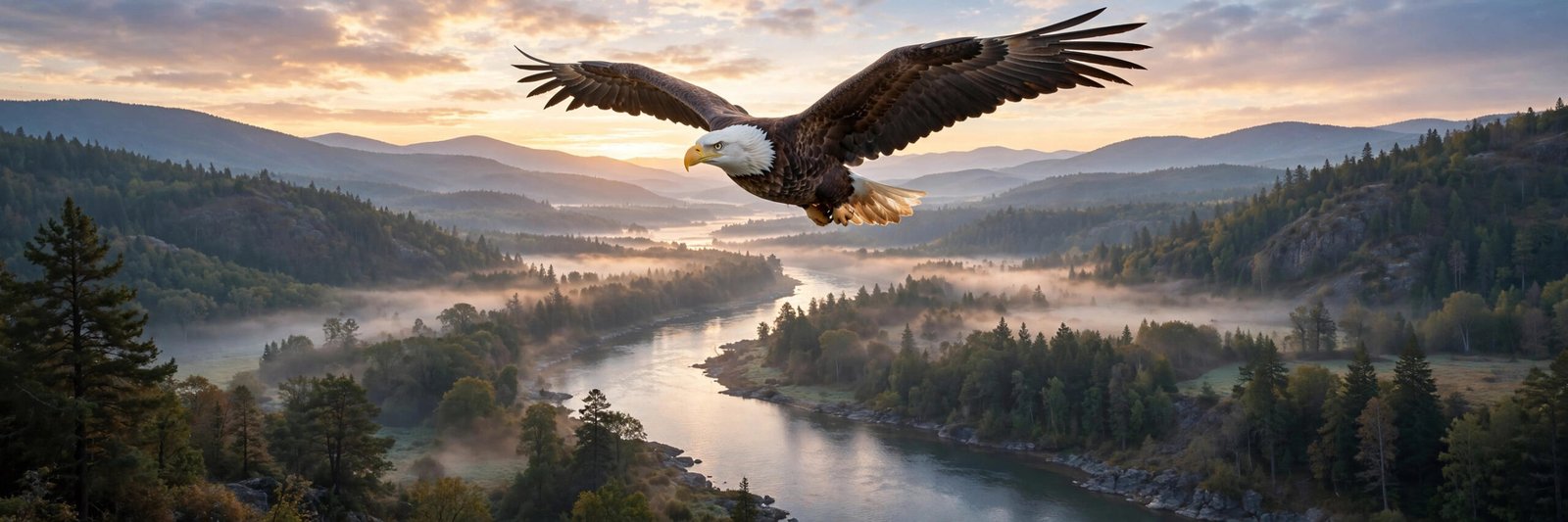
There is a moment every wildlife lover should experience at least once: a bald eagle dropping out of a gray winter sky, wings spread wider than you are tall, locking onto a fish below. It is one of the great sights in American nature — and it is far easier to witness than most people think. If you have ever wondered where to see bald eagles in the wild, this guide covers the best spots across the USA, the best time of year to go, and the remarkable comeback story behind the birds you will be watching.
Bald eagles are not rare anymore, but they are still wild. They gather in big numbers only in certain places and seasons, and knowing where to look makes all the difference between a wasted trip and the best morning of your year.
When to Go: Winter Is Eagle Season
The single most important rule of bald eagle watching is simple: go in winter. From roughly November through March, eagles from the frozen north migrate south and gather anywhere they can find open water and food. Rivers that do not freeze — below dams, along spring-fed stretches, near the coast — become eagle magnets.
In summer, eagles spread out to nest and are much harder to find. In winter, they concentrate. That seasonal gathering is the whole secret of where to see bald eagles: follow the open water in winter. That is why almost every great eagle-viewing destination on this list peaks between late fall and early spring, and why a cold, bright January morning can deliver dozens of sightings in a single day.
Where to See Bald Eagles in Alaska: The Eagle Capital of America
No state comes close to Alaska. More bald eagles live in Alaska than in all the other states combined, and the single greatest gathering on Earth happens each fall along the Chilkat River near the town of Haines in southeast Alaska.
The Chilkat Bald Eagle Preserve protects a stretch of river where thousands of eagles gather — one of the largest congregations of bald eagles anywhere in the world. The reason is food: late-spawning chum salmon run in the Chilkat River well into fall and early winter, and a quirk of the river keeps parts of it ice-free even when everything around it freezes. From about November through February, eagles pour in by the thousands to feast. On peak days, the cottonwood trees along the river can hold more eagles than leaves.
Visiting takes some planning — Haines is remote, and winter in southeast Alaska is serious business — but guided tours run through the season, and the setting is pure Alaska: snow-dusted mountains, a wild river, and, if you are lucky, brown bears fishing the same salmon. Early morning and late afternoon give the best light for photographs. For more on what makes the state extraordinary, see our surprising facts about Alaska.
Where to See Bald Eagles Along the Upper Mississippi River
You do not have to fly to Alaska for a world-class eagle experience. The Upper Mississippi River — through Minnesota, Wisconsin, Iowa, and Illinois — hosts one of the finest winter eagle spectacles in the Lower 48.
The secret is the locks and dams. The churning water below each dam stays open all winter, and stunned or injured fish drifting through the tailwaters make easy meals. Eagles learn the pattern fast. From December through February, stretches of the river below the dams can hold dozens or even hundreds of birds at a time, perched in riverside trees and cruising the open water.
Great access points include the river overlooks near the Quad Cities on the Iowa-Illinois border, the bluffs around Dubuque, and the refuges of the Upper Mississippi River National Wildlife and Fish Refuge, which stretches across four states. Many towns along the river host eagle-watching festivals in midwinter — check local event calendars before you go. A pair of binoculars is all you really need; the birds often perch close to shore.
Conowingo Dam: The East Coast Eagle Hotspot
Ask an East Coast birder where to see bald eagles and you will hear one name over and over: Conowingo Dam. On the Susquehanna River in northern Maryland, the dam’s tailrace stays unfrozen through winter, and the easy fishing draws eagles in the hundreds during peak season.
The main viewing area is Fisherman’s Park, right below the dam on the Harford County side. In late fall and early winter, the trees and rocks along the river can be dotted with eagles — adults with their unmistakable white heads, plus brown-mottled juveniles that have not yet earned their adult plumage. Because the birds fish the rushing water below the dam, you get something rare in wildlife watching: eagles at close range, in action, all day long. If you have been wondering where to see bald eagles up close on the East Coast, this is the answer — and a photographer’s dream.
Arrive early — parking fills fast on winter weekends — dress warmly, and plan to stay a while. Resident eagles nest in the area year-round, so even outside peak season you have a good shot at sightings. The visitor center is a useful first stop for orientation.
More Great Spots to See Bald Eagles Across the USA
Beyond the big three, plenty of other places deliver unforgettable eagle encounters:
- Skagit River, Washington: A major Pacific Northwest wintering ground, where eagles gather along the river to feed on spawning salmon. The misty, mountain-backed setting feels straight out of a nature documentary — the same wild country that feeds the bigfoot legend.
- Klamath Basin, Oregon and California: The wetlands and refuges of the Klamath Basin draw large numbers of wintering eagles, attracted by waterfowl and fish. The open landscape makes for easy viewing.
- Chesapeake Bay, Maryland and Virginia: One of the largest bald eagle populations on the East Coast, with open water and abundant fish keeping birds around through the winter.
- Loess Bluffs National Wildlife Refuge, Missouri: A beloved Midwest stopover where wintering eagles gather alongside snow geese and other waterfowl.
- Reelfoot Lake, Tennessee: This earthquake-formed lake in northwest Tennessee is a southern stronghold, with wintering eagles fishing its shallow, cypress-dotted waters.
Wherever you go, the formula for where to see bald eagles is the same: open water plus food plus winter equals eagles. Rivers below dams, unfrozen lakes, coastal estuaries, and salmon runs are the places to bet on.
The Comeback Story: From the Brink to Abundance
Here is the part that makes every eagle sighting a little more meaningful. The bird on the Great Seal of the United States — adopted as the national emblem in 1782 — nearly vanished from the country it symbolizes.
Through the mid-20th century, the pesticide DDT thinned eagles’ eggshells so badly that nests failed across the country. By the early 1960s, the bald eagle was in free fall in the Lower 48. Then came the turnaround: DDT was banned in the United States in 1972, the eagle gained protection under the Endangered Species Act, and one of the greatest wildlife recoveries in history began.
The numbers climbed for decades. In 2007, the bald eagle was officially removed from the endangered species list — a recovery so complete that it is now taught as a conservation success story. The bird remains protected under the Bald and Golden Eagle Protection Act, which makes it illegal to disturb eagles or their nests, but the crisis is over. Every eagle you see on a winter river is a living result of that comeback.
Tips for Watching Bald Eagles in the Wild
Once you know where to see bald eagles near you, a few practical tips will turn a good outing into a great one:
- Go at dawn or late afternoon. Eagles are most active in the softer light of morning and evening — and the photography is better too.
- Bring optics. Binoculars are the minimum; a spotting scope or a camera with a long lens gets you intimate views without crowding the birds.
- Keep your distance. If an eagle changes its behavior because of you, you are too close. Never approach a nest, and never feed eagles — it is illegal and harmful.
- Dress for the weather. The best eagle watching happens in the coldest months. Layers, wind protection, and warm boots matter as much as the binoculars.
- Be patient. Eagles spend long stretches perched and motionless, then explode into action in seconds. The wait is part of the experience.
Pair your eagle trip with a classic American road adventure — an eagle detour fits beautifully into a Route 66 road trip through the Midwest, where the Mother Road crosses prime winter eagle country in Illinois and Missouri.
Few sights capture the wild spirit of America like a bald eagle riding a winter thermal. Pick a spot from this list, pick a cold morning, and go see for yourself — the eagles will be there, as they have been for thousands of years, long before anyone thought to put one on a seal.