
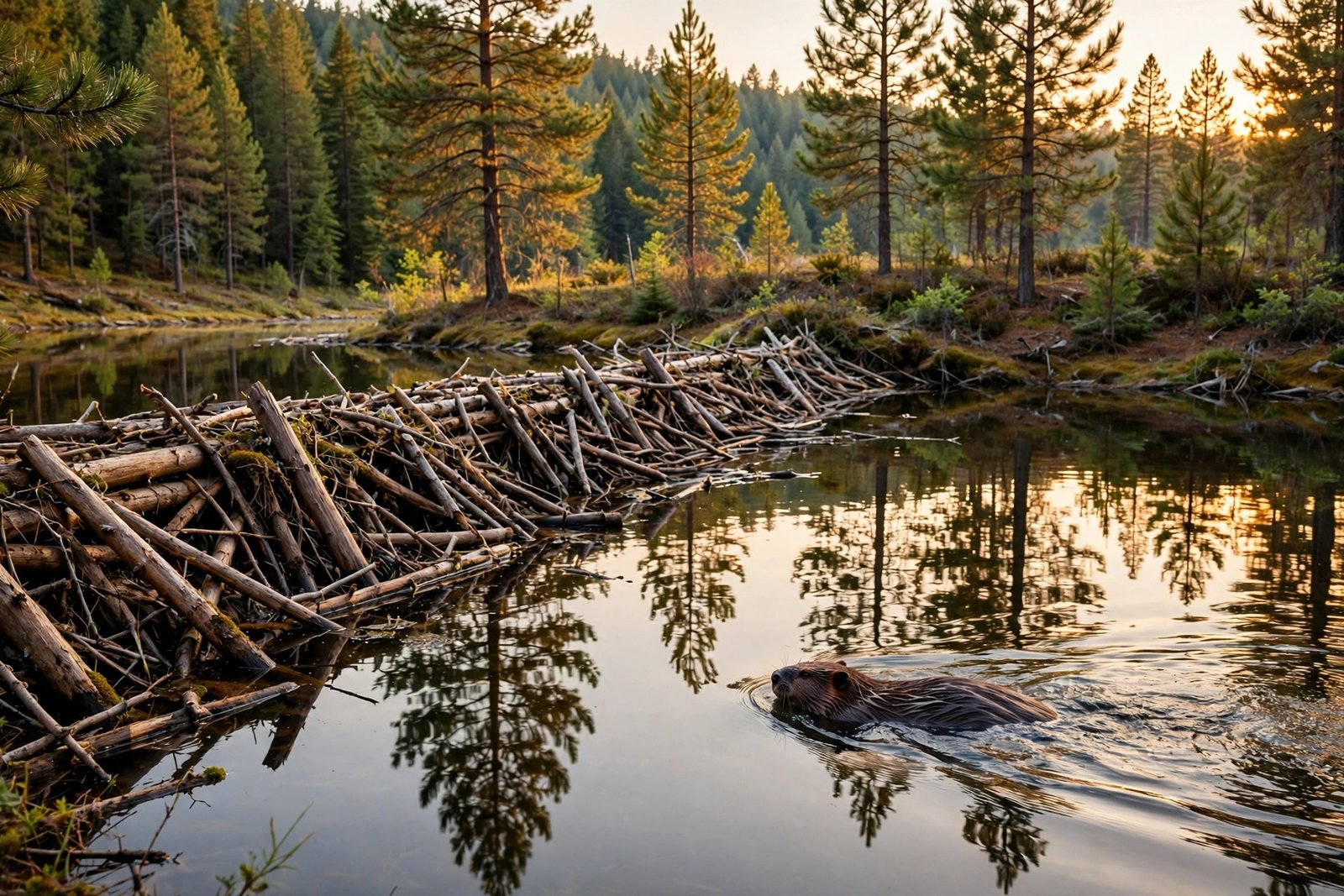
There is something magical about spotting a beaver in the wild: a V-shaped wake crossing a still pond at dusk, a flat tail slapping the water, or a freshly gnawed tree pointing like a signpost to a hidden lodge. If you are wondering where to see beavers USA wetlands, forests, and national parks offer some wonderful chances, as long as you know when and where to look. Beavers are shy, mostly active at dawn and dusk, and masters at staying out of sight, which is what makes a sighting feel so special.
This guide covers the best regions and places to look, the signs that beavers are nearby even when the animals themselves are hiding, and the quiet, patient habits that give you the best chance of a sighting. It also covers how to watch responsibly, without disturbing dams, lodges, or the animals themselves. Beavers live across much of the United States, from northern forests to western mountain valleys, so you may not need to travel far at all.
Where to See Beavers USA: Best Regions
Beavers are found across much of North America, and in the United States they are most common in forested regions with slow-moving streams, ponds, and wetlands. The Northeast, the Upper Midwest, the Pacific Northwest, and the Rocky Mountains all hold healthy beaver populations. In general, look for places where water moves slowly and trees such as aspen, willow, and birch grow nearby, because beavers cut these trees for food and building material.
National parks and wildlife refuges are often the easiest places to start, because beavers there are protected and their ponds and lodges are left undisturbed. Rangers and visitor centers can often tell you about recent activity, and boardwalks and trails make it possible to watch from a respectful distance. State parks, county nature preserves, and even suburban greenways with ponds can also be excellent, since beavers adapt well to quiet waterways near people, as long as they are not harassed.
Best National Parks and Refuges for Beavers
Rocky Mountain National Park in Colorado is a classic beaver-watching destination, with beaver ponds in valleys such as Moraine Park, where lodges and dams are visible from trails and roads. Early morning and evening are the best times to watch, when beavers may be swimming, carrying branches, or working on a dam. Grand Teton National Park in Wyoming also offers beaver ponds along quiet streams and wetlands, especially in areas with willow and aspen.
In the East, the Adirondack Mountains of New York and the forests of Maine and Minnesota hold large beaver populations, and paddlers on quiet lakes and slow rivers often spot lodges along the shore. Voyageurs National Park in Minnesota, a park defined by water, is another strong choice for patient wildlife watchers. In Ohio, the Beaver Marsh at Cuyahoga Valley National Park, reached by boardwalk, is famous among birdwatchers and is also a good place to look for beaver signs. Beaver ponds also attract other wildlife, so a quiet evening watch may also reward you with herons, ducks, or even a bald eagle; learn where to see bald eagles in the USA too.
Urban beavers deserve a mention as well. The beavers of Alhambra Creek in Martinez, California, became locally famous when they settled in a creek running through town, showing that beavers can thrive surprisingly close to people. Wherever you watch, remember that a sighting is never guaranteed. Beavers are wild animals with their own routines, and part of the joy is learning to read the landscape they shape.
Signs Beavers Are Nearby, Even When You Cannot See Them
Often, you will find beaver signs long before you see a beaver. Look for trees with pointed, pencil-like stumps, wood chips scattered at the base of a trunk, and branches stripped of bark. Dams built from sticks, mud, and stones across a stream are the most obvious sign, creating a pond behind them. Lodges, dome-shaped piles of sticks and mud rising from the water, are where beaver families live, entering through underwater passages.
Common beaver signs to look for include:
- Pointed stumps and gnawed trees along the water’s edge
- Dams of sticks, mud, and stones across slow streams
- Dome-shaped lodges rising from a pond
- Scent mounds of mud and vegetation along the bank
- Slides and trails where beavers slip in and out of the water
Learning these signs changes how you see a wetland. A pond that looks empty may be a busy beaver home, with a family working under cover of darkness. If you find fresh signs, such as light-colored wood chips or a recently repaired dam, the beavers are likely still active there, and a return visit at dawn or dusk may reward you.
Tips for Where to See Beavers USA Safely
Ask any naturalist where to see beavers USA visitors should head, and the advice is consistent: go early or late, stay quiet, and be patient. Beavers have excellent hearing and a strong sense of smell, so a noisy group arriving midday is unlikely to see much. A lone watcher, sitting still near a pond at dawn, has a far better chance.
Arrive before sunrise or in the last hour before sunset, when beavers are most active. Sit still, keep your voice low, and avoid shining bright lights toward the water. Binoculars help enormously, letting you watch from a distance without approaching a lodge or dam. Never try to touch a dam or lodge, feed a beaver, or block its path in the water. A good wildlife watcher leaves no trace and lets the animal carry on undisturbed.
Dress for the setting: waterproof shoes or boots for muddy banks, layers for cool mornings and evenings, and insect protection in summer. Bring water, a field guide or wildlife app, and plenty of time. Beaver watching rewards patience more than speed, and the quiet hour you spend by a pond is worthwhile even if the beavers stay hidden. If you enjoy watching semi-aquatic wildlife, you may also like our guides on where to see manatees in the USA and where to see sea otters in the USA.
When Is the Best Time of Year?
Beavers are active year-round, but spring, summer, and autumn are usually the easiest seasons for watching. In spring, beavers repair dams and lodges after winter, and young kits may appear by early summer. Autumn is a busy season, as beavers cut and store branches in food piles near their lodges for winter. Winter watching is possible, especially where ponds stay partly open, but beavers spend much of the cold season inside the lodge, so sightings are rarer and the weather is harder.
Whatever the season, check local conditions before you go. Trails may close, water levels change, and some parks restrict access to sensitive wetland areas. Visitor centers and park websites are the best sources for current information, and rangers can point you toward recent beaver activity without disturbing the animals.
Beaver Dams: Nature’s Engineers
Beavers are often called ecosystem engineers, and for good reason. A single dam can turn a narrow stream into a broad pond, creating wetland habitat used by fish, frogs, ducks, herons, turtles, and countless insects. The pond also stores water, slows runoff after heavy rain, and traps sediment, which can improve water quality downstream. When beavers move on and a dam eventually breaks down, the drained pond often becomes a rich meadow, so the landscape keeps changing long after the builders have left.
Inside the lodge, beaver family life is quiet and orderly. A lodge typically houses a breeding pair, their young kits, and sometimes yearlings from the previous year. The animals enter through underwater tunnels, which keep the living chamber dry and safe from most predators. In winter, the family relies on a food pile of branches stored near the lodge, swimming beneath the ice to collect twigs and bark. Watching a pond with this knowledge makes the place feel less like an empty stretch of water and more like a small, busy neighborhood.
Why Beaver Watching Is Worth the Wait
Now you know where to see beavers USA ponds, parks, and quiet wetlands offer your best chances, from Rocky Mountain valleys to Adirondack lakes. You know what signs to look for, when to arrive, and how to watch without disturbing the animals that built the landscape in front of you.
Plan a dawn or dusk visit to a beaver pond near you, pack your binoculars, and enjoy the quiet thrill of watching one of North America’s most remarkable builders at work. Share this guide with a fellow nature lover, and remember to leave every dam, lodge, and shoreline exactly as you found it.