
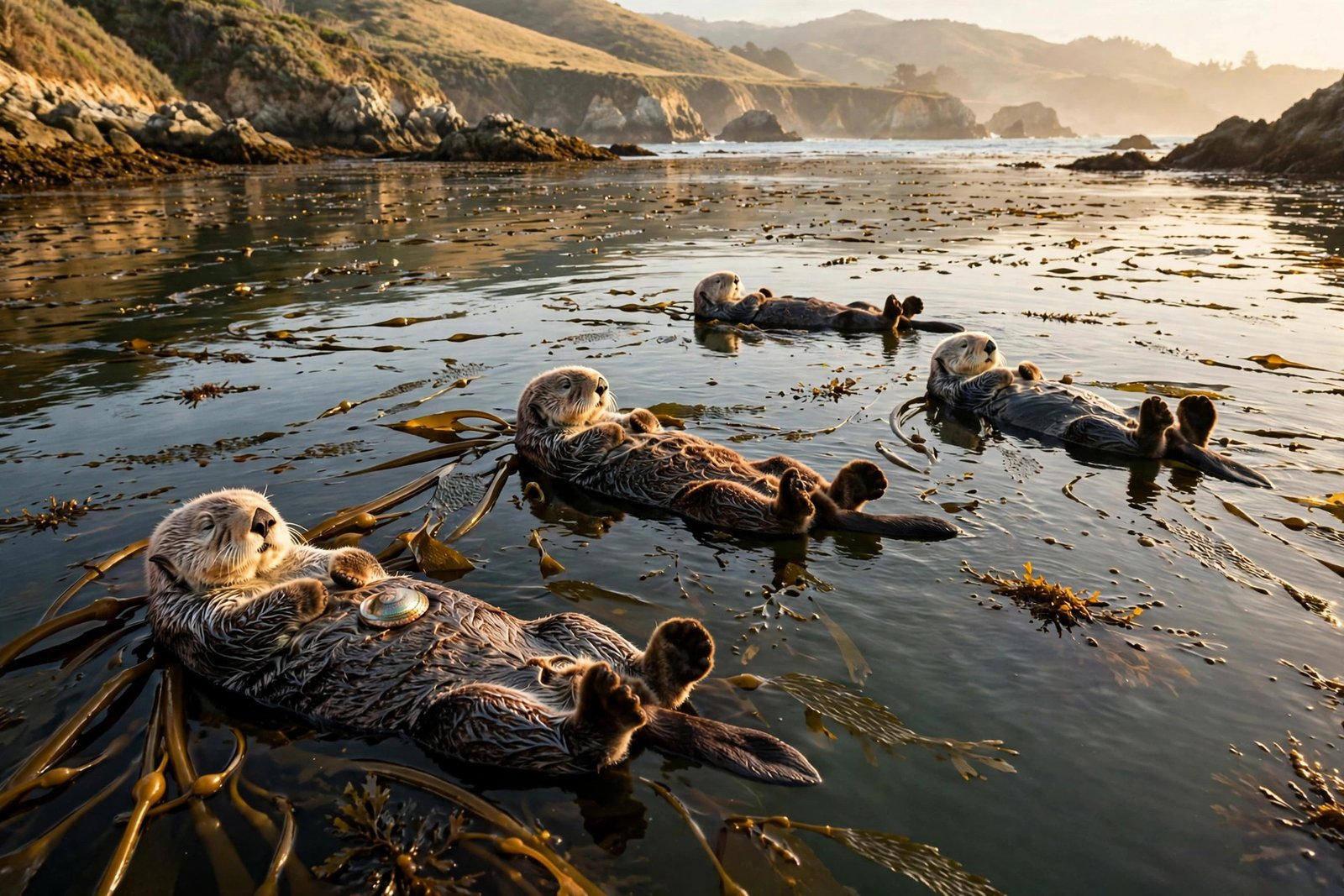
If you are wondering where to see sea otters USA offers some of the best wildlife watching in the world, and you do not need a boat expedition to remote Alaska to enjoy it. From the kelp forests of California to the sheltered bays of Washington and the wild coasts of Alaska, sea otters float, groom, crack open shellfish, and raise their pups in plain view of lucky visitors. This guide covers the best places, the best seasons, and how to watch these remarkable animals without disturbing them.
Sea otters are the smallest marine mammals in North America, and also among the most charming to watch. Unlike seals, they spend much of their lives floating on their backs, using their bellies as tables, wrapping themselves in kelp to stay put while they rest, and holding hands — or rather paws — to avoid drifting apart. They are also a conservation success story in parts of their range, after hunting for their dense fur brought them close to extinction in the 18th and 19th centuries. Today, protected populations in California, Washington, and Alaska give visitors real chances to see them in the wild.
Where to See Sea Otters USA: California Coast
California is the easiest and most reliable place for most travelers to see southern sea otters, a threatened subspecies found along the central California coast. The stretch from around Half Moon Bay south through Monterey Bay and Big Sur to Morro Bay holds the core of the population. Monterey Bay is the classic starting point: otters raft together in the kelp beds just offshore, and on calm mornings you can spot them from shore with binoculars.
In Monterey itself, head to the coastline near the bay, including areas around Cannery Row and Lovers Point in nearby Pacific Grove. Otters often rest close to shore here, especially in the morning. Farther south, Point Lobos State Natural Reserve is one of the finest shore-based viewing spots in the state. Its rocky coves and kelp beds attract otters, harbor seals, and sea lions, and the reserve’s trails offer several overlooks where patient watchers are rewarded. Bring binoculars, dress in layers for coastal wind, and scan the kelp for dark, bobbing shapes.
Morro Bay, farther south, is another excellent and less crowded option. Otters frequent the harbor and the estuary, and kayakers in the bay often encounter them at a respectful distance. Elkhorn Slough, north of Monterey, is also famous for otter sightings: the calm, protected waterway is a nursery area where mothers and pups are regularly seen. Guided kayak tours in the slough emphasize keeping distance and letting otters approach on their own terms, which is exactly the right approach.
For the best California experience, visit in the morning when the wind is low and the water is calm. Many first-time visitors ask where to see sea otters USA guides recommend most, and Monterey Bay is almost always the first answer for good reason. Spring and summer bring more pups, while autumn often brings clearer skies and fewer crowds. Otters can be seen year-round, so there is no bad season — only better viewing conditions on calm days. Avoid approaching otters in the water, never feed them, and keep voices low near resting rafts.
Where to See Sea Otters USA: Alaska and Beyond
Alaska holds the largest sea otter populations in the United States, with northern sea otters found across the Aleutian Islands, the Alaska Peninsula, Kodiak, Prince William Sound, and Southeast Alaska. For visitors, the most accessible Alaska sightings often come from boat tours and coastal towns rather than remote expeditions. Seward, Homer, and Valdez all offer day cruises where otters are a regular sighting, often floating in groups near kelp beds or rocky shores.
Glacier Bay National Park and Preserve is another outstanding Alaska destination. Boat tours through the bay pass otter habitat, and the park’s protected waters support a healthy population. In Southeast Alaska, towns such as Sitka and Juneau also offer harbor and bay sightings, especially on wildlife cruises that combine otters with whales, sea lions, and seabirds. Alaska viewing is best in summer, when daylight is long, seas are generally calmer, and tour operators run their full schedules. If you are weighing where to see sea otters USA travelers rate highest for sheer numbers, Alaska’s bays are hard to beat. Dress warmly, bring waterproof layers, and expect wildlife on its own schedule — patience is part of the adventure.
Washington State offers a third option. Northern sea otters were reintroduced to the Washington coast, and today they are found along the outer coast, particularly around the Olympic Peninsula and near La Push and Kalaloch. Sightings are less predictable than in California, but dedicated watchers and coastal hikers do see them, especially from headlands overlooking kelp beds. Check with Olympic National Park visitor centers for recent sighting reports and trail advice before you set out.
Best Times, Tips, and Viewing Etiquette
Sea otters are active during the day, with peaks in the morning and late afternoon when they feed and groom. Wherever you choose, knowing where to see sea otters USA visitors have actually succeeded — calm kelp beds near shore — matters more than chasing a single famous viewpoint. They rest in rafts during midday, which can actually make them easier to spot as a group floating together in the kelp. Calm, overcast mornings often give the best light for spotting dark fur against the water, while windy afternoons chop the surface and make them harder to pick out.
- Bring binoculars or a spotting scope: Otters often rest 50 to 200 yards offshore, and optics turn a distant speck into a clear view.
- Scan the kelp, not the open water: Look for dark shapes among kelp fronds, and watch for splashing as otters dive, roll, and groom.
- Go early and stay patient: Give yourself at least an hour at a good overlook; otters surface, dive, and drift, so a quiet wait pays off.
- Keep your distance: Stay at least 50 yards away in a kayak or boat, never chase or surround otters, and let mothers with pups have extra space.
- Never feed wildlife: Feeding changes natural behavior and can harm otters; enjoy watching them find their own food.
- Check local rules: Some reserves and parks have seasonal closures, kayak launch rules, or protected areas — follow posted guidance.
Kayaking is one of the most rewarding ways to see otters, especially in Monterey Bay, Morro Bay, and Elkhorn Slough. Choose a reputable operator that follows wildlife-viewing guidelines, keeps groups small, and briefs paddlers on distance. If an otter approaches your kayak out of curiosity, stay still, keep your hands in the boat, and enjoy the moment without reaching out or feeding it. Shore-based viewing, by contrast, costs nothing and disturbs otters least of all — a good pair of binoculars and a coastal trail are often enough.
Photographers should use a telephoto lens and avoid flash. Early morning light, a stable tripod or monopod, and a low vantage point near the waterline all help. Remember that a good wildlife photo is one that does not change the animal’s behavior: if an otter looks up, stops feeding, or moves away because of you, you are too close.
Sea Otter Behavior: What to Look For
Once you spot an otter, the show is delightful. Watch for grooming: otters spend a large part of their day cleaning and fluffing their fur, which is essential because their fur, not blubber, keeps them warm in cold water. Watch for feeding: an otter will dive, return with a clam, crab, or urchin, roll onto its back, and crack its meal open using a rock or against its chest. Mothers carry pups on their bellies, groom them carefully, and wrap them in kelp while they dive for food.
You may also see otters rafting together — sometimes dozens of animals floating in a group, holding paws or wrapped in kelp to stay together while they rest. Rafts are most common in sheltered bays and kelp forests, and they are a wonderful sight on a calm morning. Pups stay with their mothers for months, learning to dive, groom, and feed, so spring and summer visits often include these endearing pairs.
Understanding this behavior helps you appreciate why protection matters. Sea otters are a keystone species in kelp forest ecosystems: by eating sea urchins, they prevent urchins from overgrazing kelp, which in turn supports fish, seabirds, and other marine life. Watching an otter crack open an urchin is therefore not just cute — it is a glimpse of an ecosystem at work.
Planning Your Trip: California, Washington, or Alaska?
Choose California if you want the easiest, most reliable sightings with the least travel. Fly into San Jose, Monterey, or San Francisco, base yourself in Monterey or Pacific Grove, and spend two or three days exploring Monterey Bay, Point Lobos, and Elkhorn Slough. Add Big Sur’s coastline for scenery, even if otter sightings there are less predictable from the highway.
Choose Washington if you are already visiting Olympic National Park or the Pacific Northwest coast and want to add otter watching to a broader trip. Combine coastal hikes at Kalaloch and Ruby Beach with tidepooling and seabird watching, and ask rangers about recent sightings.
Choose Alaska if you want the grandest wildlife experience and are ready for a longer trip. A summer cruise or a land-based stay in Seward or Homer, with day boat tours, gives you otters plus whales, puffins, glaciers, and dramatic coastal scenery. Book tours early in summer, and build flexibility into your schedule for weather.
If you love wildlife watching in general, you may also enjoy our guides to where to see manatees in the USA, where to see bald eagles in the USA, and where to see puffins in the USA. Each guide follows the same approach: real places, honest expectations, and respect for the animals.
Conservation and Responsible Viewing
Southern sea otters in California remain listed as threatened under the Endangered Species Act, a reminder that recovery is ongoing. Their population has grown since the lows of the fur-trade era, but threats remain, including shark bites, disease, food limitations, and human disturbance. Northern sea otters in parts of Alaska have faced their own declines in some regions, while other populations are stable or growing. Viewing guidelines exist to give these animals the space they need to feed, rest, and raise pups.
You can support conservation by visiting responsibly, supporting parks and wildlife organizations that protect coastal habitat, and keeping beaches and waterways clean. Simple actions — packing out trash, keeping dogs leashed near wildlife areas, and reporting injured or stranded animals to local authorities rather than handling them — make a real difference. If you see an otter that appears injured or in distress, contact local wildlife authorities or the park service; do not attempt a rescue yourself.
Conclusion: Start Planning Your Otter Watch
From Monterey Bay’s kelp forests to Alaska’s wild bays, the United States offers world-class sea otter watching for every kind of traveler. The question of where to see sea otters USA first-timers should start with is simple: begin in California, then add Washington or Alaska when you are ready for a bigger trip. The key is choosing the right place for your trip, going early, bringing binoculars, and giving otters the space they deserve. Do that, and you are very likely to be rewarded with one of nature’s most joyful sights: an otter floating on its back, cracking open breakfast, completely at home in the sea.
Ready to go? Pick your coast, check local sighting reports, and plan a morning at the water’s edge. Share this guide with a friend who loves wildlife, explore more wildlife guides on ENG Post, and tell us in the comments where you saw your first wild sea otter.