
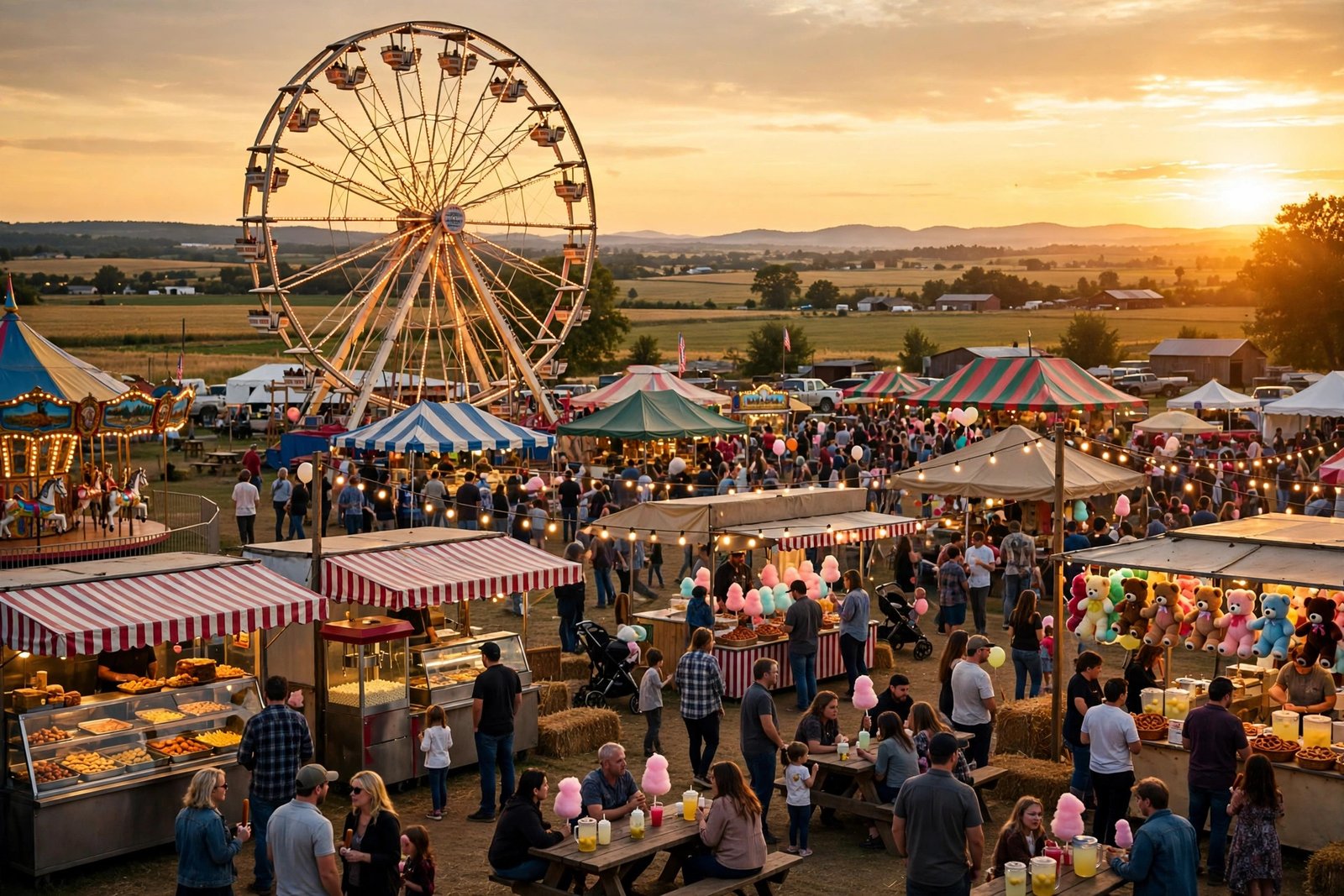
Every summer, in thousands of small towns across the United States, the fairgrounds come alive. The smell of funnel cake drifts over the midway, a brass band plays near the grandstand, and a teenager in a 4-H shirt leads a nervous calf into the show ring. This is American county fair culture, a tradition that has shaped rural American life for more than two centuries and still draws millions of visitors every year.
A county fair is more than a carnival. It is a showcase of local agriculture, craftsmanship, cooking, and community pride. It is where farm families compete, kids learn responsibility, neighbors catch up, and visitors taste a slice of small-town America. Whether you grew up going to the fair or have never been to one, this guide will help you understand what makes it so special.
The Roots of American County Fair Culture
American county fair culture began in the early 1800s, when farming was the backbone of the young nation. The first agricultural fair in the United States is widely credited to Elkanah Watson, a New England farmer and merchant who organized a sheep-shearing exhibition in Pittsfield, Massachusetts, in 1807. Farmers brought their best sheep, compared breeding stock, and shared new techniques. The idea caught on quickly.
Throughout the 1800s, agricultural societies organized fairs in county after county. These early fairs were practical events. Farmers judged livestock, tested new plows and seed varieties, and attended lectures on soil and animal care. Over time, the fairs added horse racing, cooking contests, craft displays, and entertainment, growing into the community celebrations we know today.
The county fair became an institution because it served a real need. In an era before the internet, farm magazines, or extension services, the fair was where rural people learned, traded, and connected. That educational mission survives today in the livestock barns, the 4-H exhibits, and the home arts competitions.
American County Fair Culture in the Livestock Barn
For many fairgoers, the heart of the fair is the livestock barn. Here, young people in 4-H and FFA (formerly Future Farmers of America) show cattle, pigs, sheep, goats, rabbits, and poultry they have raised for months. Showmanship competitions judge not just the animal but the exhibitor’s skill in presenting it: how they walk it, set it up, and answer the judge’s questions.
4-H, founded in the early 1900s as a youth development program, is central to fair culture. The four H’s stand for head, heart, hands, and health, and members complete projects in animal science, cooking, gardening, photography, and more. For many rural kids, the county fair is the biggest event of the year, the moment when months of early mornings feeding animals pay off in the show ring.
The livestock auction is another fair tradition. Local businesses and community members bid on market animals raised by young exhibitors, supporting the kids’ work and keeping money in the local economy. It is a uniquely American blend of agriculture, education, and community support.
The Midway, the Grandstand, and the Rides
Step out of the barns and you enter the midway, the flashing, noisy, joyful heart of the fair. Carnival rides spin and soar: the Ferris wheel, the tilt-a-whirl, bumper cars, and roller coasters sized for fairgrounds. Game booths offer ring tosses, balloon pops, and water gun races, with giant stuffed animals as prizes.
The grandstand is where the big shows happen. Depending on the fair, you might see a demolition derby, a tractor pull, a rodeo, a monster truck show, or a concert by a country or rock band. Demolition derbies, in which drivers smash old cars into each other until only one still runs, are a beloved fair tradition that dates back to the mid-1900s. Tractor pulls test the raw power of modified farm machines dragging a weighted sled down a track.
These events are loud, dusty, and gloriously unpretentious. They are also deeply social. Families claim the same bleacher seats year after year, and the grandstand show is often the night the whole town turns out.
Fair Food: A Culture All Its Own
No guide to American county fair culture is complete without the food. Fair food is indulgent, creative, and proudly over the top. Classics include:
- Corn dogs, often traced to the Texas State Fair in the 1940s, where vendors began serving hot dogs dipped in cornmeal batter on a stick.
- Funnel cake, a Pennsylvania Dutch tradition of fried batter dusted with powdered sugar.
- Deep-fried everything, from pickles and Oreos to butter and candy bars, a trend that took off at state and county fairs in the 2000s.
- Lemonade shake-ups, fresh-squeezed and shaken to order in a big cup.
- Local specialties, like cheese curds in Wisconsin, pork tenderloin sandwiches in Iowa, and fresh corn on the cob in the Midwest.
Fair food is meant to be shared and photographed. Trying the wildest new fried creation is a rite of passage, and food vendors compete for attention with bigger, stranger, and more delicious offerings each year.
Blue Ribbons, Home Arts, and Quiet Competitions
Beyond the rides and the food, the fair is full of quieter competitions that showcase everyday skill. In the exhibition halls, you will find:
- Home arts: quilts, sewing, knitting, and crochet judged on craftsmanship.
- Baking and canning: pies, jams, pickles, and breads competing for blue ribbons.
- Photography and fine art: local artists and photographers displaying their best work.
- Gardening: giant pumpkins, perfect tomatoes, and flower arrangements.
- Flower shows and floral design competitions.
These competitions matter because they honor skills that are disappearing from daily life. A blue ribbon for a quilt or a jar of preserves is a real achievement, and the exhibition halls are where the fair’s community spirit is most visible. Generations of the same family often compete in the same categories, year after year.
Why County Fairs Still Matter
In an age of streaming entertainment and online shopping, why do county fairs still draw crowds? The answer is connection. A fair is one of the few places where a community gathers in person, across ages and backgrounds, to celebrate what it makes and grows. Farmers meet consumers. Kids learn where food comes from. Neighbors who rarely see each other share a lemonade and a bench.
Fairs also preserve agricultural knowledge. As fewer Americans farm, the livestock shows, the 4-H exhibits, and the crop competitions keep farming visible and respected. They remind visitors that food does not come from a store shelf but from land, animals, and hard work.
For visitors, the county fair is also a window into American culture. It is a place where traditions are not performed for tourists but lived by the community. That authenticity is what makes a fair visit memorable, whether you are riding the Ferris wheel at sunset or watching a ten-year-old win her first blue ribbon.
How to Enjoy Your First County Fair
If you are planning your first visit, a few tips will help you make the most of it:
- Go early in the day for the livestock shows and exhibition halls, when the crowds are thinner and the animals are fresh.
- Wear comfortable shoes and bring sunscreen, because fairgrounds are big and mostly outdoors.
- Bring cash, since some smaller vendors do not take cards.
- Check the schedule in advance for grandstand shows, demolition derbies, and concerts you do not want to miss.
- Talk to the exhibitors. 4-H kids and farmers are usually happy to explain their animals and projects.
- Try one food you have never had before. That is half the fun.
American county fair culture is also part of a wider tapestry of small-town American life. If you love the fair’s food stands, you may enjoy the world of classic American diners, and if the outdoor, community spirit of the fair appeals to you, check out American camping culture and American pizza culture for more slices of everyday American tradition.
The county fair has survived for more than 200 years because it gives people something screens cannot: real animals, real food, real neighbors, and real pride. So this summer, find the fair nearest you, buy a ticket, and spend a day in one of America’s oldest and happiest traditions. Bring the family, ride the Ferris wheel, eat something fried, and cheer for a kid in the show ring. You will understand why the fair matters, and you will probably start planning next year’s visit before you leave.
Regional Flavors of the County Fair
No two county fairs are exactly alike, and that variety is part of the charm. A fair in Wisconsin will lean hard into dairy, with cheese curds, butter sculptures, and milk-chugging contests, while a fair in Texas might feature a rodeo, a chili cook-off, and a livestock show on a much grander scale. In New England, you will find ox pulls, maple syrup judging, and agricultural exhibits that trace back to the very first fairs of the 1800s. On the West Coast, fairs often blend agriculture with wine tasting, craft booths, and concerts that reflect their local communities.
Many fairs also crown a fair queen, run talent shows, host pie-eating contests, and organize parades through town on opening day. These traditions vary from county to county, but they share the same purpose: celebrating the people, products, and pride of one local community. That is why fair lovers often plan road trips around fair season, collecting blue-ribbon stories and fried-food memories from one county to the next.