
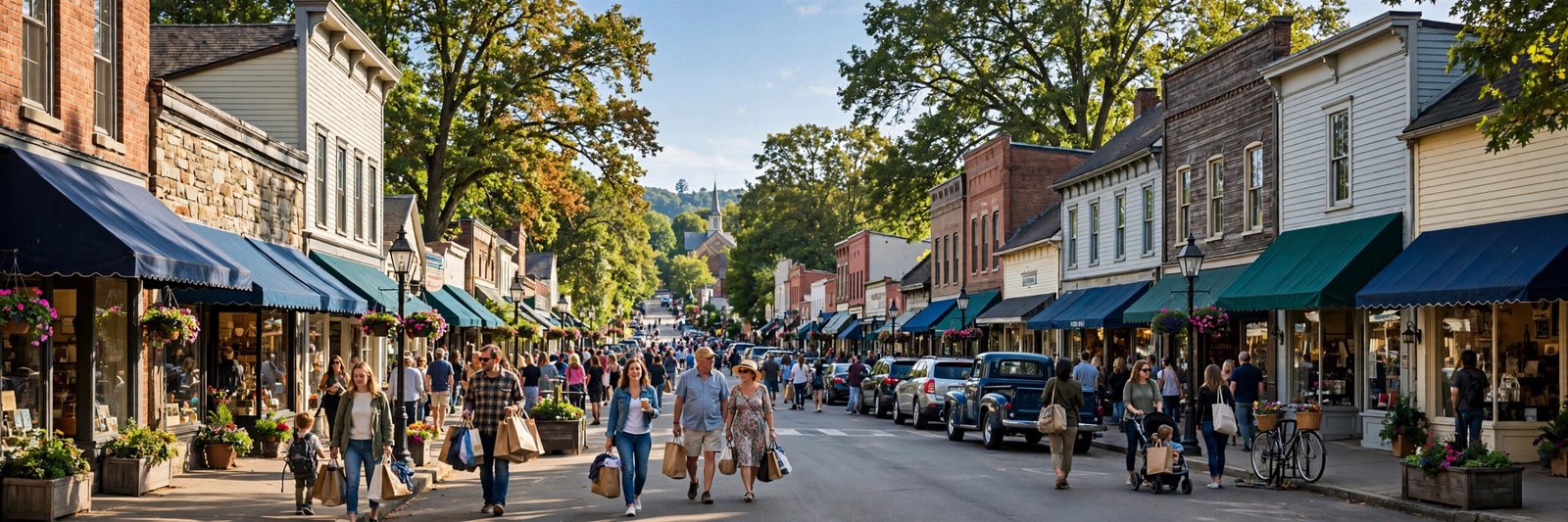
Imagine standing at a checkout counter, watching the total come up exactly the same as the price on the tag. No extra line added at the end, no mental math, no surprise. For shoppers in most of America, that moment feels unusual, because sales tax is part of everyday life. Yet the states with no sales tax offer exactly that experience: when you buy something covered by the general sales tax rules, there is no statewide sales tax added to your purchase.
That simple difference raises a lot of questions. Which states are they? Does tax-free really mean everything is cheaper? And if a state collects no sales tax, how does it pay for roads, schools, and public services? The answers are more interesting than a single number, because each of the five states reached this position in its own way, and each one balances its budget differently.
In this guide, we walk through the full picture: the five states, why they have no statewide sales tax, what they charge instead, and what the rule means in practice for shoppers, travelers, and anyone thinking about moving. If you love exploring how America works state by state, you will enjoy our roundup of how many national parks there are in the USA, which is another great example of how different each state can be.
The five states with no sales tax
Five states in the USA have no statewide general sales tax: Oregon, Montana, New Hampshire, Delaware, and Alaska. That is the complete list. Every other state has a statewide sales tax, although rates and rules vary widely from place to place.
It helps to say clearly what this means. In these five states, the state government does not add a general sales tax to most retail purchases. That is different from a temporary sales-tax holiday, which some states run for a few days each year, and different from a store promotion. The absence of a statewide sales tax in these states is a permanent feature of their tax systems, not a sale or a special event.
It does not mean that nothing is ever taxed. States can still raise money in other ways, and local governments in some of these states can add their own taxes. Alaska is the best-known example: the state itself has no statewide sales tax, but some local communities there do charge a local sales tax. So a purchase in one Alaskan town may include a local tax, while a purchase in another may not. Always check the local rules where you are shopping.
Each state also has its own character, and the tax picture is only one part of it. Here is a closer look at all five.
- Oregon: On the Pacific coast, Oregon is famous for its coastline, forests, and cities such as Portland. It has no statewide sales tax, which makes it a popular shopping destination for visitors from neighboring states.
- Montana: Known for wide-open landscapes, mountains, and national parks, Montana also has no statewide sales tax. Its western heritage is part of its identity, much like the stories told in our history of the American cowboy.
- New Hampshire: In New England, New Hampshire has no statewide general sales tax. The state motto, “Live Free or Die,” fits a place that has long resisted a broad sales tax.
- Delaware: A small East Coast state, Delaware has no statewide sales tax. Its location near major cities makes it a convenient shopping stop for people in the region.
- Alaska: The largest state by land area, Alaska has no statewide sales tax, although some local areas add their own local sales tax. Its remoteness and natural beauty make it a very different shopping environment from the other four.
Why do some states with no sales tax skip it?
There is no single reason. History, politics, and economics all play a part, and the story is different in each state. In general, though, states that avoid a sales tax tend to share a few traits: a strong local preference for keeping shopping taxes off the table, and other sources of revenue that make it possible to fund public services without one.
Some states lean more heavily on other kinds of taxes. A state without a sales tax might collect more from income taxes, property taxes, or taxes on specific industries. Others benefit from natural resources or tourism. The mix is different everywhere, which is why a simple comparison of one tax can be misleading. A state with no sales tax is not necessarily a low-tax state overall.
Politics matters too. In several of these states, proposals to introduce a sales tax have been debated and rejected over the years. Voters and lawmakers have repeatedly chosen to keep the system as it is. That kind of long-standing public preference is hard to change, and it helps explain why the list of five has stayed stable for so long.
Geography and trade also play a role. Delaware sits close to large population centers, so tax-free shopping draws visitors. Oregon draws shoppers from neighboring states as well. For these states, the absence of a sales tax is not only a policy choice but also a part of their economic identity.
What states with no sales tax charge instead
If a state does not collect a general sales tax, it still needs money to run. The answer is usually a combination of other taxes and fees. The exact mix varies, and it is worth understanding before assuming that life in one of these states is automatically cheaper.
Property taxes are one major source of revenue in many places. Homeowners pay property taxes to local governments, and those taxes help fund schools, roads, and emergency services. Income taxes are another source in some states, although the details differ from state to state. Some states also collect taxes on specific goods or services, such as lodging or meals, rather than a broad tax on nearly everything sold at retail.
Business taxes matter as well. A state may collect taxes from companies operating within its borders, or fees for licenses and permits. Tourism can contribute too, through taxes on hotel stays, rental cars, or other visitor spending. These narrower taxes can add up, and visitors sometimes notice them even in a state with no general sales tax.
The key point is balance. Every state has to fund its services somehow. These five states have simply chosen a different balance from the states that rely on a broad sales tax. Comparing only one tax, without looking at the whole picture, can give a misleading impression of the true cost of living.
That is also why moving decisions should never rest on a single tax alone. Housing costs, wages, job opportunities, health care, education, and everyday prices all matter. A state that looks cheaper at the checkout counter may be more expensive in other parts of life, and the reverse can be true as well.
Shopping in states with no sales tax: what visitors should know
For visitors, the appeal is obvious. Big purchases, from electronics to clothing to furniture, can cost less when no statewide sales tax is added. That is why shopping trips to Oregon and Delaware are popular, and why travelers sometimes plan purchases around a visit to one of these states.
Still, a few practical points are worth keeping in mind. First, the rules apply where you buy, not where you live. If you buy something in a state with no sales tax and take it home, you generally do not pay the other state’s sales tax at the counter. However, your home state may have its own rules about purchases brought in from elsewhere, so it is wise to understand those rules before making a very large purchase.
Second, not every purchase is treated the same way. Some goods and services may be taxed under separate, narrower rules even in a state with no general sales tax. Lodging, rental cars, and restaurant meals are common examples where visitors may still see taxes or fees. Reading the receipt helps: if a tax line appears, it is usually a local or special-purpose tax rather than a statewide general sales tax.
Third, prices are not set by tax policy alone. Stores set prices based on rent, wages, shipping, and competition. A tax-free state does not guarantee the lowest shelf price on every item. Comparing prices across stores still matters, and online shopping has made that easier than ever.
Finally, remember that local rules can differ within a state. Alaska is the clearest example, where some communities add a local sales tax and others do not. If you are traveling there, a quick check of local rules can prevent surprises at the register.
Is moving to a state with no sales tax worth it?
Many people ask whether moving to one of these states would save them money. The honest answer is that it depends on your whole financial picture. For someone who spends a lot on taxable goods, the savings at the register can add up over a year. For someone whose main costs are housing, health care, or education, other taxes and prices may matter more.
Housing is often the biggest factor. Home prices and rents vary enormously across the five states, and within each state as well. Property taxes, which help fund local services, also vary. A household should compare the full cost of living, not just the sales tax line on a receipt.
Jobs and wages matter too. A state with no sales tax but fewer opportunities in your field may not be the best financial move. Climate, community, schools, and lifestyle matter just as much as money for most families. The tax picture is one piece of a much larger decision.
That said, for retirees or remote workers who can choose where to live more freely, the tax mix can be a genuine factor. People in that position often compare several states side by side, looking at income taxes, property taxes, and everyday costs together. The states with no sales tax frequently appear on those shortlists, but they are rarely chosen on that fact alone.
If you are weighing a move, the practical step is to build a simple household budget for each place you are considering. List your housing, food, transport, health care, and shopping costs, and include the taxes that apply to each. That exercise usually reveals more than any single headline about tax-free shopping.
Common myths about states with no sales tax
Several myths surround this topic. One is that everything is cheaper in these states. As we have seen, shelf prices, housing, and other costs vary, and other taxes still apply. Another myth is that these states have no taxes at all. They do collect revenue; they simply do it differently.
A third myth is that tax-free shopping is a trick or a temporary offer. It is not. The absence of a statewide general sales tax is a stable, long-standing feature of these states’ systems. Stores are not running a promotion when they charge no statewide sales tax; they are following the law.
A fourth myth is that the list changes often. In practice, the five states have remained the same for many years. Proposals to add a sales tax come up from time to time, but none of the five has adopted a statewide general sales tax. That stability is part of why the topic keeps coming up in moving and shopping guides.
Understanding these myths helps shoppers and movers make better decisions. The real story is less dramatic than the myths, but more useful: five states, five different ways of funding public services, and a shopping experience that really does look different at the checkout counter.
Final thoughts: what the five states teach us
The states with no sales tax remind us that there is no single way to run a state economy. Each of the five has made its own choices about how to raise revenue, and each has lived with the trade-offs. Some rely more on other taxes, some benefit from location or resources, and all of them still have to pay for the services their residents use every day.
For shoppers, the lesson is simple: enjoy the savings where they exist, but read the receipt and understand the local rules. For travelers, a trip to one of these states can be a chance to explore beautiful places and shop without the extra line at the register. And for anyone considering a move, the lesson is to look at the whole picture, not just one tax.
America’s tax landscape is part of what makes the country so varied, much like its landmarks, traditions, and stories. If you enjoyed this guide, explore more of our USA facts, including the story behind the US national anthem, and start planning your next trip across the states. Whether you visit Oregon’s coast, Montana’s mountains, New Hampshire’s small towns, Delaware’s shops, or Alaska’s wilderness, you will see firsthand how different, and how fascinating, each state can be.