
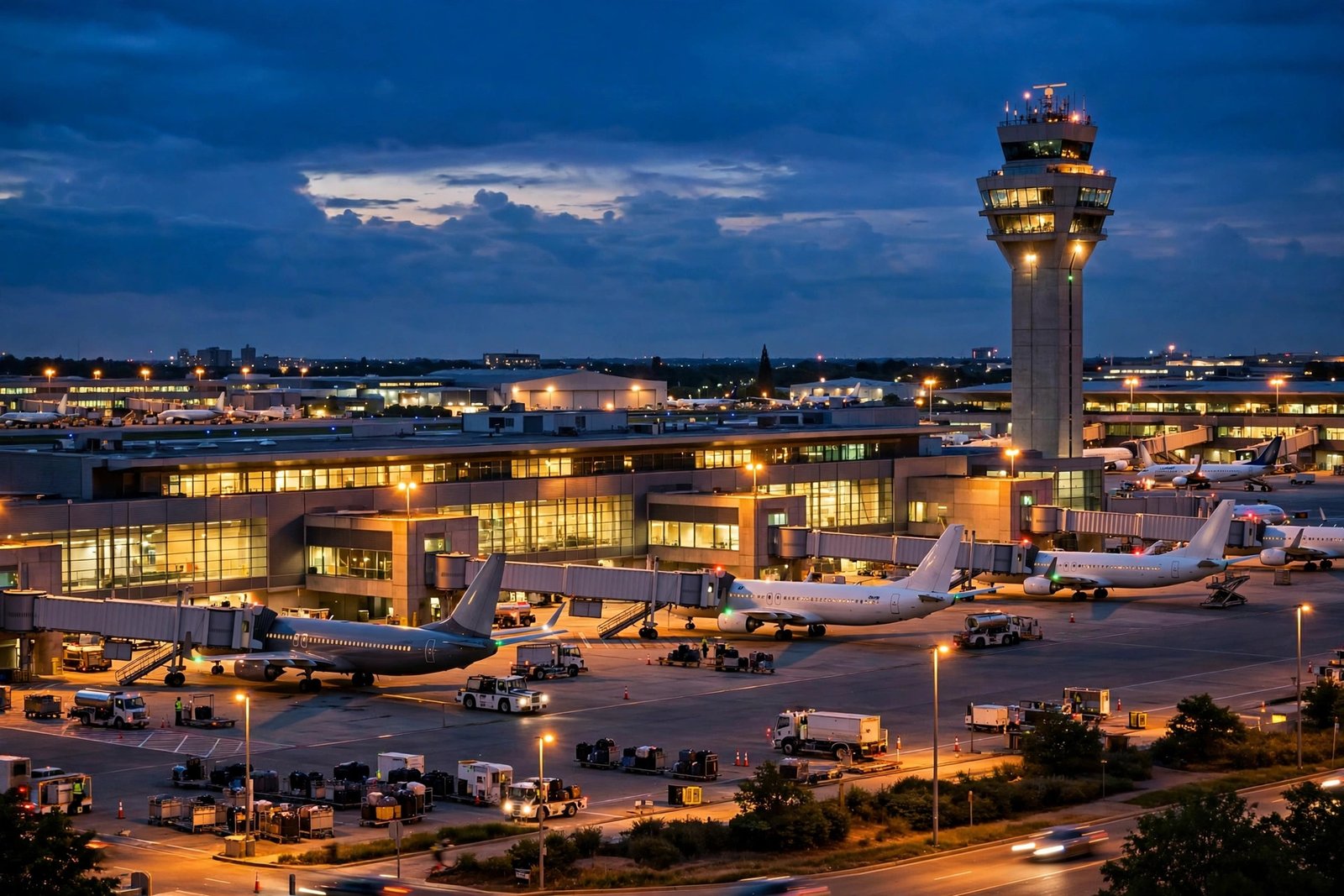
If you have ever stared out of an airplane window at the patchwork of runways, taxiways, and terminals below and wondered how many airports in the USA there really are, you are not alone. It is one of the most searched travel questions in America, and the answer is bigger than most people expect. The United States is home to one of the largest and most complex aviation networks on the planet, stretching from giant international hubs that handle tens of millions of passengers a year to tiny grass strips in farm country that only a handful of pilots ever use.
The short answer is that there are roughly 19,000 airports and landing facilities across the country, according to figures published by the Federal Aviation Administration (FAA). But that single number hides a much more interesting story. Only about one in four of those facilities is open to the general public. The rest are private, and the number changes all the time as new strips open, old ones close, and the FAA updates its records. In this guide, we break down the real numbers, explain what counts as an airport, and show you where America’s busiest and most unusual airfields are found.
How Many Airports in the USA Are There in Total?
So, how many airports in the USA are there in total? The FAA reports approximately 14,400 private-use facilities and about 5,000 public-use airports, heliports, and seaplane bases, giving a combined total of roughly 19,000 to 19,500 landing facilities. Other tallies, such as those from the Bureau of Transportation Statistics, land in a similar range once heliports, seaplane bases, and gliderports are included. The exact total moves from year to year, which is why you will see slightly different numbers depending on the source and the year of the data.
It helps to understand what the FAA actually counts. Under federal law, an airport is any area of land or water used or intended for landing or takeoff of aircraft. That broad definition covers far more than the big terminals most travelers picture. It includes:
- Large commercial airports with scheduled airline service and control towers.
- Small general aviation airports used by private pilots, flight schools, and charter operators.
- Private airstrips on farms, ranches, and company properties.
- Heliports on hospital roofs and downtown buildings.
- Seaplane bases on lakes and coastal waterways, especially in Alaska and the Pacific Northwest.
When all of those are added together, the United States ends up with more landing facilities than any other country in the world. That is no accident. America is a huge country, and aviation has been woven into its economy, its mail service, its medical system, and its way of life for more than a century.
How Many Airports in the USA Are Open to the Public?
Of the roughly 19,000 total facilities, only about 5,000 are public-use airports. A public-use airport is one that is available to the general public without needing the owner’s permission in advance. If you are a licensed pilot, you can generally fly into a public-use airport, pay any landing or parking fees, and be on your way.
Public-use airports themselves come in many sizes. At one end are the mega-hubs: Atlanta’s Hartsfield-Jackson, Dallas/Fort Worth, Denver, Chicago O’Hare, and Los Angeles International. These airports each serve tens of millions of passengers a year and operate almost like small cities, with their own hotels, train systems, fire departments, and police forces. At the other end are thousands of small community airports with a single runway, a modest terminal building, and maybe a fuel pump and a flight school. Many of these small airports never see a commercial airliner, but they are lifelines for their towns.
The remaining roughly 14,400 facilities are private-use. That means you need the owner’s prior approval to land there. Private-use facilities include corporate airfields, farm strips, and personal runways. Some are beautifully maintained; others are little more than a mowed strip of grass. Together, they make up roughly three-quarters of all American landing facilities, which is why the headline total surprises so many people.
Public vs. Private: What Is the Difference?
The difference between public and private airports is about access, not ownership. Many public-use airports are owned by cities, counties, or airport authorities, but some are privately owned and still open to the public. Likewise, many private-use airports sit on public land but are restricted to specific users. What matters is whether the general flying public can use the facility without asking first.
Public-use airports also tend to receive more public investment. They may be eligible for federal grants through the Airport Improvement Program, which funds runway repairs, safety improvements, and terminal upgrades. Private-use airports generally rely on their owners for funding, although some private airports that are open to the public can qualify for certain programs.
The National Plan: About 3,300 Airports That Matter Most
Within the roughly 5,000 public-use airports, the FAA identifies about 3,300 that are included in the National Plan of Integrated Airport Systems, known as NPIAS. These are the airports the FAA considers significant to national air transportation, and inclusion in the plan makes them eligible for federal funding.
NPIAS airports are divided into categories based on their activity. Commercial service airports have scheduled airline service and at least 2,500 passenger boardings a year. Primary airports are the busiest commercial airports, with more than 10,000 boardings a year, and there are roughly 380 of them. Reliever airports are designated to ease congestion at busy commercial airports and improve general aviation access to cities. General aviation airports make up the large majority of the NPIAS list, roughly 88 percent of it, and they serve private flying, flight training, cargo, medical flights, and business travel.
If you have ever wondered why your small hometown airport has a freshly paved runway even though no airline flies there, the NPIAS is often the reason. The system is designed to keep a nationwide network of usable airports, not just to serve the biggest cities.
The Busiest Airports in the USA
When people ask which airports handle the bulk of air travel, the answer is: surprisingly few. A small number of mega-hubs move an enormous share of passengers. Hartsfield-Jackson Atlanta International Airport has long been ranked the busiest airport in the world by passenger traffic, and Dallas/Fort Worth, Denver, Chicago O’Hare, and Los Angeles International regularly rank among the busiest in the nation. In a typical year, the FAA’s air traffic organization handles tens of thousands of flights a day across the national airspace system.
Denver International Airport deserves a special mention. It is the largest airport in the United States by land area, covering tens of thousands of acres on the plains northeast of Denver, and its distinctive white tent-like roof has made it one of the most recognizable airports in the world. By contrast, some of the busiest airports by passenger volume, such as Atlanta and Chicago O’Hare, sit on far smaller footprints and handle their traffic with tightly choreographed runway and gate operations.
For travelers, the practical lesson is simple: most Americans live within a reasonable drive of at least one commercial airport, and a short connecting flight can reach nearly anywhere else in the country. That dense network is a big reason air travel feels so routine in the United States compared with many other countries.
Airports by State: Where Are They Concentrated?
Airport counts vary enormously from state to state. Large states with big rural populations and long distances between towns tend to have the most landing facilities. Alaska is the classic example: with vast wilderness, few roads, and hundreds of remote communities, aviation is not a luxury there but a necessity, and the state is dotted with small airstrips and seaplane bases. Texas, with its huge land area and strong general aviation culture, also has a very large number of airports.
Smaller, densely populated states in the Northeast have fewer airports overall but are packed with busy commercial and reliever airports serving major metropolitan areas. Florida, California, and Arizona combine heavy commercial traffic with busy general aviation scenes, driven by tourism, flight training, and year-round good flying weather. Wherever you live, your nearest airport is probably closer than you think, and the national network means even remote towns usually have an air link to the wider world.
If you love exploring the country from the ground as well as the air, you may enjoy reading about America’s protected landscapes too. Check out how many national parks there are in the USA and plan a trip that combines a scenic flight with a national park visit.
How the FAA Counts Airports, and Why the Number Moves
One reason different sources give different answers to the question of how many American airports exist is that the count is a moving target. New airports open, old ones close, private strips change hands, and facilities are reclassified between public and private use. The FAA updates its airport data continuously, and its published totals reflect a snapshot in time rather than a permanent figure.
Another reason is definitions. Some counts include only airports, while others include heliports, seaplane bases, and other landing facilities. Some counts include only public-use airports, while others add private-use ones. When you see a number like 5,000, it almost always means public-use facilities. When you see a number near 19,000, it means everything combined. Both numbers are correct; they just measure different things.
For the most current figures, the FAA’s Airport Data and Information Portal is the official source. It lets you search airports by state, city, or identifier and see detailed information about runways, services, and ownership. It is the same data that pilots, planners, and researchers rely on.
Which Airports Have Commercial Flights?
Of the roughly 5,000 public-use airports, only a fraction have scheduled commercial airline service. The FAA counts several hundred commercial service airports, and roughly 380 primary airports handle the overwhelming majority of airline passengers. The rest of the public-use network serves general aviation: private planes, business jets, charter flights, air ambulances, agricultural aircraft, firefighting tankers, and flight training.
That general aviation network is easy to overlook, but it does vital work. Air ambulances fly patients from rural hospitals to trauma centers. Firefighting aircraft battle wildfires across the West. Agricultural planes spray and seed millions of acres. Flight schools train the next generation of airline pilots. And business jets connect executives and workers to towns that airlines no longer serve. America’s quiet army of small airports keeps all of that possible.
Aviation is also woven into America’s story of power and reach. To see another side of that story, read about US Space Force facts and how the newest branch of the military watches over the skies above us.
The Most Unusual Airports in America
Beyond the numbers, America’s airports include some genuinely remarkable places. There are airports built on islands, airports where planes land on beaches at low tide, and airports carved into mountain valleys. Some Alaskan communities are reachable only by air or water, and their gravel airstrips are the town’s front door to the world. In the desert Southwest, dry lake beds have served as emergency landing sites for generations of pilots.
Then there are the famous approaches: the river visual into Washington’s Reagan National Airport, the mountain-ringed descent into Aspen, and the island hop into Key West. Each one reminds you that flying in America is not just about getting from one hub to another; it is about reaching places that no other form of transport can serve as well.
What the Numbers Mean for Travelers
For most travelers, the practical takeaway from asking about the size of America’s airport network is reassuring. The United States has the densest airport network on Earth, which means more choices, more competition on popular routes, and more ways to reach small towns and remote regions. If your nearest big airport is crowded or expensive, a smaller regional airport nearby may offer a cheaper or calmer alternative.
For pilots and aviation enthusiasts, the numbers are an invitation. Thousands of public-use airports welcome visiting aircraft, and many host fly-ins, airshows, and pancake breakfasts that are open to the public. America’s small airports are some of the friendliest places in aviation, and they are a big part of why the country fell in love with flying in the first place.
America’s strength is not only measured in runways. Its silent service beneath the waves tells another fascinating story, which you can explore in our article on the US submarine fleet and its silent power.
Final Thoughts: A Sky Full of Runways
So, what is the final tally? Roughly 19,000 landing facilities in total, including about 5,000 public-use airports and roughly 14,400 private-use ones, with about 3,300 of the public airports forming the nationally significant NPIAS network. The precise total shifts every year, but the scale of the system is constant: no other nation comes close.
Next time you book a flight, take a moment to appreciate the network behind it. Behind your single boarding pass stands a century of aviation history, thousands of small-town runways, and a system that keeps a continent connected. Which airport is your favorite, and which small airfield would you love to visit? Share this article with a fellow travel lover, and start planning your next American adventure from the runway up.