
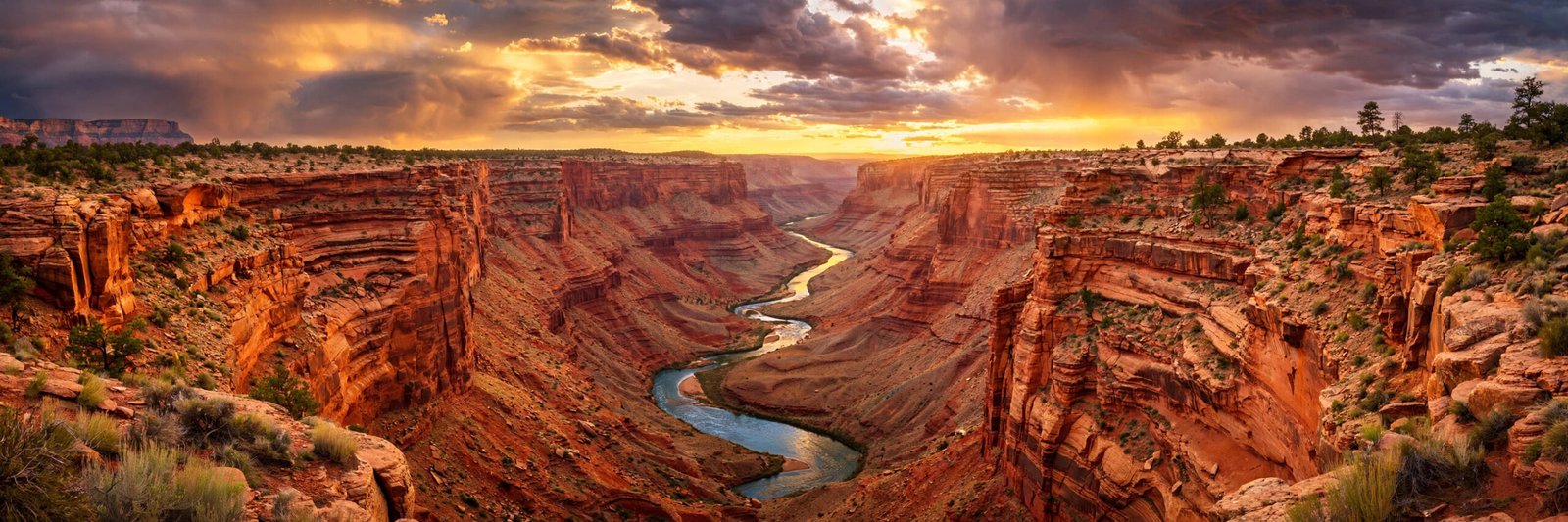
Some landscapes stop you in your tracks, and the most beautiful canyons in the USA do exactly that. Carved over millions of years by rivers, wind, and time, these deep gorges reveal layer upon layer of red, orange, and gold rock, each band telling a story far older than any human history. Standing on a canyon rim at sunrise, watching light spill down walls that drop thousands of feet, is one of the great American travel experiences.
What makes these places so special is their variety. Some canyons are vast and humbling, stretching as far as the eye can see. Others are narrow slot canyons where you can touch both walls at once, and sunlight filters down in golden beams. Some are easy to reach by car, while others reward a hike with silence and solitude. This guide brings together the finest examples across the country, with honest, practical advice for visiting each one.
Why the Most Beautiful Canyons in the USA Captivate Travelers
Canyons appeal to something deep in the human imagination. They are proof that slow, patient forces can create extraordinary beauty. A river that looks gentle today spent eons cutting through solid rock, and the result is a natural sculpture on a scale no human artist could match. Visitors often describe their first canyon view as emotional, even overwhelming, and that reaction never really fades no matter how many you see.
Each canyon also has its own character. The Grand Canyon is immense and layered, a place where distance itself becomes part of the view. Antelope Canyon is intimate and abstract, its smooth, wave-like walls glowing in shades of orange and pink. Bryce Canyon is not technically a canyon at all, but a series of amphitheaters filled with tall, thin rock spires called hoodoos, which look almost otherworldly at dawn. Together, these places show just how diverse American geology can be.
Many of the finest canyons sit within or near national parks, which means they are protected, well-signed, and accessible to ordinary travelers. If you enjoy national park trips in general, you will find plenty of overlap with our guide to the most beautiful national parks in the USA, several of which are home to the canyons listed below.
Grand Canyon, Arizona
No list of American canyons can begin anywhere else. The Grand Canyon stretches about 277 miles along the Colorado River in northern Arizona, and in places it is more than a mile deep and up to 18 miles wide. The South Rim is open year-round and is the most visited part of the park, with viewpoints, shuttle buses, and trails for every ability level. The North Rim is quieter and higher in elevation, but it closes in winter because of snow.
For a first visit, plan at least a full day. It is no surprise that the Grand Canyon tops most lists of the most beautiful canyons in the USA. Walk part of the Rim Trail, watch the sunset from Hopi Point or Yavapai Point, and if you are fit and prepared, hike a short way down the Bright Angel Trail to feel the canyon’s scale from the inside. Do not attempt to hike to the river and back in a single day; the park warns against it, and the climb back up is far harder than the descent. Bring more water than you think you need, especially in summer, when rim temperatures can be far cooler than the heat at the canyon floor.
Antelope Canyon, Arizona
Antelope Canyon, near Page, Arizona, is the most photographed slot canyon in the world, and for good reason. Its narrow, twisting passageways were carved by flash floods through Navajo sandstone, leaving smooth, flowing walls that glow in shades of orange, red, and purple when sunlight enters from above. Upper Antelope Canyon is famous for its light beams, which appear around midday in the summer months, while Lower Antelope Canyon is longer, with ladders and a more adventurous feel.
Antelope Canyon sits on Navajo land, and visits are only possible on a guided tour booked through an authorized Navajo tour operator. This is not optional, and it is worth booking well in advance, especially for the popular midday tours. If you want the full story on planning a visit, see our Antelope Canyon Arizona guide. Wear sturdy shoes, carry only what you need, and be ready for crowds in the narrowest sections; the beauty is absolutely worth sharing.
Bryce Canyon, Utah
Bryce Canyon in southern Utah is a wonderland of hoodoos, tall spires of rock left standing as softer surrounding stone eroded away. The main amphitheater, viewed from Sunrise Point, Sunset Point, Inspiration Point, and Bryce Point, glows pink, orange, and cream in the early morning light. Despite its name, Bryce is not a single canyon carved by a river, but a series of natural amphitheaters along the edge of the Paunsaugunt Plateau.
The best way to experience Bryce is to walk down among the hoodoos. The Navajo Loop and Queen’s Garden trails combine into a popular moderate hike that takes you from the rim into the heart of the amphitheater, where the rock formations tower overhead. At over 8,000 feet of elevation, the air is thin and the weather can change quickly, so bring layers even in summer. In winter, snow on the red rock makes for extraordinary photographs, and the park is far quieter.
Zion Canyon, Utah
Zion Canyon, the centerpiece of Zion National Park in southwestern Utah, is a deep, narrow gorge carved by the Virgin River, with towering sandstone cliffs that rise more than 2,000 feet above the canyon floor. The park’s main canyon is accessed by shuttle bus for most of the year, which keeps traffic down and makes the experience calmer than driving yourself. The riverside walk, the Emerald Pools trails, and the famous Narrows hike all begin here.
The Narrows is one of the most unusual hikes in America: you walk upstream in the Virgin River itself, between walls that in places are only 20 to 30 feet apart and a thousand feet high. It requires a permit for the full top-down route, and conditions depend on water flow, so check with the park before you go. For a less wet adventure, the hike to Angels Landing is famous for its views, but it now requires a permit by lottery and is not for anyone afraid of heights.
Horseshoe Bend, Arizona
Just a few miles from Page, Arizona, Horseshoe Bend is a dramatic meander of the Colorado River, which has carved a near-perfect horseshoe shape around a massive sandstone formation. The viewpoint sits about 1,000 feet above the river, and the walk from the parking area is a relatively easy trail of under a mile each way, though it crosses exposed, sandy ground with little shade.
Visit early in the morning or late in the afternoon for softer light and smaller crowds. Midday in summer is both hot and busy. There are no guardrails at the overlook’s edge, so keep a safe distance, especially with children, and hold on to hats and loose items, as the wind can be strong. Horseshoe Bend pairs naturally with a trip to nearby Antelope Canyon, and the two make an excellent single-day outing from Page.
Black Canyon of the Gunnison, Colorado
The Black Canyon of the Gunnison in western Colorado is one of the steepest, darkest, and most dramatic gorges in North America. In places the canyon is only about 1,100 feet wide at the rim but drops nearly 2,000 feet to the river, and some stretches receive only about 33 minutes of sunlight per day, which is how the canyon earned its name. The dark, ancient rock walls, some nearly two billion years old, give the place a moody, powerful atmosphere quite unlike the bright red rock of the Southwest.
The South Rim Drive offers several overlooks, including Gunnison Point and Chasm View, while the North Rim is quieter and rougher to reach. Hiking into the inner canyon is strenuous, unmaintained, and requires a free wilderness permit; it is not a casual walk. For most visitors, the rim viewpoints and the short trails along the edge deliver the full drama without the risk.
Canyonlands, Utah
Canyonlands National Park in southeastern Utah is a vast, wild landscape of canyons, mesas, and buttes carved by the Colorado and Green rivers. The park is divided into three districts: Island in the Sky, a high mesa with sweeping overlooks; the Needles, a maze of red and white rock spires; and the Maze, a remote and rugged area that is one of the least visited places in the entire national park system.
Island in the Sky is the easiest district to visit, with a paved road and viewpoints like Grand View Point and Mesa Arch, where sunrise through the arch is a classic photograph. The Needles rewards hikers with trails among the spires, while the Maze is for experienced backcountry travelers only. Canyonlands is also one of the best places in the country for stargazing, and the park is recognized as an International Dark Sky Park.
Waimea Canyon, Hawaii
Often called the Grand Canyon of the Pacific, Waimea Canyon on the island of Kauai is about ten miles long and up to 3,600 feet deep, with red, green, and brown walls cut by the Waimea River. Mark Twain is often credited with giving it its famous nickname, and while the attribution is debated, the comparison is easy to understand when you first see the canyon glowing in the tropical light.
Waimea Canyon Drive climbs from the coast town of Waimea to viewpoints including Waimea Canyon Lookout and Puu Hinahina, and continues on to Kokee State Park and the Kalalau Valley lookout. Waterfalls often streak the canyon walls after rain, and the contrast between the red rock and the lush green vegetation is unlike anything on the mainland. Combine the drive with a hike in Kokee State Park for a full day on Kauai’s wild west side.
Palo Duro Canyon, Texas
Palo Duro Canyon in the Texas Panhandle is the second-largest canyon in the United States, stretching about 120 miles long and up to 800 feet deep. Located in Palo Duro Canyon State Park near Amarillo, it is a place of layered red rock, juniper, and wide-open skies, and it feels a world away from the deserts of Arizona and Utah. The park is also famous for the outdoor musical drama Texas, performed in the canyon amphitheater during summer months.
The Lighthouse Trail is the park’s signature hike, a moderate trail of about three miles each way leading to a striking rock formation shaped like a lighthouse. Summer heat in the Panhandle is serious, so hike early, carry plenty of water, and watch for the park’s advice on heat safety. Palo Duro also makes a great road-trip stop on the way across Texas, and its quiet, uncrowded trails are a welcome surprise for first-time visitors.
Hells Canyon, Idaho and Oregon
Hells Canyon, carved by the Snake River along the border of Idaho and Oregon, is the deepest river gorge in North America, deeper than the Grand Canyon in places, with depths approaching 8,000 feet from rim to river. It is remote, rugged, and far less visited than its famous cousin, which is part of its appeal. Jet boat tours, rafting trips, and scenic drives all offer ways to experience the canyon, and the area is rich in wildlife, including bighorn sheep, eagles, and elk.
The Hells Canyon Scenic Byway runs along the Oregon side, while the Idaho side offers viewpoints such as Hells Canyon Overlook. Rafting trips through the canyon range from gentle day floats to multi-day whitewater adventures, so there is an option for most comfort levels. If you want a canyon experience without the crowds, Hells Canyon is one of the best choices in the country.
Planning Your Trip to the Most Beautiful Canyons in the USA
A little planning goes a long way when visiting the most beautiful canyons in the USA. Here are the essentials:
- Pick the right season: Spring and fall offer mild temperatures and thinner crowds at most canyons. Summer brings intense heat to desert canyons and monsoon storms that can cause dangerous flash floods in slot canyons.
- Book ahead where required: Antelope Canyon requires a guided tour, and popular hikes like Angels Landing require permits. Check requirements early so you are not disappointed.
- Carry water and sun protection: Canyon country is dry and exposed. Bring more water than you expect to need, plus sunscreen, a hat, and salty snacks.
- Respect the land: Stay on marked trails, never enter a slot canyon during rain or when flash floods are forecast, and leave no trace.
- Combine nearby sights: Many canyons cluster together, especially in Utah and Arizona. A single road trip can cover several of the places on this list, and pairing canyon visits with other desert landscapes, like those in our guide to the most beautiful deserts in the USA, makes for a richer trip.
If you are new to desert travel, start with the most accessible canyons, such as the Grand Canyon’s South Rim or Bryce Canyon, and build up to the more adventurous ones. Every canyon on this list rewards the effort, and each one will change the way you see the American landscape.
Final Thoughts
The most beautiful canyons in the USA are more than scenic viewpoints. They are places where you can feel the scale of deep time, stand quietly at the edge of something immense, and come away with a renewed sense of wonder. Whether you choose the grandeur of the Grand Canyon, the glowing curves of Antelope Canyon, or the quiet depths of Hells Canyon, you are in for an experience you will not forget.
Start planning your canyon adventure today. Pick one canyon from this list, check the current conditions and booking requirements, and set a date. The American West has been carving these masterpieces for millions of years, and they are waiting for you. Which canyon will you visit first? Share your pick in the comments, and explore more American wonders here on ENG Post.