
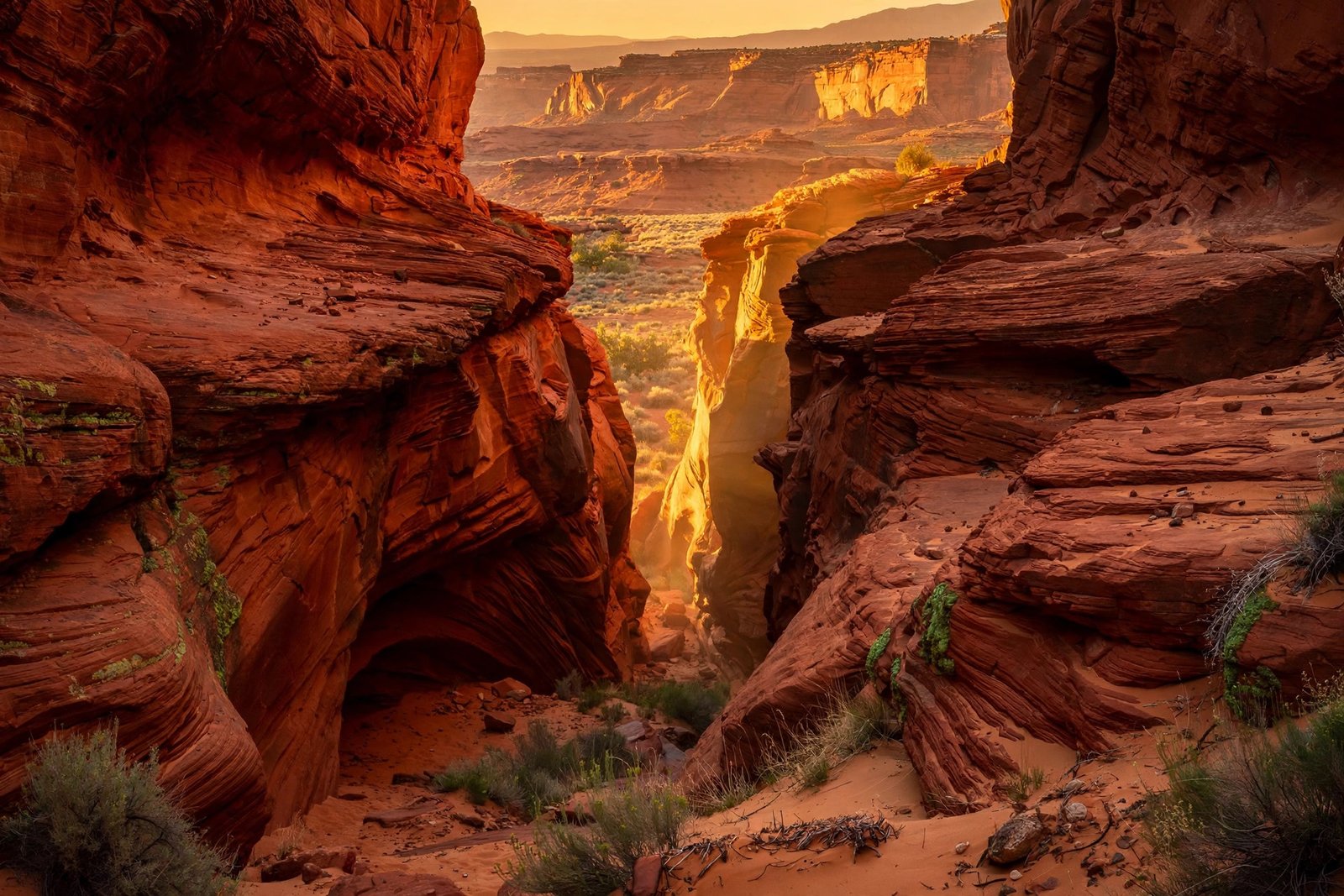
Utah is famous for its five national parks, but some of the state’s most memorable places are the quiet corners that never make the postcards. The hidden gems Utah travelers often miss are tucked into red rock canyons, desert valleys, and small mountain towns, far from the crowded overlooks. These are the slot canyons you can walk in peace, the hot springs hidden in a forest canyon, the sand dunes that glow pink at dawn, and the strange rock formations that look like another planet. If you love discovery, Utah rewards those willing to drive a little further and look a little closer.
This guide collects secret spots across Utah that sit beyond the national parks, from southern desert canyons to central Utah’s geothermal wonders. Each place is best enjoyed slowly and respectfully. Many are on public lands, some require permits or day-use fees, and desert conditions can change quickly, so always check current conditions before you go. Pack plenty of water, tell someone your plans, and leave every place better than you found it.
What Makes Hidden Gems Utah Worth Seeking Out
Utah’s landscape is one of the most varied in the United States. In a single trip you can walk through narrow sandstone canyons, soak in warm mineral water, climb pink sand dunes, and stand among ancient rock formations. The national parks protect the most famous scenery, but the lands around them hold countless smaller wonders that see far fewer visitors. That quiet is part of the appeal. In a hidden canyon, you can hear the wind, the birds, and your own footsteps instead of a crowd.
Many of these places are also closer to small towns with local cafes, motels, and outfitters, which makes a hidden-gems trip feel more personal. You might chat with a rancher in Kanab, a river guide in Moab, or a shopkeeper in Midway, and come away with tips no guidebook includes. Utah’s back roads reward curiosity, but they also demand respect. Stay on marked trails, never enter a slot canyon when rain is forecast, and follow Leave No Trace principles so these fragile places stay beautiful for the next traveler.
Before you set out, remember that desert heat, altitude, and remote roads are real factors. Carry more water than you think you need, download offline maps, and check road conditions, especially after rain. With a little preparation, Utah’s secret spots can become the highlight of your entire trip.
Kanarra Falls: A Waterfall Hike Near Kanarraville
Kanarra Falls, near the small town of Kanarraville in southern Utah, is one of the state’s most photogenic hidden hikes. The trail follows Kanarra Creek through a colorful canyon, and hikers wade through shallow water between towering sandstone walls. Along the way you pass small waterfalls and a wooden ladder that leads up beside a falls into the upper canyon. The combination of flowing water, red rock, and green vegetation makes this a favorite for photographers.
This is a managed hike with a permit system and a daily visitor limit, which helps keep the canyon peaceful. Book your permit in advance, wear shoes you can get wet, and use a walking stick for balance in the creek. The water is cold, even in summer, so plan accordingly. Because the canyon is narrow, flash floods are a serious risk, so never enter if rain is forecast anywhere upstream.
Kanarra Falls pairs well with a visit to nearby Kolob Canyons, the quieter northwestern section of Zion National Park, or with a night in the town of Kanab, a classic base for southern Utah exploration.
Little Wild Horse Canyon: A Family-Friendly Slot Canyon
Little Wild Horse Canyon, near Goblin Valley State Park in central Utah, is one of the best slot canyons for first-time visitors. The canyon walls twist and narrow into sculpted corridors of red and orange sandstone, with just enough challenge to feel adventurous without requiring technical gear. Most hikers walk up the canyon and return the same way, making it an easy out-and-back trip that suits families with older children.
The trailhead sits on a dirt road near Goblin Valley, so a high-clearance vehicle is helpful, though many passenger cars make the drive in dry conditions. Check road conditions before you go, and avoid the canyon entirely if storms are forecast, since slot canyons can flood quickly. Bring water, sun protection, and a headlamp, since some sections of the canyon are shaded and narrow.
After your hike, stop at Goblin Valley itself, where thousands of mushroom-shaped rock formations dot a desert valley. The park is small, easy to explore on foot, and especially fun for children who love climbing and imagining creatures in the rocks.
Calf Creek Falls: An Oasis in Grand Staircase-Escalante
Calf Creek Falls is a desert oasis in the Grand Staircase-Escalante National Monument, between the towns of Escalante and Boulder. The hike follows Calf Creek through a canyon lined with cottonwood trees, beaver ponds, and ancient rock art, ending at a tall waterfall that drops into a clear pool. On a hot desert day, there are few better rewards than wading into that cool water.
The trail is a there-and-back hike along a mostly flat sandy path, with little shade in places, so start early, carry plenty of water, and wear a hat. The falls area can be busy on weekends, but visiting on a weekday or in the shoulder seasons gives you a quieter experience. It is easy to see why this oasis ranks among the hidden gems Utah visitors remember most. The nearby town of Escalante offers cafes, motels, and a visitor center where you can learn about the monument’s geology and history.
Calf Creek is a reminder that Utah’s desert holds surprising pockets of green. The canyon’s hanging gardens, fed by seeps in the sandstone walls, support ferns and wildflowers that seem impossible in such dry country. Take photos, enjoy a picnic, and resist the urge to leave anything behind.
Coral Pink Sand Dunes: Utah’s Pink Desert
Coral Pink Sand Dunes State Park, near Kanab, protects a field of dunes tinted pink and orange by the surrounding Navajo sandstone. The dunes shift and ripple with the wind, creating a landscape that looks more like a painting than a park. Visitors can hike across the dunes, photograph the patterns in the sand, and enjoy wide views of the surrounding desert and mountains.
The park is smaller and quieter than Utah’s famous dune destinations elsewhere in the West, which makes it a wonderful stop on a southern Utah road trip. Morning and late afternoon offer the best light, when the dunes glow warm and long shadows shape the ridges. Off-highway vehicles are allowed in a designated area, so hikers should stick to marked trails and be aware of their surroundings.
For more desert inspiration, check out our guide to the best sand dunes in the USA, which covers other striking dune landscapes across the country.
Homestead Crater: Soak Inside a Volcanic Dome in Midway
Homestead Crater in Midway is one of Utah’s most unusual attractions. It is a geothermal hot spring inside a hollow, beehive-shaped rock dome that formed over thousands of years as mineral-rich water deposited limestone. Visitors enter through a tunnel and can swim, snorkel, or simply float in the warm mineral water beneath the dome’s opening, where a shaft of light falls into the crater.
The crater sits at the Homestead Resort, and visits are by reservation, with time slots for swimming and snorkeling. The water stays warm year-round, which makes this a wonderful stop in any season, especially in winter when snow covers the surrounding Wasatch Mountains. Midway itself is a charming Swiss-inspired town with restaurants, shops, and easy access to nearby state parks and ski areas.
Homestead Crater is a great example of how Utah hides surprises in plain sight. From the road, the dome looks like an ordinary hill, but inside it holds one of the most memorable swimming experiences in the American West.
Fifth Water Hot Springs: A Forest Canyon Soak
Fifth Water Hot Springs, also known as Diamond Fork Hot Springs, lie in Diamond Fork Canyon near Spanish Fork in central Utah. The hike follows a creek through a forested canyon to a series of natural pools where hot spring water mixes with the cold creek. The pools range in temperature, so visitors can move between warmer and cooler water until they find their perfect spot.
The trail is popular with locals, especially on weekends, so arrive early for a quieter soak. The pools are natural and undeveloped, which means conditions change with the seasons and water levels. Check recent trip reports, respect other soakers, and never use soap or shampoo in the springs. Pack out all trash, and wear sturdy shoes for the rocky trail.
These springs are a wonderful addition to a central Utah itinerary that might also include a drive through the mountains, a stop in a small farming town, or a visit to a nearby reservoir for fishing or paddling.
Goblin Valley and the Bentonite Hills: Another Planet
Goblin Valley State Park, in Emery County, is a valley filled with thousands of strange, mushroom-shaped rock formations called hoodoos. The formations were carved by wind and water from soft sandstone, and wandering among them feels like exploring another planet. Unlike many parks, Goblin Valley has no marked trails through the main valley, so visitors are free to roam and explore at their own pace.
Not far away, the Bentonite Hills near Caineville offer a landscape of striped, colorful badlands in shades of purple, gray, pink, and brown. The hills are remote and best reached by dirt road in dry conditions, so check your route and vehicle before heading out. Photographers love the area at sunrise and sunset, when the low light brings out the colors in the bentonite clay.
Together, Goblin Valley and the Bentonite Hills show off Utah’s wilder, stranger side. They are places to slow down, look closely, and appreciate a landscape shaped over millions of years. If you love national parks too, our guide to the most beautiful national parks in the USA is a great companion for planning the famous stops around these hidden ones.
Tips for Exploring Hidden Gems Utah Safely
Exploring hidden gems Utah offers is rewarding, but the state’s wild places deserve careful preparation. Slot canyons can flood in minutes during a storm, desert roads can turn impassable after rain, and summer heat can be dangerous for unprepared hikers. A few simple habits will keep your trip safe and enjoyable.
- Check weather forecasts and flash flood risk before entering any canyon, and never enter if storms are possible.
- Carry at least one gallon of water per person per day in the desert, plus snacks and sun protection.
- Download offline maps, since cell service is unreliable in many remote areas.
- Book permits in advance where required, and respect daily visitor limits.
- Stay on trails and durable surfaces to protect fragile desert soils and cryptobiotic crust.
- Tell someone your route and expected return time before remote hikes.
Respect for local communities matters too. Many of these places sit near small towns where residents value quiet roads and clean trails. Support local businesses, follow posted rules, and keep noise low. Utah’s hidden gems stay hidden partly because the people who love them take care of them, and every visitor is part of that stewardship.
Finally, remember that conditions change. A trail that was easy last year may be washed out this year, and a road that was passable in a sedan may need high clearance after a storm. Checking with local visitor centers and ranger stations is always worth the stop.
Start Planning Your Utah Hidden Gems Road Trip
Utah’s secret spots prove that the best adventures are not always the most famous ones. From the waterfall canyon at Kanarra Falls to the pink dunes near Kanab, from the warm waters of Homestead Crater to the alien landscape of Goblin Valley, these places offer wonder without the crowds. String a few of them together into a road trip, and you will see a side of Utah that many visitors never discover.
Ready to explore? Pick two or three spots from this guide, check permits and conditions, and build your itinerary around them. These hidden gems Utah travelers dream about are waiting just beyond the crowded overlooks. Share this guide with a friend who loves road trips, and start planning your own journey into Utah’s hidden corners. The desert is waiting, and the next secret canyon is closer than you think.