
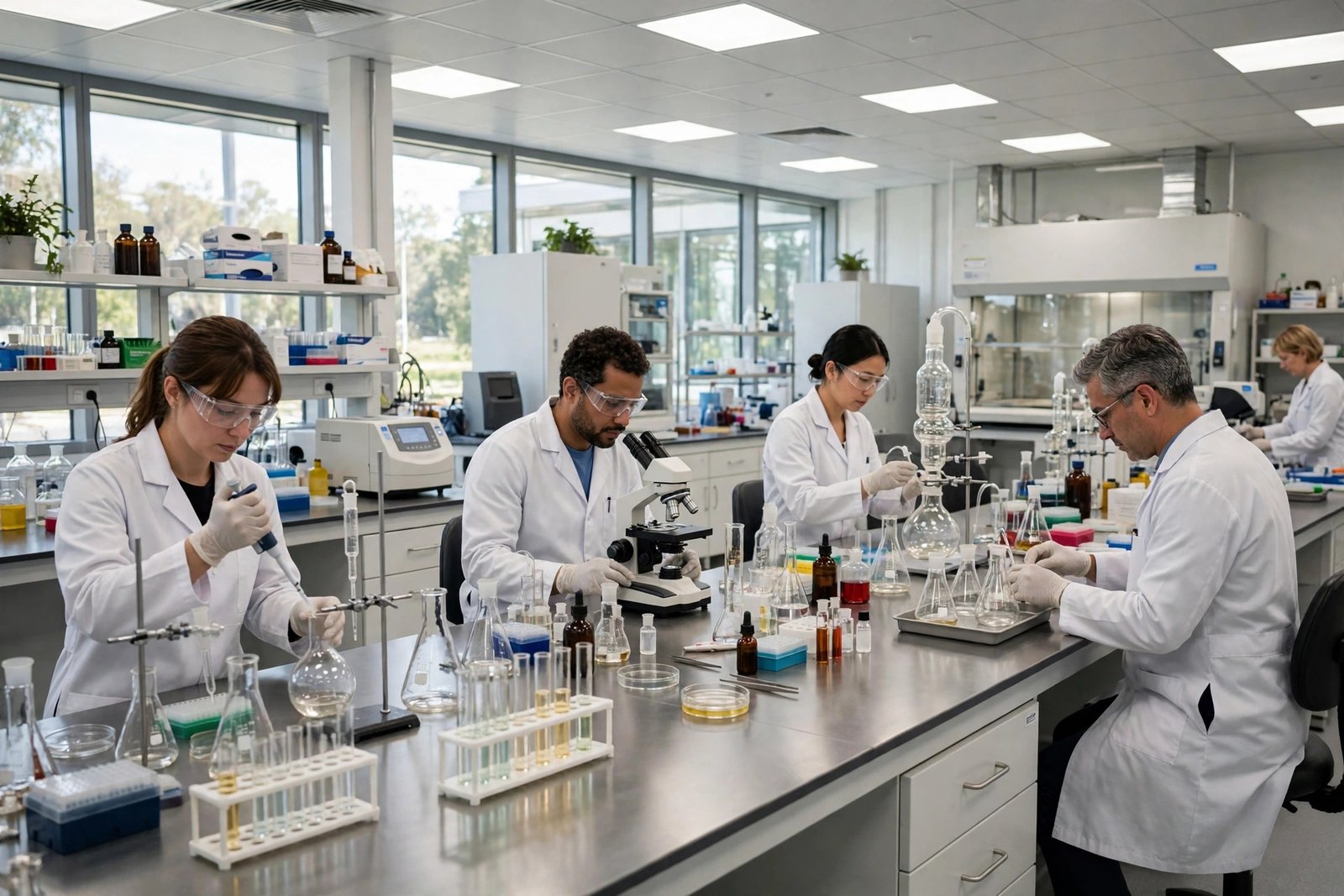
When a new medicine reaches a pharmacy shelf anywhere in the world, there is a good chance its story began in an American laboratory. From life-saving cancer therapies to everyday vaccines, US pharmaceutical power shapes how the world fights disease, and it does so on a scale no other country matches. The United States is home to some of the largest drug companies on the planet, the biggest public funder of medical research, and a regulatory system whose approvals are watched closely by health agencies everywhere. That combination of science, money, and scale is why American medicine reaches so far.
But American pharmaceutical strength is about more than big companies and big budgets. It is about the researchers who spend years chasing a single molecule, the patients who volunteer for clinical trials, and the hospitals and universities that turn basic science into real treatments. It is also about the factories, supply chains, and export networks that carry those treatments across borders. Understanding how this system works helps explain why the United States sits at the center of global medicine, and what that position means for patients in America and beyond.
How US Pharmaceutical Power Starts With Research
Every medicine begins as an idea, and in the United States those ideas get more support than anywhere else. The National Institutes of Health, the world’s largest public funder of biomedical research, supports thousands of studies at universities and research centers across the country. This public investment funds the basic science that private companies later build on, from understanding how cells work to mapping the genes behind disease.
American universities play a central role too. Institutions such as Harvard, Stanford, Johns Hopkins, and the Massachusetts Institute of Technology run research programs that regularly produce breakthroughs in biology, chemistry, and medicine. Many of the most important drugs of recent decades trace their roots to university laboratories, where scientists worked for years before a treatment ever reached a patient. This pipeline from campus lab to clinic is one of the strongest engines of US pharmaceutical power.
Private companies add another layer of investment. Large American drug makers spend billions of dollars each year on research and development, running laboratories, hiring scientists, and testing new compounds. They also partner with smaller biotechnology firms, many of which are based in hubs like Boston, San Francisco, and San Diego. These clusters bring scientists, investors, and entrepreneurs together, creating an environment where a promising discovery can quickly attract the funding it needs to move forward.
The result is a research ecosystem with remarkable depth. When a new health threat emerges, American labs can often respond quickly because the talent, the equipment, and the funding networks are already in place. That readiness was visible during the COVID-19 pandemic, when American companies developed effective vaccines in record time, building on years of earlier research into messenger RNA technology.
The Companies Behind US Pharmaceutical Power
Several of the world’s largest pharmaceutical companies are American, and their reach is genuinely global. Names like Pfizer, Johnson & Johnson, Merck, Eli Lilly, and Amgen are familiar in hospitals and pharmacies on every continent. These companies develop, manufacture, and distribute medicines for conditions ranging from diabetes and heart disease to cancer and autoimmune disorders.
Their size matters because developing a new drug is enormously expensive and risky. Most experimental compounds never make it through clinical trials, and those that do can take a decade or more to reach the market. Only companies with deep resources can absorb that many failures while continuing to fund new research. The scale of American firms lets them run many programs at once, increasing the odds that some will succeed.
Beyond the giants, the United States is also home to a vibrant biotechnology sector. Hundreds of smaller companies focus on specific diseases or new technologies, such as gene therapy, targeted cancer treatments, and personalized medicine. Some of these firms grow into major players themselves, while others are acquired by larger companies that can carry their discoveries through late-stage trials and global distribution. This constant churn of startups and scale-ups keeps the industry innovative.
- Pfizer — a global leader in vaccines and medicines for a wide range of conditions.
- Johnson & Johnson — known for both pharmaceuticals and consumer health products.
- Merck — a major force in cancer immunotherapy and vaccines.
- Eli Lilly — a leader in diabetes care and newer weight-management treatments.
- Amgen — a biotechnology pioneer focused on serious illnesses.
Together, these companies and their smaller peers employ hundreds of thousands of people in the United States, from research scientists to factory workers. Their work supports entire regional economies, particularly in states like New Jersey, Massachusetts, California, and North Carolina, where pharmaceutical and biotechnology jobs are concentrated.
How American Medicines Reach Patients Worldwide
Developing a medicine is only half the story. Getting it to patients in dozens of countries, each with its own health system and regulations, requires a vast distribution network. American pharmaceutical companies operate manufacturing plants and partnerships around the world, and they export medicines to nearly every country. When regulators in other nations consider approving a new drug, they often look closely at the data behind the US Food and Drug Administration’s own decision.
The FDA’s role is central to this global influence. Because the American market is so large, companies typically seek FDA approval early, and the agency’s rigorous review process is widely respected. An FDA approval often becomes a reference point for health agencies elsewhere, speeding up access in other countries. In this way, American regulatory standards help shape global medicine.
US pharmaceutical power also shows up in humanitarian and global health efforts. American-made vaccines and treatments have been central to campaigns against diseases such as polio, measles, and HIV. During health emergencies, the United States has donated or exported large quantities of vaccines and medicines to countries in need, using its manufacturing capacity as a tool of both public health and diplomacy.
Of course, access remains an ongoing challenge. New medicines can be expensive, and patients in lower-income countries do not always get them quickly. Debates about pricing, patents, and access are a constant part of the conversation around American medicine, and they reflect the tension between rewarding innovation and making treatments affordable for everyone who needs them.
Why US Pharmaceutical Power Matters for Everyday Americans
For Americans, the benefits of a strong domestic pharmaceutical industry are personal. Patients in the United States are often among the first in the world to gain access to new treatments, because clinical trials frequently run in American hospitals and new drugs launch in the American market first. For someone facing a serious illness, early access to a breakthrough therapy can make a real difference.
The industry also contributes to the broader economy. Pharmaceutical and biotechnology jobs tend to pay well, and the sector supports related industries, from laboratory equipment makers to logistics companies that ship medicines. Research spending by drug companies and the NIH flows into communities across the country, funding jobs and infrastructure far beyond the lab itself.
There is also a national security dimension. The ability to develop and manufacture essential medicines at home reduces dependence on other countries during crises. The pandemic made this point clearly: countries that could produce vaccines domestically were better positioned to protect their populations. Maintaining strong domestic manufacturing capacity for medicines is now widely seen as a strategic priority, much like the country’s strength in other advanced industries. For a broader look at how American strength spans sectors, see our coverage of US tech giants and global power and facts about the US Space Force.
Challenges Facing American Pharma
None of this means the American pharmaceutical system is without problems. Prescription drug prices in the United States are among the highest in the world, and many Americans struggle to afford the medicines they need. Policymakers have debated price controls, negotiation programs, and patent reform for years, and these debates will continue to shape the industry’s future.
Competition is another pressure. Countries such as China, India, and members of the European Union are investing heavily in their own pharmaceutical and biotechnology sectors. India is already a major producer of generic medicines, and China has set ambitious goals for drug innovation. American leadership is real, but it is not guaranteed, and it depends on continued investment in research, education, and manufacturing.
Supply chains are a third challenge. Many of the raw ingredients used in medicines are produced overseas, which creates vulnerabilities during trade disruptions or geopolitical crises. Policymakers and companies alike are now working to bring more of this production back to the United States, a process that will take years but is seen as essential for resilience.
Finally, public trust matters. Debates over vaccine safety, drug marketing, and corporate profits can affect how willing people are to take new medicines. Companies and regulators must keep earning that trust through transparency, rigorous science, and honest communication about both the benefits and the risks of treatments.
The Future of American Medicine
Looking ahead, several trends are likely to define the next chapter of American medicine. Personalized treatments, tailored to a patient’s genetic profile, are becoming more common, particularly in cancer care. Gene therapies that address the root cause of inherited diseases are moving from experimental to approved treatments. Artificial intelligence is speeding up drug discovery by helping researchers screen millions of compounds far faster than before.
These advances will require continued investment and smart policy. If the United States keeps funding basic research, training scientists, and maintaining a regulatory system that balances speed with safety, its pharmaceutical leadership should endure. The stakes are high, not only for American patients and the American economy, but for patients everywhere who depend on the medicines this system produces.
US pharmaceutical power is ultimately a story about what happens when science, investment, and ambition come together at scale. It has delivered treatments that extend lives, ease suffering, and protect entire populations from disease. Keeping that engine strong, while making its benefits more affordable and accessible, is one of the most important health challenges of the years ahead.
What do you think? Should the United States do more to make its medicines affordable around the world, or is protecting innovation the top priority? Share your thoughts in the comments, and explore more stories about American strength on ENG Post.