
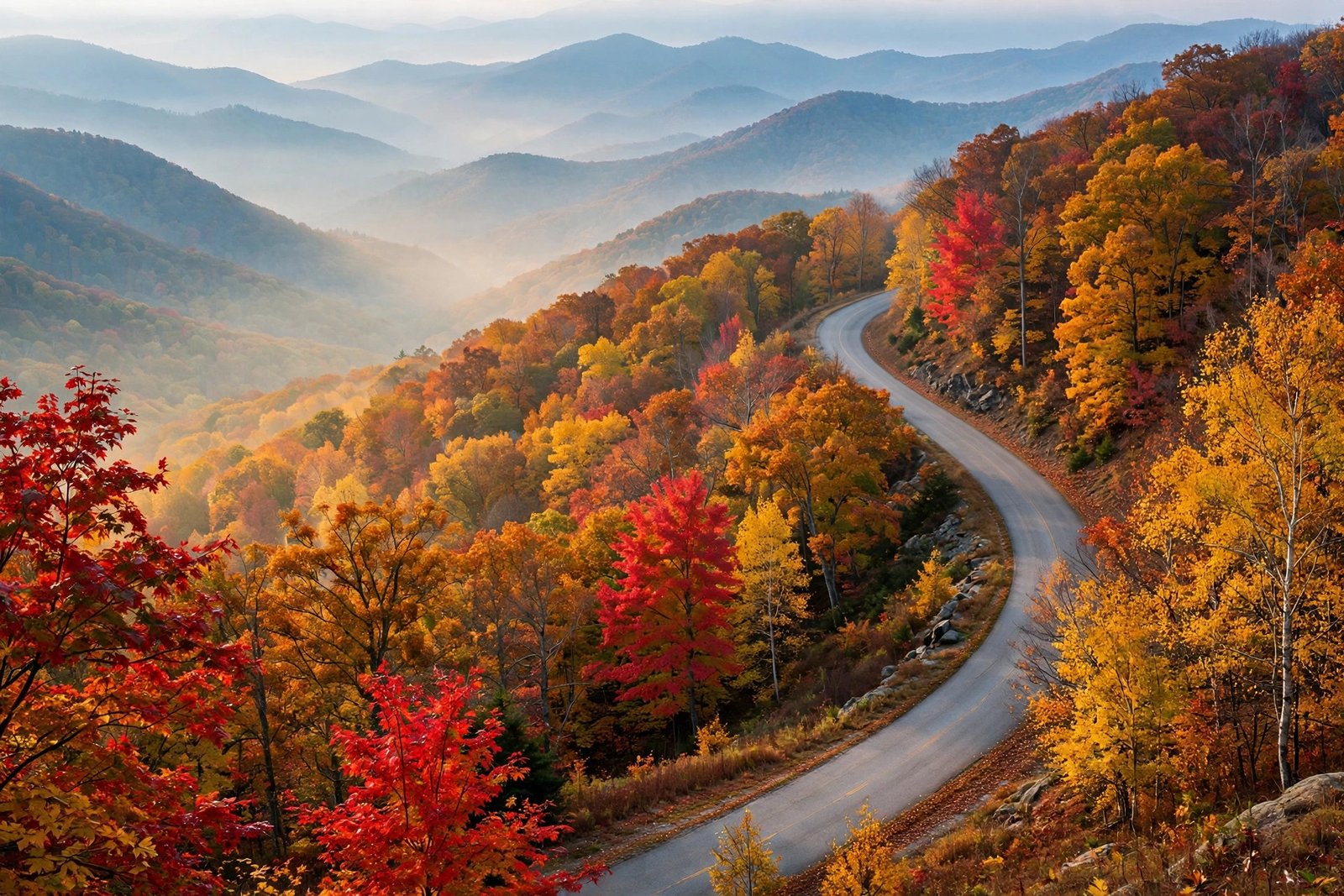
There is a moment every fall when the mountains seem to catch fire in slow motion. One ridge glows gold, the next burns red, and a thin layer of mist settles in the valleys below. A Blue Ridge autumn road trip is the best way to see that show unfold, because the color does not arrive everywhere at once. It moves down the slopes week by week, so a slow drive with plenty of stops lets you follow it from the high peaks to the lower valleys. This guide will help you plan a trip that is scenic, relaxed, and full of small towns, overlooks, hikes, and good food along the way.
The Blue Ridge Mountains run through Virginia and North Carolina, and the Blue Ridge Parkway ties the region together. The parkway connects Shenandoah National Park in Virginia with Great Smoky Mountains National Park on the North Carolina and Tennessee border. You do not have to drive the whole road to enjoy it. Many travelers pick one stretch, add a few mountain towns, and leave time for short walks, farm stands, and long lunches. That slower pace is the secret to a great fall trip.
Planning Your Blue Ridge Autumn Road Trip
Start by choosing how many days you have and which direction you want to travel. A long weekend works well for one section of the parkway, while a full week lets you drive from the Shenandoah Valley to Asheville and beyond. If you are flying in, Charlottesville, Roanoke, and Asheville all make good starting points, and each one puts you close to the mountains without a long drive on arrival day.
Book lodging early if you can, especially for weekends in October. Small inns, cabins, and bed-and-breakfasts near the parkway fill up fast in fall, and the most popular overlooks and trails are busiest in the middle of the day. An early start gives you quieter viewpoints, softer light for photos, and an easier time finding parking at trailheads. Keep your daily driving distance modest. The parkway speed limit is low, and the road is meant for looking, not rushing.
Pack layers, because mountain weather changes quickly in autumn. Mornings can be cool and foggy, afternoons can feel warm in the sun, and higher elevations are often several degrees cooler than the towns below. Bring a light jacket, comfortable walking shoes, water, snacks, and a paper map or downloaded map in case cell service drops in the mountains. Check road conditions before you leave, since fog, construction, or seasonal closures can change your route.
Best Stops on a Blue Ridge Autumn Road Trip
Shenandoah National Park is a wonderful place to begin. Skyline Drive runs along the ridge through the park, with dozens of overlooks facing the Shenandoah Valley and the Blue Ridge beyond. Short trails lead to waterfalls and viewpoints, and the park is known for its fall color, wildlife, and quiet forest walks. If you enjoy a longer hike, plan one for the morning and save the afternoon for a slow drive and a stop in a nearby town.
Farther south, the parkway passes through Roanoke and the Virginia highlands, where farms, rolling hills, and small communities sit beside the road. Mabry Mill is one of the most photographed stops on the parkway, and it is easy to see why. The old mill, the stream, and the surrounding trees make a classic mountain scene, especially in fall. Nearby trails and picnic areas invite you to stop for a while rather than just pulling over for a photo.
In North Carolina, the parkway climbs toward Grandfather Mountain, Linville Falls, and Craggy Gardens. Linville Falls is a rewarding short hike with views of a deep gorge, while Craggy Gardens offers open views and rhododendron-covered slopes that turn colorful in autumn. Mount Mitchell, the highest peak in the eastern United States, is another highlight, with a viewing platform that looks out over layers of blue ridges on a clear day.
Asheville makes a natural base for the southern part of the route. The city is known for its arts scene, historic downtown, and the Biltmore Estate, a grand historic house and gardens that is worth a half day on its own. From Asheville, you can take day trips back to the parkway, explore nearby waterfalls in the Pisgah National Forest, or simply enjoy the local food scene after a day in the mountains.
- Start early for quiet overlooks and easy parking at popular trailheads.
- Pick one or two hikes per day and leave room for unplanned stops.
- Carry water, snacks, and layers for changing mountain weather.
- Stop in small towns for local food, crafts, and farm stands.
- Save sunset for an open overlook, not a narrow stretch of road.
When to See Fall Color in the Blue Ridge
Fall color usually starts at the highest elevations first and moves downhill as the season goes on. That means early fall can be best for the high peaks, while later in the season the lower valleys and foothills take their turn. The exact timing shifts from year to year with temperature and rainfall, so it is wise to check local fall color reports close to your trip rather than fixing your plans around a single date.
Weekdays are generally calmer than weekends, and late afternoon light makes the ridges look especially rich. Fog is common in the morning, and while it can hide the views for a while, it often burns off to reveal clear skies. Do not be discouraged by a cloudy start. Some of the most beautiful mountain mornings begin in mist and end in bright sunshine.
If your dates are flexible, build your trip around a region rather than a single famous overlook. A valley town, a state park, and a quiet stretch of the parkway can be just as memorable as the busiest viewpoints, and they often give you more space to enjoy the season. Fall is also harvest time, so look for apple orchards, pumpkin patches, and farmers markets along your route.
Where to Stay and What to Eat
Mountain towns along the route each have their own character. Charlottesville offers history and a walkable downtown near the start of the Virginia section. Roanoke has a lively downtown and easy access to the parkway and nearby trails. Blowing Rock and Boone are charming bases in the North Carolina high country, with shops, restaurants, and mountain views. Asheville, farther south, has the widest choice of hotels, restaurants, and cultural attractions.
Food is part of the fun on a mountain road trip. Look for diners and cafes that serve breakfast all morning, barbecue spots, farm-to-table restaurants, and bakeries in small towns. Apple cider, fresh-baked goods, and seasonal dishes made with local produce are fall staples in the region. If you are staying in a cabin, pick up supplies at a local market and enjoy at least one quiet evening meal with a mountain view.
For a different kind of night sky, plan an evening away from town lights. The Blue Ridge region has dark rural stretches where stars stand out clearly on a clear autumn night. For more ideas on dark-sky destinations across the country, see our guide to the best stargazing spots in the USA. If this trip sparks a love of national parks, our roundup of the most beautiful national parks in the USA is a good place to plan your next adventure.
Driving Tips for the Parkway and Mountain Roads
The Blue Ridge Parkway is a scenic road, not a highway, and it rewards a patient driver. Speed limits are low, curves are frequent, and overlooks appear often, so plan for a slower pace than a mapping app may suggest. Pull fully off the road at overlooks, watch for cyclists and hikers near trailheads, and avoid stopping in travel lanes for photos.
Fuel up before long stretches of the parkway, since gas stations are not located on the road itself. Tunnels are part of the route in some sections, so turn on your headlights and keep a safe distance from other vehicles. If you are driving a larger vehicle or towing, check route guidance in advance, since some sections and overlooks are better suited to smaller vehicles.
Leave no trace at every stop. Stay on marked trails, carry out your trash, and give wildlife plenty of space. Fall is an active season for animals preparing for winter, and a respectful distance keeps both visitors and wildlife safe. A little care helps keep these mountain landscapes beautiful for the next traveler.
Conclusion: Take the Slow Road Through Fall
A Blue Ridge autumn road trip is not about covering the most miles. It is about waking up in a mountain town, watching fog lift off the ridges, stopping when the light looks perfect, and ending the day with good food and a sky full of stars. Choose one stretch of the parkway, add a few towns you have never visited, and leave room in your plan for the stops you cannot predict. Those unplanned moments often become the stories you tell long after the trip is over.
Start planning your own Blue Ridge autumn road trip today. Pick your dates, book a cozy place to stay, and map a route that leaves time for overlooks, short hikes, and long lunches. The mountains will do the rest, one colorful ridge at a time. For more quiet corners of the country to explore after this trip, browse our guide to hidden gems in Colorado and start dreaming about your next scenic drive.