
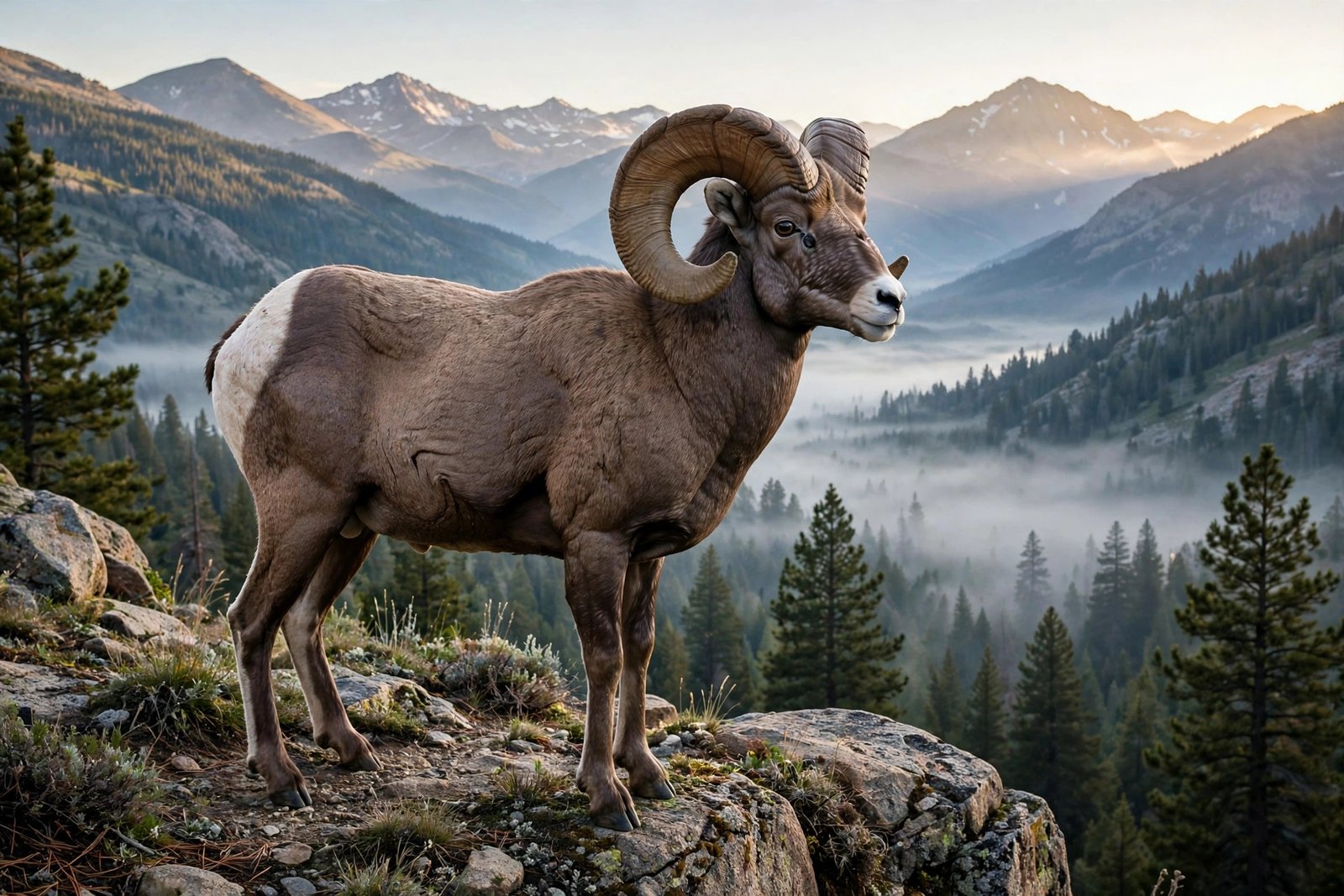
There is a moment on a mountain trail that changes how you see the American West forever: you round a bend, and there they are — a herd of bighorn sheep standing on a cliff face that looks straight out of a Western film. Massive curled horns, sure hooves on impossible rock, and eyes that have watched you long before you saw them. If you have ever wondered where to see bighorn sheep in the wild, the good news is that these icons of the high country are easier to find than you might think — if you know where, when, and how to look.
America’s bighorn sheep are one of the continent’s great wildlife comeback stories. From the Rocky Mountains to the deserts of the Southwest, wild herds now roam a network of national parks, wilderness areas, and mountain ranges that anyone can visit. This guide covers the best places to see bighorn sheep in the USA — Rocky Mountain, desert, and everything in between — plus the seasons, safety rules, and viewing tips that turn a trip into a sighting.
Understanding the Bighorn: Two Sheep, Many Mountains
Before we talk about where to see bighorn sheep, it helps to know there are two main types in the United States. The Rocky Mountain bighorn (Ovis canadensis canadensis) lives in the high, rocky ranges of the northern and central Rockies. The desert bighorn (Ovis canadensis nelsoni and related subspecies) roams the arid mountains of the Southwest, from Nevada and Utah to Arizona and California.
Both share the same signature look: stocky bodies, gray-brown coats that blend into rock, and — in mature rams — the enormous curled horns that can weigh more than the rest of the skull combined. Ewes have smaller, straighter horns. Both climb with a confidence that looks like defiance of gravity, picking their way across cliff faces where a mountain goat would think twice.
The key difference for visitors is habitat. Rocky Mountain bighorns favor alpine meadows, high passes, and craggy slopes above treeline in summer, moving to lower, wind-swept slopes in winter. Desert bighorns live among the red rock canyons, desert mountain ranges, and river corridors of the Southwest. Knowing which sheep lives where is the first step to a successful sighting.
Where to See Bighorn Sheep in the National Parks: The Rockies
The northern Rockies are the heartland of the Rocky Mountain bighorn, and several national parks offer outstanding, road-accessible viewing.
Rocky Mountain National Park, Colorado. This is arguably the single best answer to where to see bighorn sheep in the USA. The park holds a healthy, visible herd, and rams are regularly spotted along Trail Ridge Road, near the Alpine Visitor Center, and in the Horseshoe Park and Sheep Lakes areas during summer. The lakes get their name from the sheep that come down to drink. Arrive early — bighorns are most active in the cooler morning hours.
Yellowstone National Park, Wyoming/Montana. Yellowstone’s bighorns favor the park’s northern range: look along the road between Tower Junction and the northeast entrance, around Mount Washburn, and near the Lamar Valley’s surrounding ridges. Winter is prime time here, when sheep descend to lower elevations and can often be seen from park roads.
Badlands National Park, South Dakota. A surprise entry for many visitors — the Badlands’ rugged formations are excellent bighorn country. Scan the cliff faces and buttes along the Badlands Loop Road, especially in the early morning. The park’s herd is reintroduced, part of the species’ modern comeback, and sightings are common for patient watchers.
Beyond the parks, strong options include the San Juan Mountains and Mount Evans (now Mount Blue Sky) corridor in Colorado, the Bighorn Mountains of Wyoming, and Montana’s Rocky Mountain Front. State wildlife areas and national forests around these ranges often hold herds that are less visited than the marquee parks. If you are building a wildlife-watching trip, pair this with our guides on where to see moose and where to see elk for a full Rocky Mountain safari.
Where to See Bighorn Sheep in the Desert: Big Bend, Zion, and the Southwest
Desert bighorns live in a different world — one of red rock, blazing sun, and canyon shadows — and seeing them requires different tactics.
Big Bend National Park, Texas. Desert bighorns were reintroduced to Big Bend, and the park’s rugged Chisos Mountains and desert ranges now hold a growing herd. Sightings take patience: scan ridgelines at dawn and dusk from pullouts along the Ross Maxwell Scenic Drive and the road into the Chisos Basin.
Zion National Park, Utah. Zion’s desert bighorns are one of the park’s best-kept wildlife secrets. Watch the slickrock slopes above the Zion–Mount Carmel Highway, especially near the east-side tunnels and Checkerboard Mesa. Early morning is best, and a pair of binoculars is nearly essential — the sheep blend perfectly into the banded cliffs.
Death Valley and the Mojave, California/Nevada. The desert ranges around Death Valley National Park hold desert bighorns, though sightings here demand serious effort and desert-travel preparation. The Valley of Fire area in Nevada and the River Mountains near Lake Mead are more accessible alternatives with established herds.
Grand Canyon, Arizona. Desert bighorns inhabit the canyon’s inner reaches and are occasionally spotted from rim viewpoints with good optics. The North Rim’s quieter trails offer some of the better odds in summer.
Desert bighorn viewing is an exercise in patience and glass: bring quality binoculars or a spotting scope, scan slowly across distant slopes, and look for movement before shape — a flicking ear or a shifting leg gives away a sheep long before the horns do.
When to See Bighorn Sheep: Seasons That Matter
Timing is everything. Here is how the calendar breaks down:
- Fall rut (roughly October–December): The most dramatic season. Rams clash head-on in thunderous head-butting contests to win breeding rights. In the Rockies, this is when sheep are most visible and most active — and when places like Rocky Mountain National Park draw wildlife watchers specifically for the rut. Listen for the crack of horns echoing off canyon walls.
- Winter: In the northern Rockies and Yellowstone, bighorns move to lower, wind-swept slopes where snow is thin and forage is exposed. This concentrates herds near roads and makes winter one of the best seasons for reliable sightings — bundle up and scan the ridges.
- Spring: Lambing season. Ewes retreat to steep, protected nursery slopes to give birth. Watch from a distance — mothers with lambs are especially sensitive to disturbance, and this is the season to be most conservative with your approach.
- Summer: High-country season. Rams and ewes graze alpine meadows in the Rockies; in the desert, sheep are most active at dawn and dusk and bed down in shade during the heat. In summer, go early or go late — midday belongs to the shade.
Viewing Tips: How to Watch Bighorn Sheep Safely and Responsibly
Seeing bighorn sheep is a privilege, and the sheep’s welfare comes first. Follow these rules every time:
- Keep your distance. The National Park Service advises staying at least 100 yards (about 91 meters) from large wildlife including bighorn sheep. During the rut, rams are focused and unpredictable — give them extra room.
- Never feed wildlife. Human food harms bighorns and teaches them to approach roads and people, which ends badly for the sheep.
- Use binoculars or a spotting scope. The best views are magnified ones. Quality optics let you watch natural behavior from a respectful distance.
- Stay on trails and in your vehicle at roadside stops. Bighorns are used to cars passing; they are not used to people walking toward them. If sheep are near the road, watch from inside your vehicle.
- Keep dogs leashed or leave them home. Dogs stress wild sheep and can trigger dangerous chases on cliff terrain.
- Go early, go quiet. Dawn is prime time. Move slowly, keep voices low, and let the mountain come to you.
- Respect closures. Parks sometimes close lambing areas or rut-viewing zones. Those closures exist for the sheep — honor them.
One more tip from experienced watchers: learn to read the rock. Bighorns are camouflage experts. Scan cliff bands systematically, left to right, looking for horizontal lines (backs) against vertical rock, or the pale rump patch that flashes when a sheep turns. Once your eye learns the pattern, you will start spotting sheep you walked past for years.
A Conservation Comeback Worth Celebrating
Here is the part of the story that makes every sighting sweeter: bighorn sheep were once in deep trouble. Unregulated hunting in the 1800s, combined with diseases carried by domestic livestock and competition for range, drove herds to a fraction of their historic numbers across the West. By the early 1900s, the species had vanished from many of its former ranges — including places like the Badlands and Big Bend, where you can see them today.
The comeback came from decades of work: regulated hunting, habitat protection, disease research, and ambitious reintroduction programs that trucked sheep back into empty mountains. The herds at Badlands, Big Bend, and Zion exist because wildlife agencies and conservation groups put them there — a deliberate, generations-long act of restoration. We will not quote population figures here, because they shift constantly and vary by herd; what matters is the trajectory. Where to see bighorn sheep today is, in many places, a map of where people decided the sheep belonged back.
That history adds weight to the viewing rules. Every herd you see is the product of sustained effort. Watching from a respectful distance is a small way to honor it. For more on America’s wildlife recovery stories, see our guides to where to see bison and where to see wolves — two more species that came back from the brink.
Plan Your Bighorn Sheep Trip
So — where to see bighorn sheep? Start with the headline parks: Rocky Mountain National Park for the classic Rocky Mountain bighorn experience, Yellowstone and Badlands for northern-range herds, and Zion and Big Bend for the desert bighorn challenge. Time your trip for the fall rut or a winter roadside scan, pack binoculars, keep your distance, and let the sheep do what they have done for millennia: own the cliff.
There is no feeling quite like locking eyes with a ram across a canyon — an animal that belongs to the vertical world, watching you from a place you could never reach. Go find that moment. The mountains are waiting.
Keep exploring America’s wild side: check out our full wildlife series — where to see moose, where to see elk, and where to see grizzly bears — all on ENG Post.