
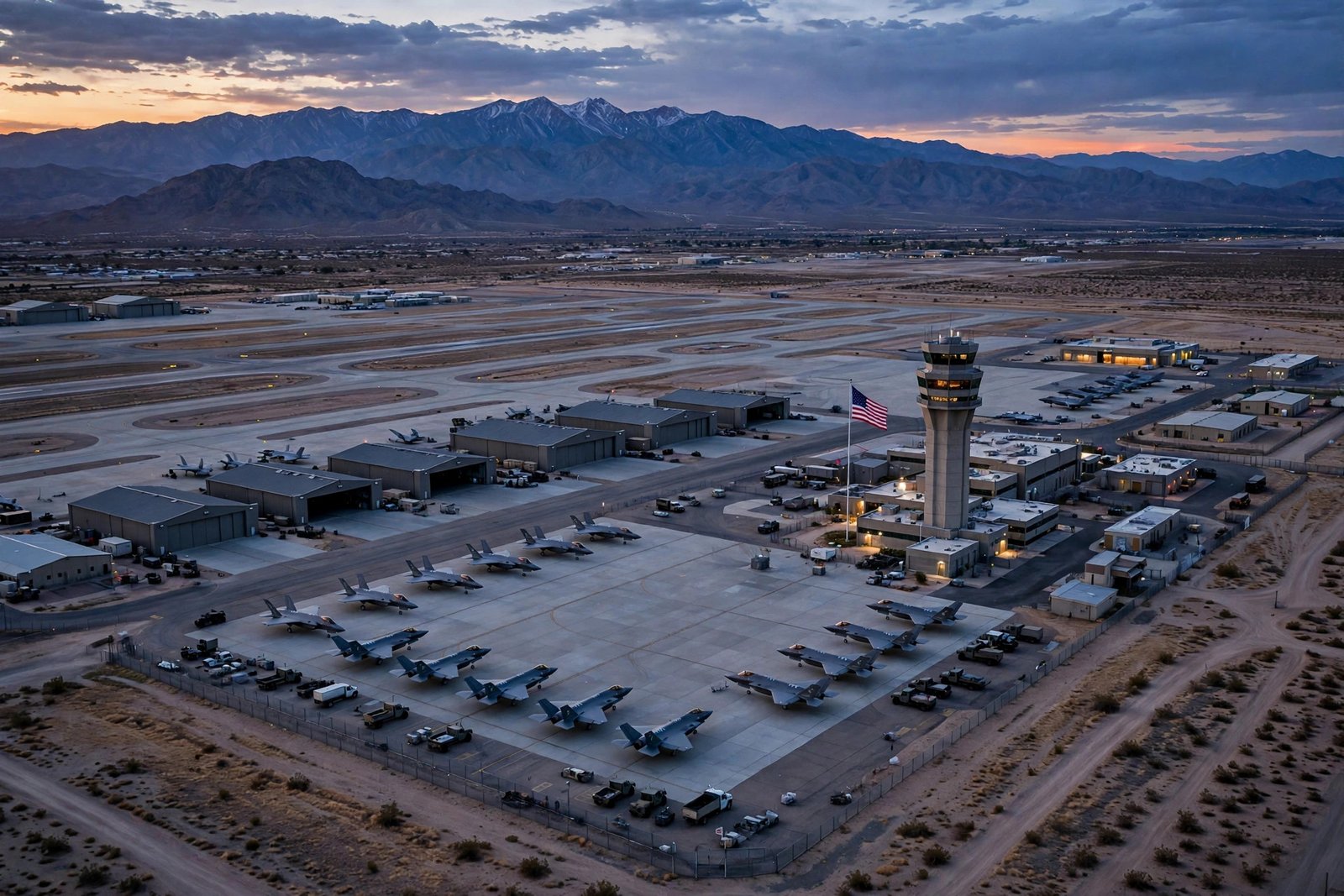
No other country on earth maintains a military footprint like the United States. From airfields in Germany to naval stations in the Pacific, US military bases around the world form a network that spans every continent and ocean. It is one of the most visible signs of American power — and one of the most debated.
How did this global network come to exist? Where are the biggest installations? What does it cost, and who decides where troops go next? This guide answers those questions using widely reported, verifiable information — and keeps the contested details clearly labeled as such.
How Many US Military Bases Around the World Are There?
The short answer: hundreds, spread across dozens of countries. The exact figure depends on how you count.
The Pentagon’s own Base Structure Report — the official annual inventory of Department of Defense installations — has long listed roughly 750 overseas sites in some 70 to 80 countries. That figure is the one most commonly cited in media reporting, and it counts everything from sprawling air bases to small cooperative security locations and liaison offices.
For context, the United States also maintains several hundred installations at home. Add them together, and the commonly reported global total approaches 1,000 sites. Exact counts shift year to year as bases open, close, or get reclassified, which is why you will see different numbers in different articles. When a precise figure matters, the DoD’s published Base Structure Report is the authoritative source.
What is not disputed is the scale: the US military footprint overseas is far larger than that of any other nation, and US military bases around the world exist in every major region — Europe, the Middle East, Africa, and the Indo-Pacific.
Why the United States Keeps Bases Around the World
The global network did not appear by accident. It grew out of World War II and the Cold War, when the United States stationed forces in allied countries across Europe and Asia to deter the Soviet Union. When the Cold War ended, most of the network stayed — repurposed for new missions.
Today, the reasons the US maintains US military bases around the world generally fall into a few broad categories:
- Deterrence: Forward-deployed forces signal that the US can respond quickly to aggression, which supporters say discourages conflicts before they start.
- Rapid response: Bases near likely flashpoints — such as South Korea or the Persian Gulf — let the US move troops, aircraft, and ships in days rather than weeks.
- Logistics and staging: Refueling stations, repair depots, and prepositioned equipment make long-range operations possible.
- Training with allies: Permanent bases host joint exercises with partner militaries, from NATO drills in Europe to combined training on the Korean Peninsula.
- Intelligence and surveillance: Certain sites host radar, signals intelligence, and early-warning systems.
Critics argue the network is too large and too expensive, while supporters call it the backbone of American security. The debate is decades old — and the footprint keeps evolving.
Major US Military Bases Around the World, Region by Region
Here is a tour of the most significant and widely reported US installations by region.
Europe. Germany hosts the largest US presence on the continent, anchored by Ramstein Air Base — the headquarters of US Air Forces in Europe and a major hub for medical evacuations and cargo flights. Spangdahlem Air Base and the sprawling Grafenwoehr training area are also key. Italy hosts Aviano Air Base and Naval Air Station Sigonella, while the United Kingdom hosts RAF Lakenheath and RAF Mildenhall. These installations underpin NATO’s deterrent posture on the continent.
Northeast Asia. Japan hosts the largest US military presence in Asia, centered on bases such as Yokota Air Base near Tokyo, Kadena Air Base on Okinawa, and the Marine Corps facilities on Okinawa. South Korea hosts Camp Humphreys — widely described as the largest overseas US military installation — along with Osan and Kunsan air bases. These bases sit on the front line of the US alliance system in the Pacific.
Middle East. Al Udeid Air Base in Qatar is one of the most important US airfields in the region, hosting the forward headquarters of US Central Command’s air component. Naval Support Activity Bahrain is home to the US Fifth Fleet. Bases in Kuwait, the United Arab Emirates, and elsewhere support operations across the region.
Africa. Camp Lemonnier in Djibouti is the only permanent US military base in Africa, serving as a hub for counterterrorism and security cooperation missions across the Horn of Africa.
Latin America and the Caribbean. The US Naval Station at Guantanamo Bay, Cuba — held under a lease dating to the early 1900s — remains one of the most politically contested sites in the network. Bases in Honduras and Colombia support counter-narcotics and partnership missions.
The Indian Ocean. Diego Garcia, a coral atoll in the British Indian Ocean Territory, hosts a critical joint US-UK facility with a long runway and a naval anchorage that supports operations from the Middle East to Southeast Asia.
The Largest and Most Important Overseas Bases
A few installations stand out for their size or strategic weight:
- Camp Humphreys, South Korea: After a massive consolidation of US forces south of Seoul, this garrison is widely described as the largest overseas US Army base, home to thousands of service members, families, and civilian workers.
- Ramstein Air Base, Germany: The busiest US air base in Europe and a central node for operations stretching into Africa and the Middle East.
- Yokota Air Base, Japan: Headquarters of US Forces Japan and a critical airlift hub.
- Naval Support Activity Bahrain: Home port of the Fifth Fleet, overseeing naval operations across the Middle East.
- Guantanamo Bay, Cuba: Small in troop numbers but outsized in political significance.
To learn how sea power fits the same picture, read our look at the US submarine fleet’s silent power and the broader facts behind US military power.
What US Military Bases Around the World Cost
Running a global network is expensive, and the numbers invite argument. The Pentagon’s budget is public, but the specific cost of the overseas footprint is not reported as a single tidy line item — estimates vary depending on what gets included.
What is verifiable: the overall US defense budget is by far the largest in the world, and independent analysts commonly estimate that the overseas basing network accounts for tens of billions of dollars per year in direct costs, including construction, operations, and the movement of personnel and families.
Host nations also contribute. Japan and South Korea, for example, provide substantial financial support for US forces stationed on their soil — a fact both countries’ governments publicly report. Supporters of the footprint argue these burden-sharing arrangements, plus the deterrence value of the bases, make the network a good deal. Skeptics counter that the true costs — including deployments the bases enable — are higher than the headline figures suggest.
The Legal Framework: SOFAs and Treaties
American troops do not simply show up in another country. Their presence is governed by international agreements — most importantly Status of Forces Agreements, or SOFAs.
A SOFA defines the legal status of US personnel abroad: who has jurisdiction when a service member commits a crime, how taxes and customs work, and what rules apply to base operations. The United States has SOFAs or similar arrangements with well over 100 countries, and these documents are frequently the subject of diplomatic negotiation — and occasional public controversy.
Mutual defense treaties provide the strategic foundation. The NATO treaty underpins the European footprint; bilateral treaties with Japan and South Korea underpin the Pacific presence. In the Middle East, a patchwork of defense cooperation agreements with Gulf states serves a similar role.
The Debate About the Global Footprint
Few topics in defense policy divide analysts more than the question of how big the overseas network should be.
Supporters argue that US military bases around the world keep shipping lanes open, reassure allies, deter adversaries, and let Washington respond to crises quickly. They point to the deterrent effect in Europe and Northeast Asia, where forward-deployed forces have stood watch for more than 70 years.
Critics argue the network encourages overreach, costs too much, and creates friction with local populations — from noise complaints near air bases to disputes over environmental cleanup when installations close. High-profile incidents involving service members abroad have periodically strained alliances and fueled calls to draw down.
A middle position holds that the footprint should be modernized rather than simply shrunk: fewer large permanent garrisons, more rotational deployments, and greater investment in the Pacific as strategic priorities shift. This debate plays out in every defense budget cycle in Washington.
The Future of US Military Bases Around the World
What happens next? Several trends are reshaping the network:
- A pivot toward the Pacific: Successive administrations have emphasized the Indo-Pacific, investing in bases in places like Guam, Australia, and the Philippines alongside the traditional anchors in Japan and South Korea.
- More rotational forces: Instead of permanently stationing whole units abroad, the US increasingly rotates troops through partner countries — a model used in Eastern Europe since the mid-2010s.
- Smaller, more dispersed sites: Military planners talk about spreading forces across more locations to make them harder to target, a concept sometimes called distributed operations.
- Base politics at home and abroad: Every proposed opening or closure becomes a local political event, in host nations and in American communities that depend on installations for jobs.
For the newest frontier of American military power, see our report on US Space Force facts.
Conclusion
US military bases around the world remain the most far-reaching military network in history — hundreds of installations across dozens of countries, built over eight decades of alliances, wars, and strategic choices. Whether you see the network as a pillar of global stability or a relic that needs trimming, understanding where it is and why it exists is the first step to judging where it should go.
Want more explainers on American power? Explore our Power of USA section for deep dives on the fleet, the arsenal, and the institutions behind the world’s most capable military — and share this article with anyone who wants the facts, not the hype.