
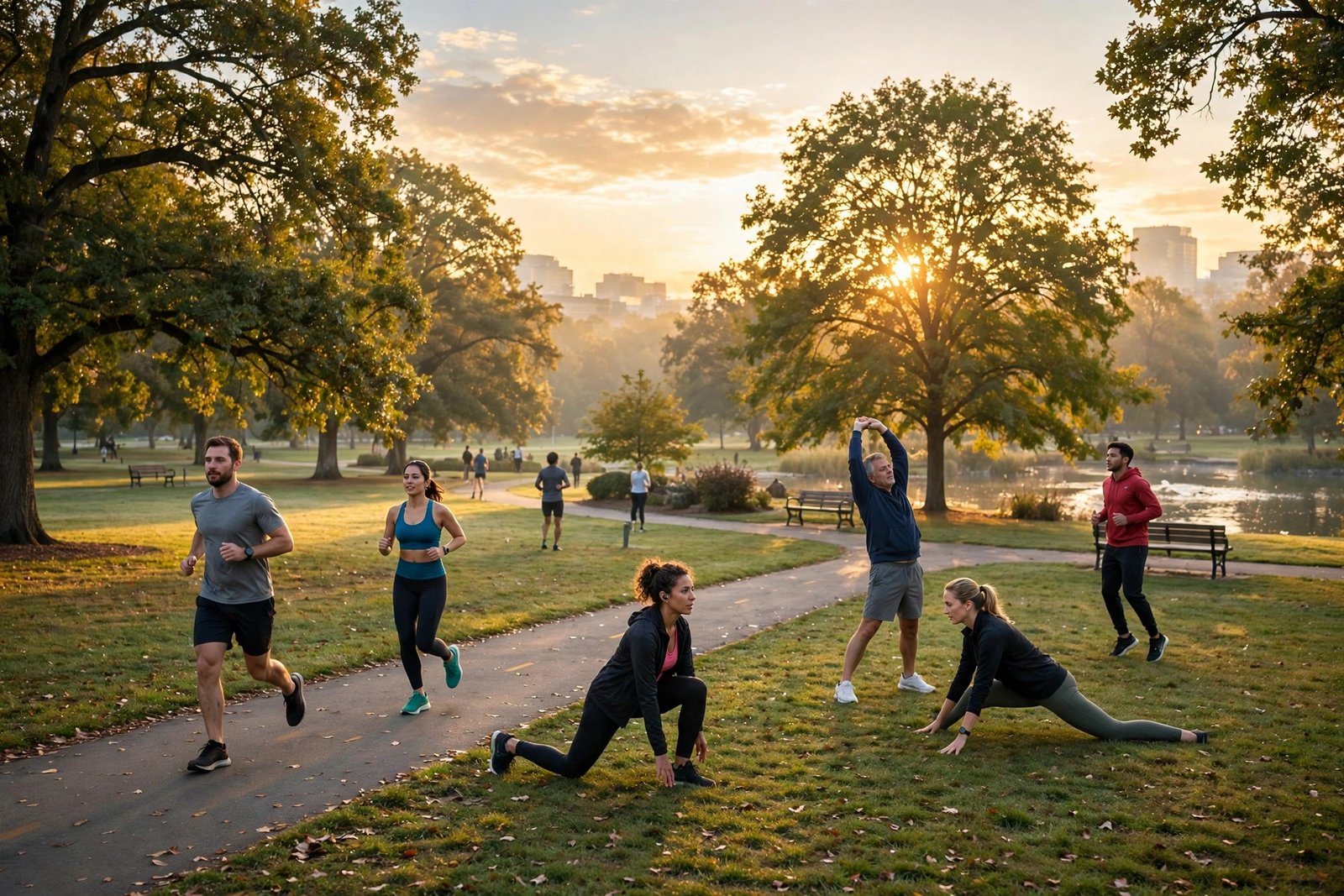
At sunrise in cities and small towns across America, the day begins with movement. A running club gathers outside a coffee shop, lacing shoes and swapping stories before the first mile. A gym fills with early risers lifting, stretching, and finding focus before work. A parent walks a trail with a stroller, a retiree practices balance exercises in a park, and a teenager shoots hoops before school. This everyday energy is the heart of American fitness culture, a broad, welcoming, and constantly changing way of life built around staying active, feeling strong, and connecting with other people through movement.
This culture is not a single sport, a single body type, or a single way to train. It includes professional athletes and weekend walkers, competitive lifters and gentle yoga practitioners, marathon runners and people who simply want to climb stairs without getting winded. What ties these different people together is a shared belief that movement matters, not only for appearance but for health, mood, confidence, and community. In the United States, that belief shows up in gyms, parks, trails, school fields, living rooms, and workplaces, and it keeps evolving as new ideas, technologies, and social trends arrive.
In this guide, we explore how American fitness culture took shape, what it looks like today, and how anyone can find a version of it that fits their life. Whether you love team sports, prefer quiet solo workouts, or are just getting started, there is a place for you in this culture, and you do not need expensive gear or an extreme routine to belong.
What Defines American Fitness Culture?
At its core, American fitness culture is about choice. The United States has a long tradition of personal freedom and self-improvement, and fitness fits naturally into that story. People choose activities that match their interests, schedules, and personalities. Some choose structure, following a coach, a class schedule, or a training plan. Others choose freedom, running when they feel like it, hiking on weekends, or playing pickup basketball with friends. Both approaches count, and many people mix them over a lifetime as their goals and bodies change.
Community is another defining feature. Fitness in America is rarely a solitary pursuit for long, even for people who train alone. Running clubs, group classes, sports leagues, and online groups give people accountability, encouragement, and friendship. A beginner who joins a walking group is more likely to keep going than someone who tries to stay motivated entirely alone, not because willpower is weak but because shared routines are powerful. When others expect you at 6 a.m., you are more likely to show up, and when you celebrate progress together, the habit sticks.
Fitness culture in America also reflects the country’s diversity. Different communities bring different traditions to movement, from dance and martial arts to team sports, outdoor recreation, and family-centered activities. A neighborhood class might blend music, dance, and strength training. A park might host soccer games, tai chi, and youth leagues on the same afternoon. That mix is a strength, because it means fitness does not have to look one way to be real. It can be joyful, cultural, competitive, gentle, or all of these at different times.
Gyms: The Heart of American Fitness Culture
For many Americans, the gym is where fitness culture becomes a daily habit. Modern gyms offer far more than weights and treadmills. They offer classes in strength, cardio, dance, martial arts, and flexibility, along with pools, courts, climbing walls, and recovery areas in larger facilities. Some gyms focus on serious lifting, others on boutique classes with music and coaching, and still others on family-friendly, low-pressure environments where beginners feel welcome.
The gym also serves as a social equalizer. On any given evening, students, nurses, teachers, construction workers, retirees, and new parents may train side by side, united by a shared goal rather than divided by job or background. Regulars learn each other’s routines, share tips, and quietly cheer progress. That sense of belonging helps explain why so many people keep a gym membership even when home workouts would be cheaper. They are paying not only for equipment but for atmosphere, routine, and community.
At the same time, gym culture in America has changed to become more inclusive. Many facilities now offer beginner orientations, women-only areas or hours, adaptive equipment, childcare, and classes for older adults. Trainers increasingly emphasize safe technique, gradual progress, and long-term health over quick, extreme results. The message is shifting from punishing workouts to sustainable strength: train in a way you can still enjoy next year, not just survive this week.
Running Clubs, Walking Groups, and Community Movement
Running clubs are one of the most visible expressions of American fitness culture, and they show how simple movement can build strong communities. A typical club welcomes all paces, organizes routes of different lengths, and ends with coffee or breakfast. Nobody is left behind, and experienced runners often loop back to encourage newcomers. The result is a weekly ritual that improves fitness and friendships at the same time, and many people say the social side is what keeps them coming back long after the novelty of running has worn off.
Walking groups offer a similar benefit with an even lower barrier to entry. Walking is accessible, gentle on joints, and easy to fit into daily life, yet it delivers real health benefits when done regularly. Mall walking groups, neighborhood strolls, hiking clubs, and workplace walking challenges all turn a basic human activity into a shared habit. For older adults, new parents, and people recovering from illness or injury, walking groups can be a safe and encouraging first step back into regular movement.
Team sports and recreational leagues extend this community spirit to adults who may have played as kids and want to play again without professional pressure. Softball, basketball, soccer, volleyball, pickleball, and ultimate frisbee leagues fill parks and gyms across the country. Pickleball, in particular, has grown rapidly as a social, accessible sport that welcomes beginners and rewards strategy as much as speed. These leagues remind adults that fitness can be play, not just training, and that laughter is a legitimate part of a workout.
Outdoor Workouts and the Love of Open Space
America’s landscapes have always shaped its fitness culture. With national parks, beaches, mountains, deserts, rivers, and city trails, outdoor exercise feels natural rather than forced — and readers planning active trips may enjoy our guides to the most beautiful national parks in the USA and secret beaches in the USA for inspiration. Hiking, cycling, kayaking, surfing, skiing, trail running, and rock climbing are not just sports here; they are ways to experience the country. Many people plan vacations around outdoor activity, from a weekend hike to a cross-country cycling trip, and return home with a renewed commitment to staying active.
Outdoor workouts also appeal to people who dislike indoor gyms. Training in a park, on a beach, or along a river offers fresh air, changing scenery, and a sense of freedom that a treadmill cannot match. Bodyweight circuits, boot-camp classes, yoga in the park, and open-water swimming have all grown as outdoor options. Even simple activities like gardening, yard work, and playing with children outdoors count as movement, and this culture increasingly recognizes that everyday activity matters just as much as formal exercise.
City design plays a role too. Greenways, rail trails, bike lanes, and waterfront paths make it easier for residents to walk, run, or cycle safely. When a city invests in trails and parks, it invests in public health, because people use what is convenient and pleasant. A safe, well-lit trail near home can turn a good intention into a daily habit, while a lack of safe space can make fitness feel out of reach. That is why parks and trails are not luxuries in American communities; they are essential fitness infrastructure.
Wellness Trends: Recovery, Mindfulness, and Balance
In recent years, American fitness culture has expanded beyond exercise alone to include recovery and overall wellness. Stretching, foam rolling, mobility work, sleep, nutrition, and stress management are now discussed alongside workouts, not as afterthoughts. Athletes and everyday exercisers alike have learned that rest is part of training, not a sign of laziness. A body that recovers well can train consistently, avoid injury, and enjoy movement for decades.
Mindfulness practices such as yoga, Pilates, breathwork, and meditation have become mainstream parts of fitness culture. These practices appeal to people seeking calm, flexibility, and body awareness, and they complement more intense training by improving balance, posture, and focus. Many gyms and studios now offer a blend of high-energy classes and slower, restorative sessions, recognizing that different days and different bodies need different kinds of movement.
Nutrition and wellness trends also shape the culture, from home cooking and farmers markets to protein-rich meals, plant-based options, and hydration awareness. The healthiest approach, experts generally agree, is not a strict fad diet but a balanced, sustainable pattern that supports activity and enjoyment. This culture is at its best when it encourages curiosity about food and health without shame, guilt, or extreme rules, and when it celebrates progress that can be maintained in real life.
- Start small: choose an activity you enjoy and commit to a short, regular routine first.
- Find people: join a club, class, or friend group so movement becomes social and fun.
- Mix it up: combine strength, cardio, flexibility, and outdoor time across the week.
- Prioritize recovery: sleep, stretch, hydrate, and rest when your body asks for it.
- Make it convenient: pick locations and times that fit your real schedule, not an ideal one.
Challenges, Pressure, and a Healthier Path Forward
Like any culture, fitness culture in America has its challenges. Social media can create unrealistic expectations about bodies, performance, and progress, making ordinary people feel inadequate despite real effort. Extreme programs, quick-fix promises, and comparison to influencers can push people toward injury, burnout, or unhealthy relationships with food and exercise. Recognizing these pressures is important, because fitness should build confidence, not damage it.
The healthiest voices in the culture are pushing back against that pressure. Coaches, doctors, and everyday athletes increasingly emphasize consistency over intensity, health over appearance, and personal progress over comparison. They remind beginners that a thirty-minute walk counts, that lifting lighter weights with good form counts, and that showing up imperfectly is better than waiting for a perfect plan. That message matters, especially for people who have felt excluded from fitness spaces in the past.
Access is another real challenge. Gym memberships, classes, equipment, and safe outdoor spaces are not equally available in every neighborhood. Community centers, school programs, public parks, and low-cost classes help close that gap, as do free online workouts, walking groups, and home-based routines that require little equipment. A truly inclusive fitness culture works to make movement possible for everyone, regardless of income, age, ability, or location.
How to Find Your Place in It
Finding your place starts with honesty about what you enjoy. If you love music, try a dance class. If you love nature, try hiking or cycling. If you love competition, try a league. If you love quiet, try early-morning walks or yoga. There is no wrong entry point, and trying something new does not commit you forever. Many people discover a lifelong passion by accident, simply because a friend invited them to one class or one run.
Set goals that are clear but kind. Instead of aiming for a dramatic transformation in a month, aim for a routine you can repeat: three walks a week, two strength sessions, one class you look forward to. Track progress in ways that motivate you, whether that means distance, strength, energy, mood, or simply how many weeks in a row you kept your habit. Celebrate small wins, because small wins compound into lasting change.
Finally, remember that fitness culture is ultimately about life, not just workouts. The strongest version of this culture helps people feel better, connect more deeply, and enjoy their bodies and communities. It gives parents energy to play with their children, older adults confidence to stay independent, workers focus for their jobs, and friends a reason to meet outside a screen. When movement serves life in that way, it stops being a chore and becomes a source of joy.
From sunrise running clubs to evening gym sessions, from park yoga to weekend hikes, American fitness culture is a living, welcoming tradition that belongs to everyone willing to move. You do not need to be fast, strong, or experienced to join. You only need to start where you are, find people who encourage you, and keep going one step, one rep, one walk at a time. If this guide inspired you, share it with a friend, invite someone to your next workout, and explore more American lifestyle stories on ENG Post, including where to spot wildlife on an active outdoor trip in our where to see bald eagles in the USA guide — your next healthy habit might begin with a single invitation.