
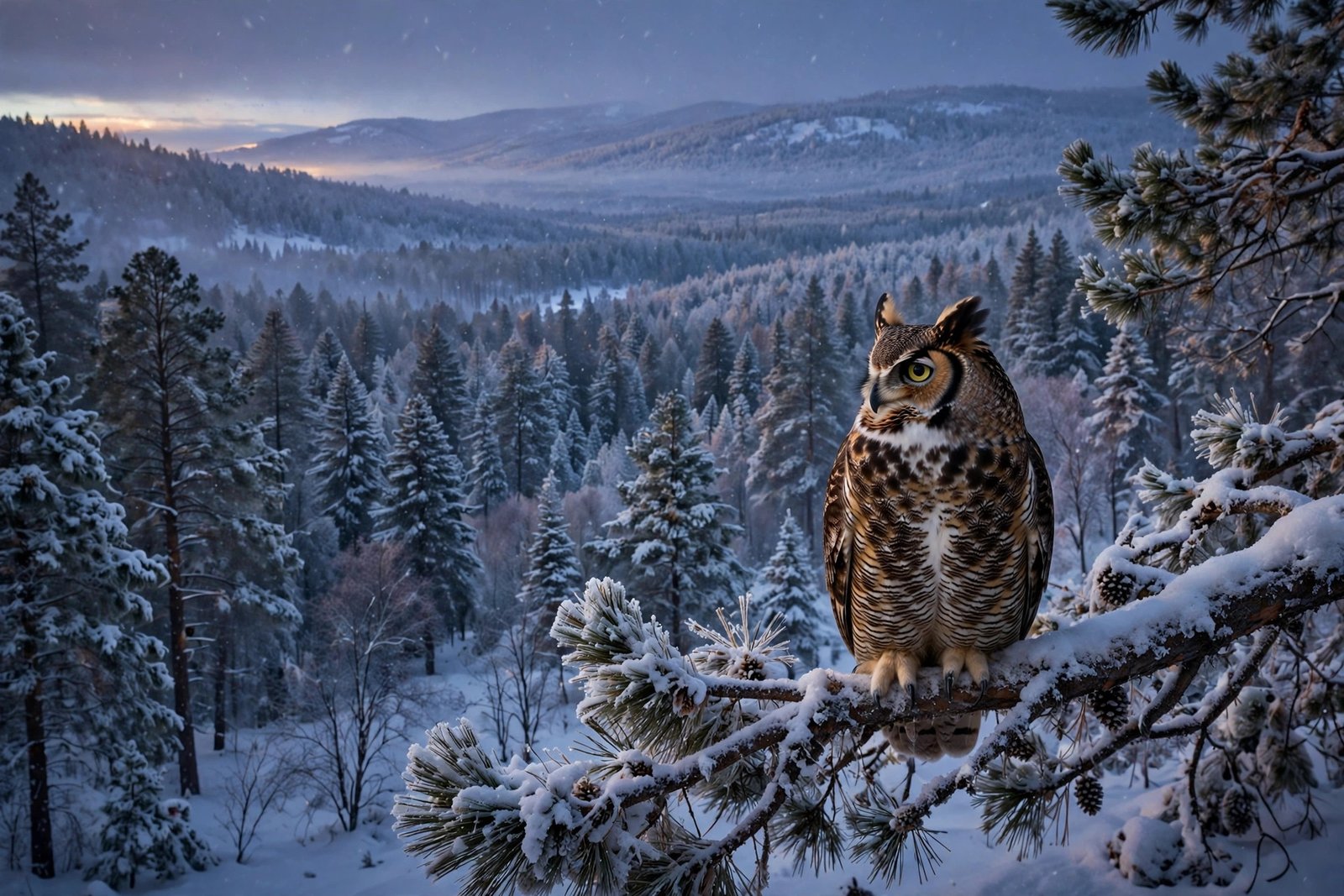
There is nothing quite like the moment an owl turns its head and looks straight at you, and if you have ever wondered where to see owls USA travelers should start, this guide has the answer. Owls live across the United States, from snowy northern fields to desert grasslands and quiet suburban parks, but they are masters of camouflage and silence, so finding them takes a little knowledge, patience, and timing. With the right places, seasons, and viewing habits, even a first-time birder can have a memorable owl encounter.
Owls are not rare in the way many people assume. The United States is home to many owl species, and several of them are widespread and relatively common, even if they are seldom noticed. The challenge is not that owls are absent, but that they are nocturnal or crepuscular, well camouflaged, and quiet when they want to be. Learning where each species prefers to hunt and roost, and when it is most active, turns a random walk into a focused search, and greatly increases your chances of success.
Where to See Owls USA in Winter
Winter is often the best season for owl watching, and it is a great time to learn where to see owls USA visitors most often succeed. Bare trees make roosting owls easier to spot, many owls call more during the late-winter breeding season, and northern species move south into the United States in search of food. If you live in the northern half of the country, a winter walk through a conifer grove, a cemetery with old trees, or a quiet park edge can be surprisingly productive, especially at dawn and dusk when owls are moving between roost and hunting grounds.
One of the most exciting winter visitors is the snowy owl, a large white owl of the Arctic that sometimes appears in northern states during irruption years, when food is scarce farther north. Snowy owls often choose open places that resemble tundra, such as beaches, dunes, airports, farm fields, and lakeshores, and they may be active during the day, unlike most owls. Because sightings are unpredictable from year to year, check recent local bird reports before traveling, and always keep a respectful distance. A snowy owl on a beach dune is a wild animal conserving energy in winter, not a photo prop, and crowding it can cause real harm.
Winter is also prime time for great horned owls, which begin nesting remarkably early, sometimes while snow is still on the ground. Listen on calm, clear evenings for their deep, hooting calls, often described as a rhythmic series of hoots from a pair duetting across a wooded valley. Great horned owls use old nests built by hawks, crows, or herons, and they favor tall trees near open hunting areas. If you hear a pair calling repeatedly from the same area over several nights, you may have found a territory, and patient, distant observation over following weeks can reveal a roost or nest site without disturbing the birds.
Where to See Owls USA: Top Regions and Habitats
Different regions of the country offer different owl experiences, and choosing a region is the easiest way to narrow your search. In the Northeast and upper Midwest, mixed forests, pine plantations, and river valleys hold barred owls, great horned owls, eastern screech-owls, and, in winter, northern saw-whet owls and snowy owls. Barred owls in particular are vocal and relatively bold, and their distinctive hooting call, often rendered as who cooks for you, is one of the most recognizable sounds in eastern forests. Dawn and dusk walks near swampy woods, beaver ponds, and wooded streams are good places to listen for them.
In the Southeast, barred owls remain common, and you may also find great horned owls in wooded suburbs, parks, and bottomland forests. Southern pine forests and wooded neighborhoods can hold eastern screech-owls, small owls that roost in tree cavities and nest boxes during the day. Because screech-owls are small and well camouflaged, you are more likely to hear their whinny or trill at night than to see them by day. Learning their calls before you go is one of the most useful preparations for any owl outing, and free bird-call resources can help you practice.
In the West, the variety is especially rich. Great horned owls are widespread, burrowing owls occupy open grasslands and desert edges, western screech-owls live in wooded canyons and suburban trees, and long-eared owls roost quietly in dense conifer groves in winter. Mountain forests in the Rockies and Pacific Northwest hold northern spotted owls in old-growth areas, though those birds are sensitive and their exact locations should not be sought out or shared publicly. For most travelers, the western experience is best enjoyed through general habitats, such as grasslands for burrowing owls and riparian woodlands for screech-owls, rather than chasing a specific sensitive species.
In the Great Plains and desert Southwest, open country is the key. Burrowing owls nest in burrows in prairies, grasslands, and desert flats, and they are often visible during the day, perched near a burrow entrance or on a fence post. Look for them in protected grasslands, wildlife refuges, and ranchlands where prairie dogs or ground squirrels create burrows, but always stay on public roads and designated viewing areas, and never approach a burrow closely. Desert washes and cactus country can also hold elf owls in summer, tiny owls that nest in old woodpecker holes in saguaro cacti, though they are small, nocturnal, and best found by listening on warm desert nights.
Best Owl Species to Look For Across America
If you are new to owl watching, start with the most widespread species, because they give you the best chance of success and teach you the field skills you will use for rarer birds. The great horned owl is large, powerful, and found in nearly every state, with prominent ear tufts, yellow eyes, and a deep hoot. The barred owl is a forest owl of the East, Midwest, and Pacific Northwest, with dark eyes, a rounded head, and a famously chatty call. The eastern and western screech-owls are small, gray or reddish, and masters of blending into bark, which makes finding a daytime roost feel like solving a puzzle.
The barn owl deserves special mention because it is one of the most widespread land birds in the world, and it often lives close to people, in barns, nest boxes, and old buildings near open fields. Barn owls are pale, with a heart-shaped face and dark eyes, and they hunt over grassland and farmland at night, listening for rodents in the grass. Because barn owls often use nest boxes, some wildlife refuges and farms maintain boxes that can be watched from a distance, and local bird groups sometimes organize evening outings to listen for their eerie screech. If you are lucky enough to see a barn owl quartering a field at dusk, it is a sight you will not forget.
Other species reward more targeted trips. Short-eared owls hunt over marshes, grasslands, and coastal fields, often in daylight on winter afternoons, flying low over open ground with a floppy, moth-like flight. Northern saw-whet owls are tiny, secretive forest owls that migrate through the northern United States in fall, and banding stations sometimes offer public demonstrations where visitors can learn about migration research without disturbing wild birds. Long-eared owls gather in communal winter roosts in dense conifers, and finding one requires patience, quiet, and often a tip from a local birder, but the sight of several owls tucked into a single grove is extraordinary.
For a broader birding trip, owls pair naturally with other raptors and wildlife watching. A winter visit to a wildlife refuge can combine owls at dawn and dusk with hawks, waterfowl, and deer during the day. For another iconic American raptor, see our guide to where to see bald eagles in the USA, which covers many of the same refuges, rivers, and winter habitats that also hold owls. Planning a trip that includes both owls and eagles makes the most of cold-weather birding, when many species are at their most visible.
Owl Watching Tips: How to Find Owls Without Disturbing Them
Successful owl watching starts with learning calls. Many owls are heard far more often than they are seen, and a short evening walk with a bird-call guide can teach you to separate a great horned owl from a barred owl, or a screech-owl from a distant dog or insect. Go out on calm, windless evenings, when sound carries and owls are more likely to call. Avoid playing recorded calls repeatedly to lure birds, especially during breeding season, because playback can stress owls, draw them away from nests, and disrupt natural behavior. A brief listen is enough; patience is better than playback.
Look for signs during the day, too. Owl pellets, the regurgitated bundles of fur and bone left after a meal, often accumulate below a regular roost, along with whitewash droppings on branches or the ground. A cluster of small songbirds mobbing a tree, scolding loudly and darting around a branch, is another classic clue that an owl is roosting nearby. Follow the commotion quietly, scan the tree slowly with binoculars, and look for an owl-shaped lump against the trunk, a pair of ear tufts, or a face peering from a cavity. Once you find a roost, keep your distance and keep your visit short.
Gear matters less than behavior, but a few items help. Binoculars with good low-light performance are ideal for dawn and dusk, and a red-filtered flashlight preserves your night vision while minimizing disturbance. Dress warmly in winter, wear quiet clothing that does not rustle loudly, and bring a friend for safety on night walks, especially on unfamiliar trails. Let someone know where you are going, stay on marked trails, and avoid owl watching alone in remote areas after dark. The best owl watchers are the ones who leave no trace and leave the owl exactly as they found it.
- Go at dawn and dusk: Most owls are most active in low light, when they move between roosting and hunting areas.
- Listen first, look second: Learn common owl calls before your trip, and let sound lead you to the right grove or field edge.
- Scan roost trees slowly: Look for pellets, whitewash, and mobbing songbirds, then check trunks and cavities with binoculars.
- Keep your distance: Use binoculars instead of approaching, never use flash close to an owl, and leave if the bird shows stress.
- Respect private land and refuges: Stay on public trails and viewing areas, follow refuge rules, and never share sensitive nest locations online.
Great Places to Start: Refuges, Parks, and Local Birding Groups
National wildlife refuges are among the best answers to where to see owls USA, because they protect large blocks of habitat, maintain trails and viewing areas, and often publish bird lists that tell you which owls have been recorded there. Refuges in grasslands, marshes, and forests across the country can hold different species, and winter visits are especially rewarding. State parks, county parks, and large urban parks can also be excellent, particularly where old trees, quiet trails, and open fields meet. Do not overlook a local park near home; many birders find their first owl within a short drive of where they live.
Local Audubon chapters and birding clubs are another invaluable resource. Many groups run guided owl walks, often called owl prowls, in fall and winter, led by experienced birders who know local territories and ethical viewing practices. Joining a guided walk is the fastest way to learn calls, habitats, and field marks, and it connects you with people who can point you toward good general areas without revealing sensitive nests. Online birding platforms can also show recent sightings in your county, but use them responsibly: visit general areas, not exact nest sites, and never post precise locations of roosting or nesting owls.
If you are planning a dedicated owl trip, consider combining owl watching with other nature experiences in the same region. A desert trip for burrowing and elf owls can include wildflower walks, stargazing, and scenic drives, while a northern winter trip for snowy and great gray owls can include cross-country skiing, frozen lakeshores, and quiet forest trails. For scenic landscapes to pair with your birding, our guide to the most beautiful national parks in the USA offers destinations where owls, scenery, and trails come together in one trip.
Owl Ethics: Enjoying Owls While Protecting Them
Owls face real pressures, including habitat loss, vehicle collisions, rodenticides, and disturbance at nests and roosts. Owl watchers can help by keeping visits brief and distant, avoiding playback during breeding season, never baiting owls with live prey, and staying out of closed areas. If an owl flies away, changes posture repeatedly, or stares intently at you while flattening its feathers, you are too close, and you should back away quietly. A good sighting is one where the owl continues its natural behavior after you arrive, not one where it is forced to flee.
Photographers have a special responsibility, because the desire for a close shot can tempt people to approach too closely, use flash at night, or return repeatedly to the same roost. Ethical owl photography means using a long lens, natural light, and a respectful distance, and accepting that some shots are not worth taking if they disturb the bird. Sharing photos is fine, but sharing exact locations of nests and roosts online can lead to crowds that stress the same bird again and again. When in doubt, share the general region and the story, not the coordinates.
Families can enjoy owls together in ways that protect the birds and build lasting interest. Read about owls before a trip, practice calls at home, and make the outing a listening walk rather than a chase. Children often love finding pellets, learning to hoot like a barred owl, and spotting the silhouette of an owl at dusk. Those experiences, shared without disturbing wildlife, create the next generation of owl watchers, and they teach an important lesson: the best wildlife encounters are the ones where the animal is free to behave naturally, and we are lucky guests in its home.
Planning Your First Owl Watching Trip
Start close to home. Choose a local park, refuge, or forest edge, visit at dusk on a calm evening, and simply listen for ten or fifteen minutes without moving much. Note what you hear, even if you cannot identify it at first, and compare your notes with a bird-call guide when you get home. Over several outings, you will begin to recognize the common owls in your area, and you will learn which groves, fields, and trails are most promising. That local knowledge is the real answer to where to see owls USA, more valuable than any single famous destination.
When you are ready to travel, pick a region and a season that match your target species. Winter in the north for snowy owls and great gray owls, spring in the east for barred and screech-owls, summer in the desert Southwest for elf owls, and fall migration in the upper Midwest for saw-whet owls are all good starting points. Book lodging near your chosen habitat, plan dawn and dusk outings around meals and rest, and leave the middle of the day for hiking, sightseeing, and exploring local towns. Owl watching rewards a relaxed schedule, not a rushed itinerary.
Above all, enjoy the search itself. Some nights you will hear owls but not see them, some mornings you will find only pellets and a mobbing flock, and some trips will end with a single, unforgettable glimpse of an owl in flight. That uncertainty is part of what makes owl watching so addictive, and it is why experienced birders return to the same groves year after year. The owls are out there, across the United States, in forests, fields, deserts, and parks, waiting for patient listeners to find them. Grab your binoculars, head out at dusk, and start listening. Your first owl may be closer than you think.
Ready to plan your outing? Pick a nearby refuge or park, check local bird reports for recent owl activity, invite a friend, and head out on a calm evening this week. Share this guide with a fellow nature lover, and let us know in spirit which owl you hope to see first. Whether it is a great horned owl in your neighborhood woods, a burrowing owl on a prairie, or a snowy owl on a winter beach, the search is half the adventure, and the moment you finally spot one will stay with you for years.