
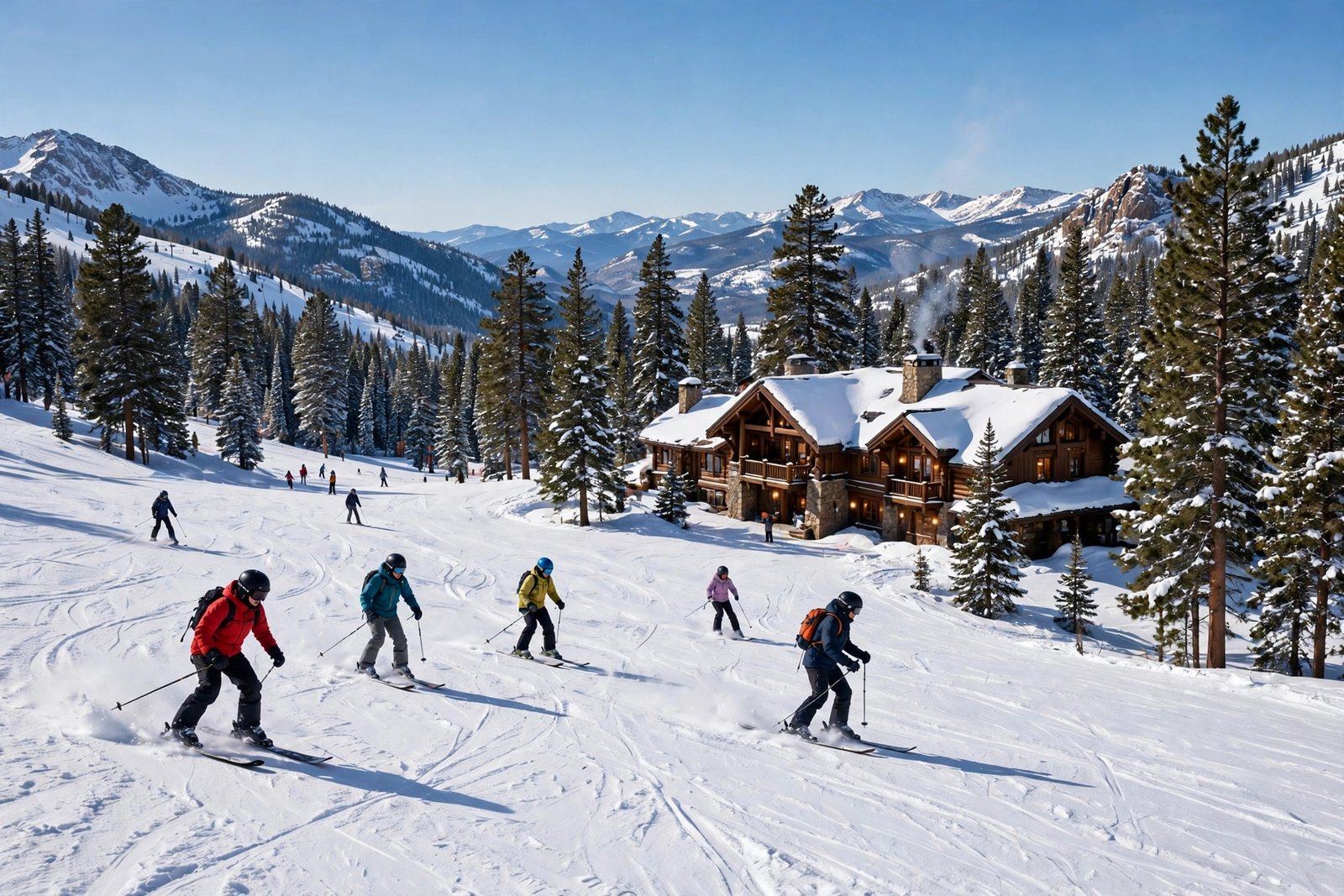
Every winter, millions of Americans head for the mountains, skis strapped to the roof and a thermos of coffee in the cup holder, chasing fresh snow and wide-open slopes. American ski culture is much more than a sport. It is a way of spending winter: early chairlifts, long lunches in lodges, small mountain towns that come alive when the snow falls, and friendships forged on cold chairlift rides. Whether you are a first-timer on the bunny slope or a lifelong powder chaser, ski culture in the United States has a place for you.
Skiing in America took off in the twentieth century, when soldiers returning from mountain warfare training, European immigrants, and homegrown resort builders turned remote peaks into destinations. Towns like Aspen, Stowe, and Sun Valley grew up around the slopes, and a whole lifestyle grew with them: ski lodges with roaring fires, diners serving huge breakfasts, and shops selling everything from hand-knitted hats to high-tech skis. Today, that culture spans the country, from the big resorts of the Rockies to the cozy family hills of New England and the Midwest.
American Ski Culture: From First Turns to Lifelong Passion
For most people, American ski culture starts with a first lesson. A patient instructor, a gentle green run, and a few tumbles later, something clicks. The feeling of gliding down a slope, of turning smoothly through soft snow, is addictive in the best way. Many skiers describe their first good run as the moment winter changed for them forever, from a season to endure into a season to celebrate.
That first experience is deliberately welcoming. Resorts across the country run beginner programs with rental packages, group lessons, and dedicated learning areas separated from faster traffic. Kids often learn through ski school, where games and gentle progressions make the sport feel like play. Adults learn in groups too, and there is a cheerful honesty among beginners: everyone falls, everyone laughs about it, and everyone improves faster than they expect.
From there, the passion tends to grow. Skiers progress from green runs to blues, then to blacks, then to moguls, trees, and powder. Some take up snowboarding, cross-country skiing, or backcountry touring. Others become loyal to one home mountain, returning to the same lodge, the same lift operators, and the same breakfast spot year after year. The mountain becomes a second home, and the people on it become a second family.
American Ski Culture and the Great Ski Towns
No guide to American ski culture is complete without the ski towns. These are places where winter is the main event and the whole town is built around it. Main streets are lined with gear shops, bakeries, and breweries. Locals greet lift operators by name. On a powder morning, the coffee line buzzes with excitement, and by afternoon, the patios fill with skiers in boots, swapping stories about the day’s best runs.
Each region has its own flavor. Colorado towns like Aspen, Vail, and Telluride are famous for big terrain, lively dining, and a mix of luxury and laid-back mountain character. Utah is known for famously light, dry powder and resorts clustered close to Salt Lake City, making it easy to ski several mountains in one trip. Wyoming’s Jackson Hole draws expert skiers with steep, challenging terrain and a rugged cowboy-town atmosphere.
In the East, Vermont towns like Stowe and Killington offer classic New England skiing: icy mornings, cozy lodges, maple syrup, and a strong sense of tradition. California’s Lake Tahoe region combines huge lake views with major resorts on both the California and Nevada sides. Montana’s Big Sky offers wide-open space and a quieter, less crowded experience. Even the Midwest has its own ski culture, with smaller hills, night skiing under lights, and fiercely loyal local crowds who ski every weekend the snow allows.
The ski town economy runs on winter, but the culture runs on community. Seasonal workers, ski patrollers, instructors, and shop owners form a tight-knit world, and visitors are welcomed into it for a weekend or a season. If you want to understand a ski town, eat breakfast where the locals eat, ride the lift with strangers, and stay for the live music in the lodge bar.
The Rituals: Apres-Ski, Lodges, and Mountain Food
Ask any skier what makes the sport special and they will eventually mention apres-ski, the social time after the lifts close. The word comes from French, but the American version is all its own: friends gathering on a sunny deck in ski boots, hot chocolate or a local beer in hand, recounting the day’s runs and planning tomorrow’s. Some resorts have famous apres scenes with live bands and dancing; others are quieter, with fireplaces, board games, and big mugs of soup.
Lodges are the heart of this ritual. A good lodge is warm, a little worn, and full of stories. Wooden beams, trophy photos, and the smell of wax and hot chocolate create a feeling that is hard to find anywhere else. Families spread out picnic lunches at long tables. Kids warm frozen fingers by the fire. Groups of friends claim the same corner table every Saturday. The lodge is where ski culture slows down and becomes social.
Mountain food deserves its own mention. Ski resort dining ranges from simple to spectacular. On one end, there are chili bread bowls, grilled cheese, and fries eaten with gloves still on. On the other, there are mountaintop restaurants serving fine dining with panoramic views. Many resorts now celebrate local food too: craft beer from a nearby brewery, farm-to-table menus, and food trucks parked at the base. A long lunch on the mountain is not a break from skiing; for many people, it is part of the experience.
Gear, Fashion, and the Look of the Slopes
Ski gear has changed enormously over the decades, and the fashion of the slopes tells the story. Early skiers wore wool sweaters and leather boots. Later came neon one-piece suits in bright colors that still inspire retro ski parties today. Modern gear is lighter, warmer, and more technical: waterproof shells, insulated layers, shaped skis, and boots that balance comfort with control.
For beginners, the good news is that you do not need to buy everything at once. Rental shops at every major resort offer skis, boots, poles, and helmets, and staff will fit you properly and explain the basics. Many skiers rent for their first few trips, then buy gear gradually as they learn what they like. Used gear shops and seasonal swaps are also a big part of ski culture, making the sport more affordable and sustainable.
Ski fashion today mixes function and personality. You will see everything from sleek, matching technical outfits to vintage jackets, wild patterns, and costumes on themed days. Helmets are now standard for most skiers, and goggles come in every color imaginable. The unwritten rule is simple: dress for the weather, wear a helmet, and let your style show. Nobody judges a skier for a loud jacket if they are having a good time.
Families, Kids, and Learning to Love Winter
Skiing is one of the few sports that whole families can genuinely enjoy together, and family ski culture is a huge part of the American winter. Resorts invest heavily in children’s programs, with trained instructors, fun terrain parks for kids, and childcare for the youngest visitors. Parents can ski together while children learn in a safe, supervised setting, then meet up for lunch and an afternoon run as a family.
Many adults trace their love of skiing to childhood trips: waking up early, piling into the car in the dark, the smell of the lodge, and the thrill of finally riding the big chairlift. Those memories create a cycle, as grown-up skiers bring their own children back to the same mountains. Family ski trips become traditions, repeated year after year, with photos on the same slope marking how much the kids have grown.
For families new to the sport, a few tips help. Start with a lesson for everyone, even confident athletes from other sports. Book rentals in advance during peak weeks. Choose a resort with a good beginner area and family-friendly lodging close to the lifts. And keep the first day short and fun: hot chocolate breaks, easy runs, and no pressure to conquer the mountain on day one.
Backcountry, Powder Days, and the Wild Side
Beyond the resorts lies the backcountry: ungroomed, unpatrolled terrain reached by hiking, skinning, or snowmobile. Backcountry skiing is the wilder branch of American ski culture, attracting skiers who want untouched snow and solitude. It is beautiful and demanding, and it requires serious preparation, including avalanche safety training, proper equipment, and knowledge of the terrain.
Powder days are the stuff of legend in ski culture. When a big storm drops fresh snow overnight, skiers line up before the lifts open, hoping for first tracks on an untouched run. The excitement is contagious, and even strangers on the lift share the thrill. Locals often plan their winter around storm cycles, and a truly great powder day becomes a story retold for years.
Safety always comes first in the backcountry. Unlike resort skiing, there is no ski patrol to help if something goes wrong, and avalanche risk is real. Responsible backcountry skiers take courses, travel with partners, carry beacons, shovels, and probes, and check avalanche forecasts before every trip. The reward is solitude and wild beauty, but it must be earned with preparation.
The outdoor spirit of skiing connects naturally with other American outdoor traditions. Readers who love the mountains in winter often enjoy them in summer too, and our guides to American hiking culture and American camping culture cover the trails, gear, and rituals of the warmer months.
Planning Your First (or Next) Ski Trip
Planning a ski trip is part of the fun. Start by choosing a region that fits your level and budget. Beginners do well at resorts with strong ski schools and gentle terrain. Intermediates might look for variety: plenty of blue runs, some challenges, and a fun town. Experts chase steeps, powder, and big vertical drops.
Timing matters. Early season can offer great deals but thinner snow coverage. Midwinter, from January through February, usually brings the most reliable snow, though holiday weeks are crowded and expensive. Spring skiing offers softer snow, longer days, and a festive atmosphere, with pond skims and outdoor parties closing out the season at many resorts.
- Book lessons and rentals early, especially during holidays and school breaks.
- Dress in layers: a moisture-wicking base, an insulating mid-layer, and a waterproof outer layer.
- Wear sunscreen and lip balm; sun at altitude reflects off snow and burns quickly.
- Stay hydrated and take breaks; altitude and cold air are more tiring than they feel.
- Learn lift etiquette: wait your turn, lower the bar when asked, and be kind to beginners.
- Check the weather and trail reports each morning before heading out.
Budgeting helps too. Lift tickets are the biggest cost, but many resorts offer multi-day discounts, and some regions have pass programs that cover several mountains. Lodging near the lifts costs more but saves driving time; staying in a nearby town can be cheaper and adds local flavor. Packing your own lunch some days and cooking in a condo kitchen keeps costs down without missing the fun.
Ski culture in America keeps growing and changing. New resorts open, old ones reinvent themselves, and more people discover adaptive skiing programs, night skiing, and summer glacier camps. What stays constant is the core of it all: fresh air, big mountains, good company, and the simple joy of sliding on snow. So wax your skis, or rent a pair, and join the long American tradition of heading uphill in winter. The mountain is waiting, the lodge fire is lit, and your best run of the season might be the next one you take.