
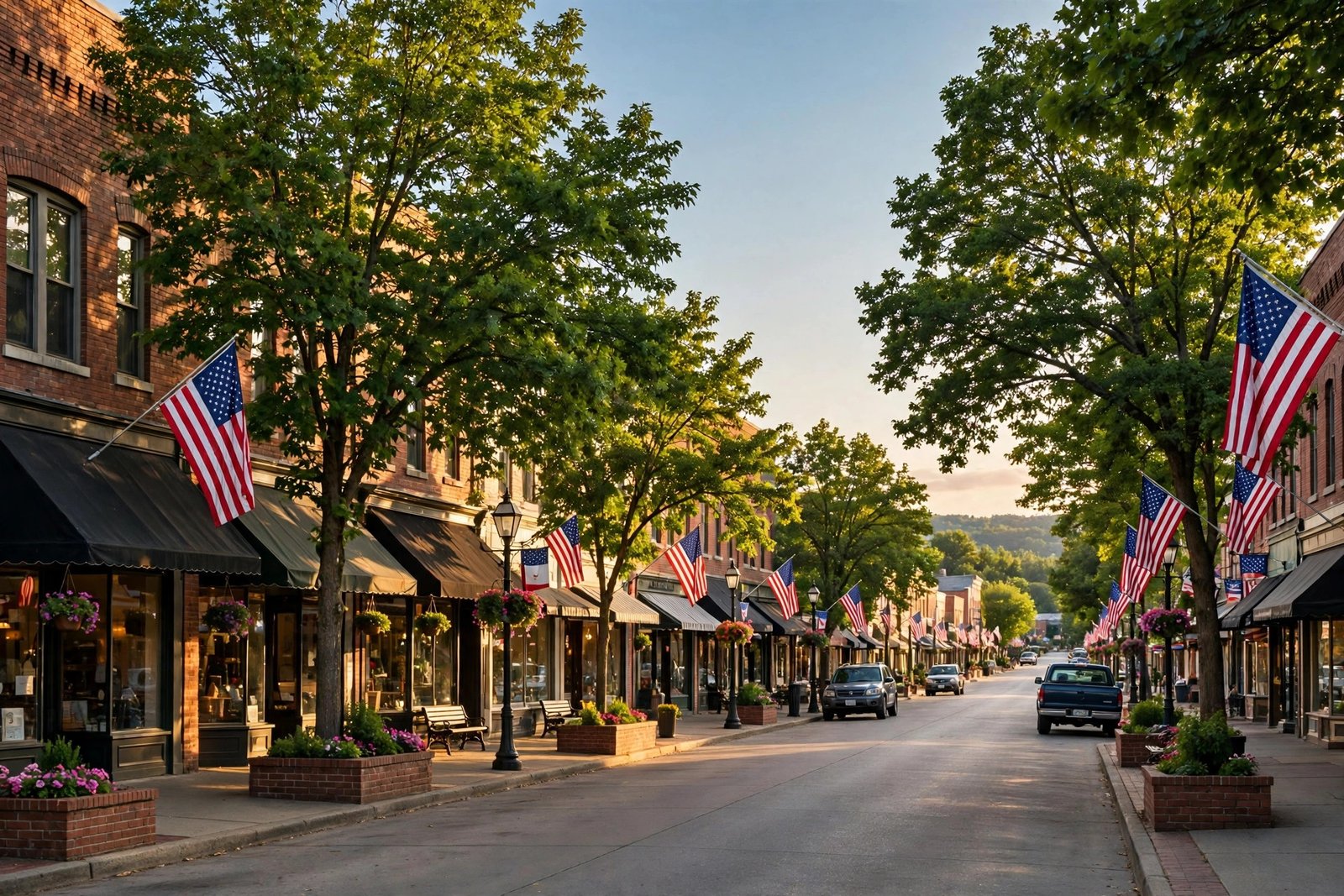
Small town life in America is one of the country’s most enduring images. Think of a quiet main street, a Friday night football game, neighbors who know each other’s names, and a pace of life that feels very different from a big city. But what is small town life really like today, beyond the postcards and movies? The answer is more varied, and more interesting, than the stereotype suggests.
A small town is usually defined by population, but there is no single definition. In the United States, towns with fewer than 10,000 or 25,000 people are often described as small, while the Census Bureau uses different categories for rural and urban places. What matters more than the exact number is the feeling: a place where daily life is shaped by close connections, local businesses, and a shared sense of community. Small towns exist in every region, from New England villages to Midwestern farm towns, Southern county seats, and mountain communities in the West.
What Defines a Small Town?
Small towns are often marked by a modest population, a compact main street, and close community ties. They may have one high school, one grocery store, a post office, and a handful of churches, diners, and family-owned shops. Everyone tends to know everyone else, at least by sight, and news travels fast. That closeness can be comforting, especially for families raising children or retirees seeking a quieter life.
At the same time, small towns are not all the same. Some are farming communities surrounded by fields and open land. Others are former mining or mill towns reinventing themselves through tourism, art, or remote work. Some are college towns, where students bring energy and diversity to a small population. Others are resort towns, busy in summer or winter and quiet the rest of the year. Each type has its own rhythm, challenges, and appeal.
The Pace of Life in Small Town America
One of the most talked-about features of small town life is its pace. Traffic is lighter, commutes are shorter, and daily routines are often simpler. People walk to the post office, stop to chat on the sidewalk, and know the names of the cashier, the librarian, and the mechanic. For many newcomers, especially those moving from crowded cities, that slower pace is the main attraction.
That pace does not mean life is boring. Small towns host farmers’ markets, county fairs, parades, high school sports, church suppers, and community theater. Residents often wear many hats: the same person might be a teacher, a volunteer firefighter, a coach, and a member of the town council. That involvement creates a strong sense of belonging, but it can also mean there is little privacy, and everyone knows your business.
Housing and Cost of Living
Housing and cost of living are part of the appeal for many people. Homes are often larger and more affordable than in big cities, with yards, porches, and room to breathe. That affordability is one reason remote workers and retirees have shown renewed interest in smaller communities in recent years. At the same time, wages in small towns can be lower, and specialized jobs may be scarce, so families often weigh lower costs against fewer career options. The trade-off is real, and it looks different for every household.
Main Street Is the Heart of Many Small Towns
Main Street is the heart of many small towns, and a morning walk down it reveals a great deal. You might pass a bakery that has been in the same family for generations, a barbershop where regulars debate local sports, and a courthouse or town hall that anchors the square. Some main streets are beautifully preserved, with brick storefronts, painted signs, and flower baskets in summer. Others show the wear of hard years, with empty windows beside businesses that are fighting to stay open.
The rhythm of the day is shaped by local businesses. Farmers may stop for coffee before heading to the fields. Shop owners sweep sidewalks and chat with early customers. School buses roll through, and parents wave from porches. In many towns, the local diner doubles as an informal town hall, where the mayor, the sheriff, and the high school coach might all share the same counter. Conversations here cover weather, crops, school board decisions, and who needs help after an illness or a storm.
That sense of familiarity extends to local institutions. The librarian may know your reading tastes. The pharmacist may ask about your family by name. The volunteer fire chief may also be your neighbor and your child’s coach. These overlapping roles create accountability and trust, but they also mean that personal and public life are closely woven together. For newcomers, breaking in can take time, patience, and a willingness to show up again and again.
Small Town Life in America Through the Seasons
Seasons shape small-town life in vivid ways. Spring brings planting, graduations, and the reopening of farmers’ markets. Summer means county fairs, parades, lake weekends, and outdoor concerts in the park. Autumn brings harvest festivals, high school football, and the turning of leaves that draws visitors to scenic towns. Winter can be quieter, with holiday lights on main street, school concerts, and neighbors helping one another through snow and cold.
Festivals and traditions are often the highlights of the year. A town might celebrate its founding, its main crop, its local history, or a famous resident. These events are usually organized by volunteers, funded by local sponsors, and attended by former residents who return home for the weekend. They are not polished tourist productions. They are community gatherings, with homemade food, local music, and games for children, and they give a town a chance to tell its own story.
Nature is also close at hand in most small towns. Lakes, rivers, forests, and farmland are often just minutes away, and outdoor life is part of everyday recreation rather than a special trip. Fishing, hunting, hiking, boating, and gardening are common pastimes, and many families have deep ties to the land around them. That connection shows up in local food as well, from farm stands and diners serving regional dishes to community gardens and seasonal markets. For readers drawn to a slower, waterside version of this lifestyle, an American lake house lifestyle guide captures a related kind of American home life.
Work, School, and Community Ties
Work in small towns has changed a great deal over the past few decades. Farming, manufacturing, mining, and timber once anchored many communities, and in some places they still do. In others, those industries have shrunk, and towns have turned to tourism, health care, education, remote work, or small-scale entrepreneurship. A single factory closing or a hospital downsizing can shake an entire town, because so many livelihoods are connected.
At the same time, small towns can be surprisingly entrepreneurial. A former teacher might open a bakery. A young couple might restore an old theater. A farmer might sell directly to customers online. Broadband access has made a real difference here, allowing some residents to work remotely for companies elsewhere while living where housing is affordable and life is quieter. Where broadband is still weak, however, that opportunity remains limited, and closing that gap is one of the most important challenges for rural communities today.
Schools deserve special attention, because in many towns the school is the largest employer and the main gathering place. Class sizes are often small, teachers know families personally, and students may participate in many activities because there are fewer students to fill each team or club. At the same time, small schools can face funding challenges, teacher shortages, and limited course offerings compared with larger districts. Parents, alumni, and local businesses often step in with fundraising and volunteer support to fill the gaps.
Community ties are also maintained through service, and this is one of the quiet strengths of small town life in America. Volunteer fire departments, food pantries, youth sports leagues, and church outreach programs depend on residents giving time, not just money. Veterans are often honored visibly, with memorials, parades, and ceremonies that bring the whole town together, and stories of service remain part of local identity, much like the accounts shared in US Army cavalry true stories. When a family faces a crisis, neighbors organize meal trains, fundraisers, and rides to medical appointments. That practical kindness is one of the most consistent features of small-town life.
The Challenges Nobody Should Romanticize
It would be dishonest to describe small-town life only in warm, nostalgic terms. Many towns face serious problems, and residents are often the first to name them. Population loss is a major one: young people leave for college or jobs and do not always return, leaving an older population and fewer workers. When the population shrinks, schools close, stores close, and it becomes harder to attract doctors, teachers, and new businesses.
Access to services can also be limited. A town may have no hospital, no public transportation, and limited options for groceries, childcare, or high-speed internet. Residents may drive long distances for specialized medical care, shopping, or entertainment. For people without a car, those distances can be isolating. Weather and distance compound the issue: a winter storm or a flooded road can cut a town off for hours or days.
Social life has its own challenges too. The same closeness that provides support can make it hard for newcomers, or for people whose views differ from the local majority, to feel fully at home. Gossip travels fast, and old family histories can shape how people are seen for generations. Small towns, like everywhere else, contain a full range of opinions, backgrounds, and experiences, and the healthiest communities are those that make room for difference while holding on to shared traditions.
None of this means small towns are doomed or that city life is superior. It means the choice to live in a small town, like any major life choice, deserves clear eyes. The best accounts of rural America acknowledge both the beauty and the difficulty, and they listen to residents themselves rather than imposing an outsider’s fantasy.
Why People Choose Small Towns Today
Despite the challenges, many people actively choose small-town life, and their reasons are instructive. Some want safety and simplicity for their children, with room to play outdoors and schools where teachers know every student. Some want a lower cost of living and a shorter commute, freeing time for family, hobbies, or a side business. Some are returning to hometowns after years away, drawn by aging parents, familiar landscapes, or a desire to contribute to a place that shaped them.
Others are newcomers seeking a change of pace. Remote work has allowed some professionals to trade a city apartment for a house with land, trading traffic for star-filled skies. Retirees may seek a quieter community, lower taxes, and neighbors who look out for one another. Artists, writers, and makers sometimes find affordable studio space and a supportive local audience. In each case, the decision is personal, and the town that fits one family may not fit another.
Newcomers often learn that fitting in takes participation. Joining a volunteer group, attending town meetings, shopping locally, and showing up at school events are the fastest ways to become part of a community. Small towns tend to reward consistency: people trust those they see regularly, not just those who arrive with big plans. Patience, humility, and genuine interest go a long way.
Visiting a Small Town the Right Way
If you are planning to visit a small town, a few simple habits will help you enjoy it and support the community. Consider these tips:
- Shop and eat locally. Independent diners, shops, and markets are the economic backbone of main street, and your visit helps them survive.
- Slow down. Small towns are not theme parks. Take a walk, sit on a bench, and notice details that a hurried drive-through would miss.
- Respect local customs and private property. Ask before photographing people, homes, or farms, and follow posted signs on trails and private land.
- Learn the local story. Visit the museum, read the historical markers, and ask respectful questions about what makes the town proud.
- Visit in different seasons if you can. A summer festival and a quiet winter town can feel like two different places, and both are worth knowing.
Good places to start include historic main streets, state parks, scenic byways, and country fairs, all of which showcase local character without requiring a long itinerary. Talk to shop owners and librarians, who are often excellent guides. And remember that the most memorable moments may be unplanned: a conversation at a diner counter, a sunset over farmland, or a local band playing in the park.
Conclusion: A Way of Life Worth Understanding
Small towns are not a single story, and they are not a relic of the past. They are diverse, changing communities where people work, raise families, worship, celebrate, and care for one another. Their strengths, closeness, affordability, natural beauty, and strong traditions, sit alongside real challenges, from population loss to limited services. Understanding both sides is the key to appreciating what these places offer.
Whether you grew up in a small town, dream of moving to one, or simply enjoy visiting, take time to look beyond the postcard image of small town life in America. Support local businesses, listen to residents, and learn the history behind the main street you are walking. If this article inspired you, share it with someone who loves small-town America, tell us about your own hometown in the comments, and explore more stories about American places and lifestyles here on ENG Post. The quiet streets, the familiar faces, and the community spirit are waiting, and they are well worth getting to know.