
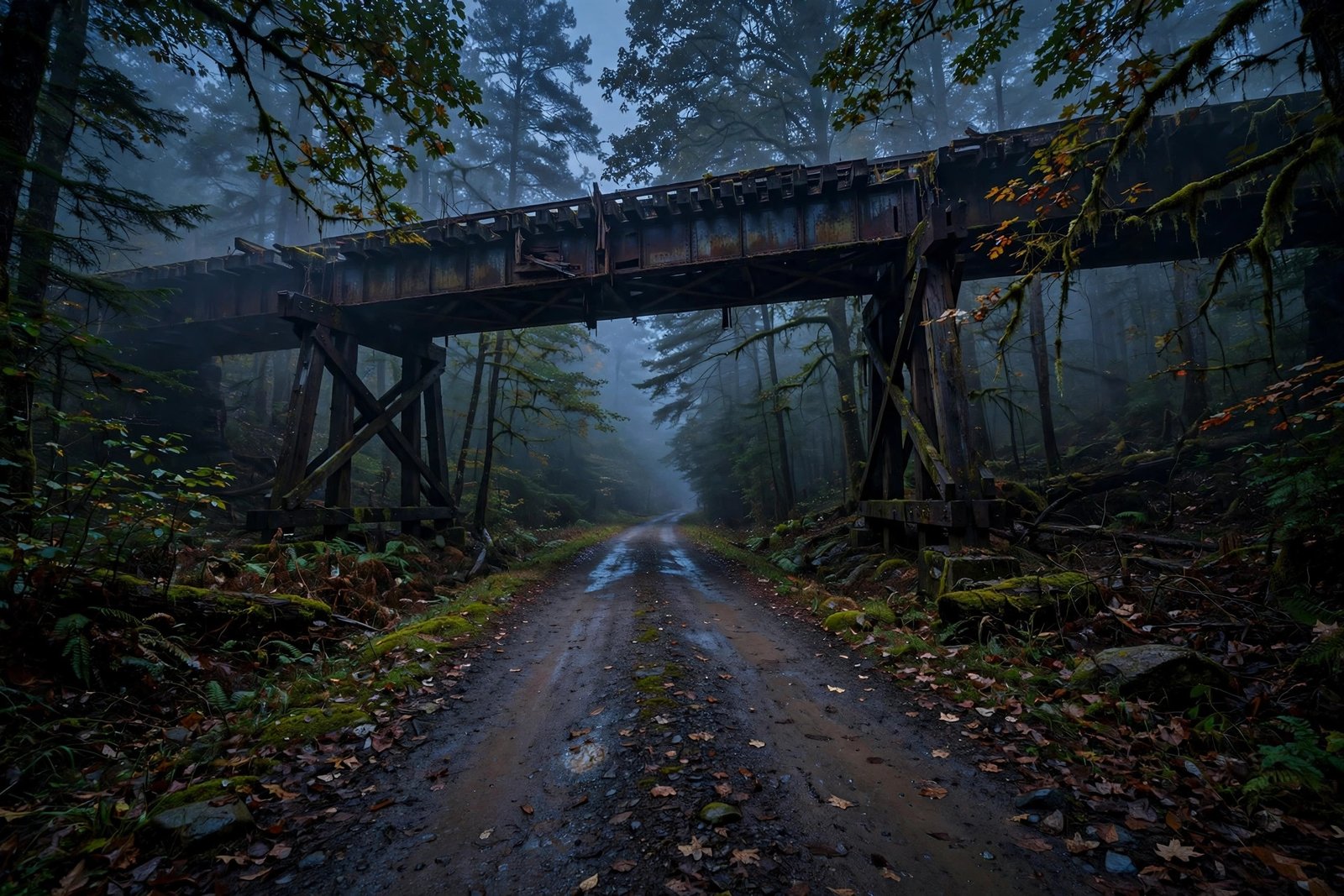
On a dark road in Prince George’s County, Maryland, a story has been whispered for generations, and the Goatman Maryland legend is at the heart of it. According to local lore, a strange half-man, half-goat figure haunts an old bridge near Beltsville and Bowie, appearing to late-night drivers and daring teenagers who go looking for a scare. Whether you first heard the tale around a campfire, from a friend who grew up in Maryland, or in a late-night internet rabbit hole, the story has a way of sticking with you long after the telling ends.
What makes this legend so durable is not proof, because there is none that stands up to scrutiny. It is the mix of a real place, a real road, and a story flexible enough to change with each retelling. Some versions are spooky, some are sad, and some are almost funny. Together they form a piece of Maryland folklore that says as much about the people who tell it as it does about any supposed monster. This guide separates what storytellers claim from what can actually be verified, so you can enjoy the legend without confusing it with history.
Origins of the Goatman Maryland Legend
The most commonly retold origin story centers on a goat farmer. In one popular version, a man who raised goats in the Beltsville area becomes the target of cruel teenagers or unhappy neighbors, and tragedy follows. In another version, a scientist experimenting with goats is transformed, or goes mad, after his work is mocked or destroyed. Details change depending on who is telling the story, and that variation itself is a clue: legends that grow by word of mouth rarely keep a single, stable plot. Instead, each community, school, and generation adds its own twist, keeping the core image of a goat-like man while reshaping the reason he is said to haunt the bridge.
Local historians and folklorists generally treat these origin stories as folklore rather than documented history. There is no reliable public record that confirms a specific goat farmer turned into a monster, a named scientist who became the Goatman, or a verified series of attacks that match the legend. That does not mean the stories are worthless. Folklore often grows around real anxieties, such as fear of isolated roads at night, tension between longtime residents and newcomers, or the uneasy feeling of passing through wooded, little-traveled places after dark. The Goatman gives those feelings a face and a name, which makes them easier to talk about, joke about, and pass on.
It also helps to understand where the legend lives. Prince George’s County, with its mix of suburban neighborhoods, research facilities, farms, and wooded corridors, has long been a fertile setting for local stories. Beltsville in particular is associated in popular memory with agricultural research, which may help explain why one version of the tale involves a scientist and goats. When a place already has laboratories, fields, and quiet back roads, it does not take much imagination to build a story that connects them. Over time, the bridge on Lottsford Vista Road became the anchor point, the one real landmark listeners could point to and say, that is where it happened.
Goatman Bridge and the Landscape of the Story
Storytellers often call the bridge over Lottsford Vista Road Goatman Bridge, and that nickname has stuck in local lore and online retellings. It is important to be clear here: the bridge is a real road structure, but its reputation as a haunted site comes from stories, not from any official designation or documented event. People who drive through the area on an ordinary day will see an ordinary road, trees, and houses, not a stage set for a horror film. That contrast between the everyday landscape and the frightening story is part of the appeal, and it is also why visitors should treat the area with respect.
If you are interested in American folklore road trips more broadly, the Goatman story fits alongside other regional legends that turn an ordinary bridge, forest, or stretch of highway into a storytelling landmark. For a similar example of how a creature legend grows around a place, see our guide to the Bigfoot legend explained, which shows how sightings lore, local pride, and retelling combine to keep a story alive. The Goatman is smaller in scale and more local, but the pattern is familiar: a place, a creature, and a community that enjoys retelling the tale.
For visitors, the practical advice is simple. Do not trespass, do not block a public road, do not climb on bridge structures, and do not disturb nearby residents. Legends are best enjoyed from legal, safe places, during daylight if you are simply curious about the landscape, and with an awareness that real people live and drive in the area. The story is free to enjoy, but the road is not a haunted house attraction, and treating it like one can create real safety problems for everyone.
Goatman Maryland Legend Sightings and Lore
Sightings lore for the Goatman tends to follow a familiar pattern. A driver claims to have seen a tall, shadowy figure near the bridge late at night. Teenagers dare one another to visit the bridge, honk the horn, or call out the name. A story spreads at school or online that someone saw glowing eyes, heard strange bleating, or found odd footprints. Because these accounts are usually secondhand, anonymous, or told long after the supposed event, they cannot be verified in the way a news report or scientific observation could be. That lack of verification does not stop the stories from spreading, and in folklore, spread is often the point.
Some versions add an axe to the Goatman, making him a threatening figure who chases cars or damages vehicles. Other versions make him more sorrowful, a lonely outcast who only wants to be left alone. Still others lean into humor, treating the Goatman as a mascot-like figure for local pride rather than a genuine threat. The fact that the same creature can be terrifying in one telling and almost sympathetic in another shows how flexible folklore can be. Storytellers shape the monster to fit the mood of the moment, whether that mood is Halloween mischief, teenage bravado, or nostalgic storytelling about growing up in Maryland.
It is also worth noting what sightings lore does not include. There are no widely accepted photographs, no physical specimens, no peer-reviewed studies, and no law enforcement reports that establish the Goatman as a real animal or person. Pranks, misidentified animals, shadows, and the power of suggestion can explain many supposed encounters, especially on dark, wooded roads where the mind is primed to expect something strange. When you arrive at a place already believing a monster lives there, every rustle, shadow, and reflection can feel like evidence. Folklorists call this part of the experience, not proof of the creature.
- Visit in daylight first: See the real landscape before imagining the nighttime story, and stay on public roads and paths.
- Do not trespass: Private land, fenced areas, and bridge structures are not part of a legend tour, even if a story says otherwise.
- Keep the story in its place: Enjoy the tale as folklore, and be skeptical of any claim that presents a campfire story as documented history.
- Respect neighbors: Late-night noise, blocked roads, and headlights aimed at homes turn a fun story into a real nuisance.
Legend Versus Fact: What We Can Actually Say
Separating legend from fact is the most useful way to approach the Goatman. Fact: Prince George’s County, Beltsville, Bowie, and Lottsford Vista Road are real places, and local residents have told Goatman stories for many years. Legend: the specific origin stories, the transformation of a man into a goat creature, and the supposed attacks and hauntings. Those elements belong to storytelling tradition, not to verified history. When a retelling presents a legend detail as if it were a court record, a newspaper archive, or a scientific finding, it is worth asking for a source, because folklore retellings rarely provide one that holds up.
This distinction matters beyond simple accuracy. Treating every legend as fact can lead people to take real risks, such as walking on a dark road at night, trespassing to find a supposed lair, or frightening drivers by staging a prank near traffic. It can also flatten a rich local tradition into a single scary claim, when the real interest lies in why the story changed over time and what it meant to different generations. The most interesting question is not whether the Goatman is real, but why Marylanders kept telling his story, how teenagers used it as a rite of passage, and how the internet gave a local tale a much larger audience.
There is also a broader lesson here for anyone who loves American legends. Many states have their own creature stories, from swamp monsters to forest cryptids, and most follow a similar arc: a striking image, a local landmark, a few dramatic retellings, and a community that adopts the story as part of its identity. Maryland’s Goatman is a good example because it is so local. It does not claim to be a national mystery. It belongs to a county, a road, and a bridge, and that small scale makes it feel more personal, and therefore more memorable, than a legend that could be anywhere.
Why the Goatman Still Captivates Maryland
Part of the Goatman Maryland legend’s staying power comes from Halloween culture and the internet. Each October, local legends get a fresh audience, and the Goatman is a natural fit for spooky season lists, podcasts, and social media posts. Online retellings can also blend different versions together, creating a composite Goatman who has the saddest origin, the scariest sightings, and the most dramatic bridge all at once. New listeners may assume that composite is the original story, when in fact it is the product of decades of layering.
Another reason is place-based pride. People enjoy having a local legend that outsiders do not know, or know only vaguely. Saying you grew up near Goatman Bridge is a conversation starter, a badge of local knowledge, and a way to connect with others who share the same hometown stories. In that sense, the Goatman functions less like a monster and more like a mascot for local memory, even when the stories themselves are meant to be frightening. Communities often keep such figures alive precisely because they give neighbors something shared to talk about.
For travelers who love beautiful and unusual places, Maryland offers far more than one spooky bridge. The state has Chesapeake Bay shorelines, historic towns, forests, and parks that are worth visiting in daylight, with real natural beauty and real history to explore. If the Goatman story sparks your interest in the region, let it be a starting point for a broader visit, not a reason to focus only on a single road at night. You can enjoy the legend, then spend the rest of your trip on the landscapes and towns that make Maryland genuinely worth exploring, including the kind of scenic destinations we cover in our guide to the most beautiful national parks in the USA.
How to Enjoy the Legend Responsibly
The best way to enjoy the Goatman Maryland legend is as a story. Read different versions, notice how they differ, and ask what each version emphasizes. Share it around a campfire or at Halloween, with the clear framing that this is folklore. If you visit Prince George’s County, explore its real attractions, support local businesses, and treat residential roads as places where people live, not as sets for a scare. That approach keeps the legend fun without creating problems for residents, drivers, or yourself.
Parents and teachers can also use the Goatman as a gentle introduction to critical thinking about folklore. Ask young listeners what parts sound like a story, what parts could be checked, and what evidence would be needed to move a claim from legend to fact. Those questions apply far beyond Maryland, to every cryptid, ghost story, and urban legend they will encounter online. Learning to enjoy a story while still asking for evidence is a skill that serves readers well in every subject, not just folklore.
In the end, the Goatman endures because he is a good story attached to a real place, told by real people who enjoy the telling. He does not need to be real to matter. Legends matter when they bring people together, spark curiosity about local history, and remind us that every community has stories that exist somewhere between memory and imagination. The Goatman Maryland legend, understood that way, is not a warning about a monster on a bridge. It is an invitation to listen more carefully to the stories a place tells about itself, and to enjoy them with both imagination and good judgment.
So the next time someone mentions the Goatman, you will know what to say: yes, it is a famous Maryland legend, no, there is no verified evidence that the creature is real, and yes, the story is still worth telling, as long as we tell it honestly. Share this guide with a friend who loves local legends, plan a daylight visit to the wider Prince George’s County area, and keep exploring America’s folklore with curiosity, respect, and a healthy sense of wonder. The bridge will still be there in the morning, and the story will be waiting whenever you are ready to hear it again.