
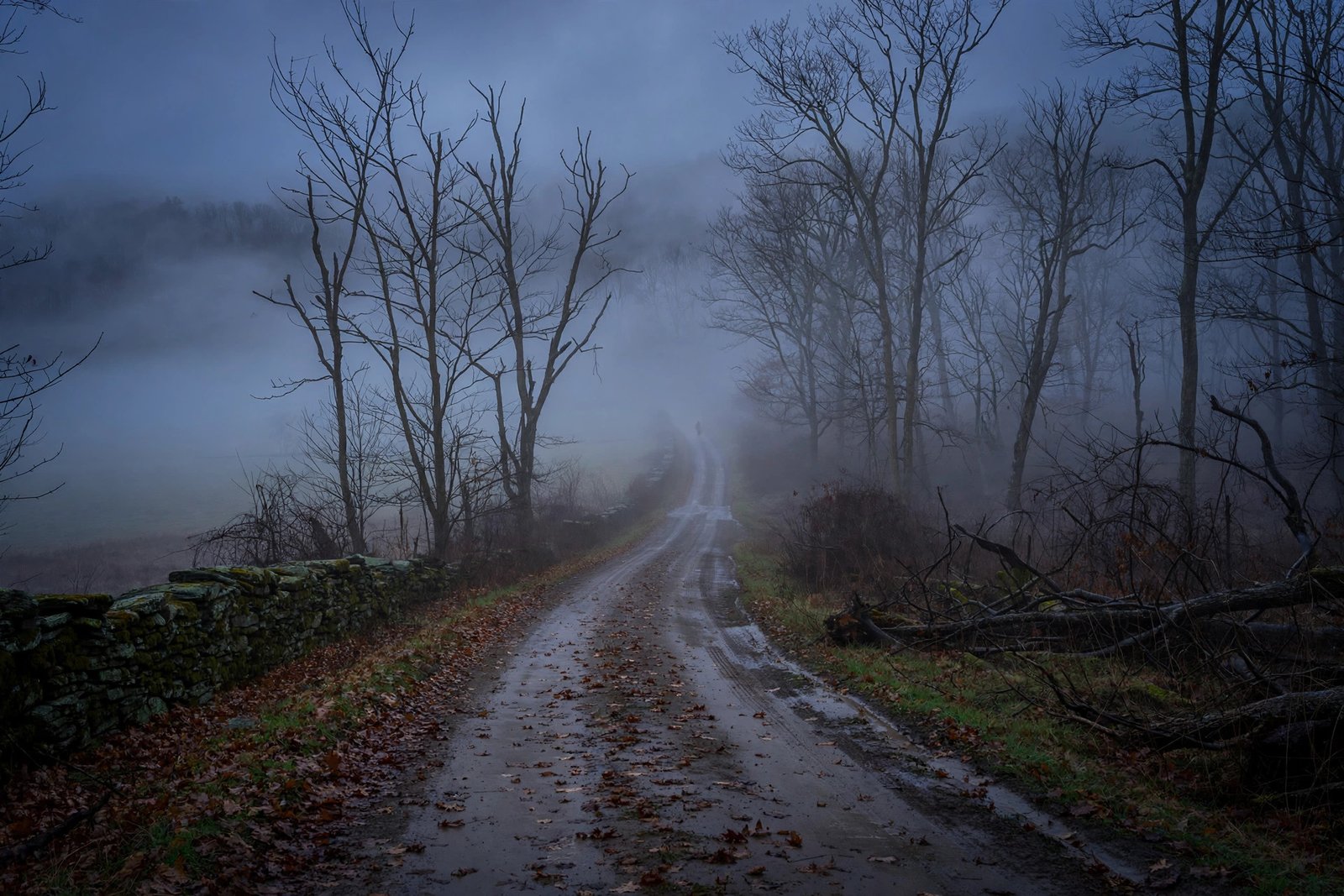
The Dover Demon legend begins on a quiet spring night in a small Massachusetts town, when three teenagers reported seeing something they could not explain. It is one of New England’s strangest local legends: a small, pale creature with a huge head and glowing eyes, seen for only a few days in April 1977 and never reliably reported again. This is the story of what was reported, what witnesses said they saw, and why the tale still fascinates visitors to Dover more than four decades later.
Before we go further, one important note: the Dover Demon is an unverified local legend, not an established scientific fact. No physical evidence, photograph, or specimen has ever confirmed the creature’s existence. What follows is a faithful account of the reports and the folklore that grew around them, clearly separated from what is known to be true about the town, the witnesses, and the investigations that followed.
What Is the Dover Demon Legend?
The Dover Demon legend centers on a series of reported sightings in Dover, Massachusetts, a rural town about 20 miles southwest of Boston. Over the course of a few nights in April 1977, several young people independently reported encountering a strange, small creature along roadsides and near wooded areas. The creature was described as standing about four feet tall, with a disproportionately large, watermelon-shaped head, a thin body, long spindly arms and legs, and large glowing orange eyes.
The name “Dover Demon” was coined after the sightings were publicized, and it stuck. Unlike older American cryptid legends that developed over generations, this legend has a precise origin point: a handful of nights in a single month, reported by named witnesses whose accounts were recorded at the time. That specificity is part of what makes the legend so enduring. It reads less like an ancient folk tale and more like a small-town mystery that was never solved.
It is worth stressing again that the Dover Demon legend remains folklore. Cryptozoologists — people who study reported but unconfirmed animals — have discussed the case for years, but mainstream scientists have not accepted the creature as real. The most commonly offered explanations involve misidentification of a known animal, a hoax, or the tricks that darkness and imagination can play on young observers. None of these explanations has been proven either, which is exactly why the story survives.
The April 1977 Sightings
The first widely cited sighting is attributed to 17-year-old Bill Bartlett, who reported seeing the creature on the night of April 21, 1977, while driving with friends along Farm Street in Dover. According to his account, the creature was crouched on top of a stone wall, and its large eyes seemed to glow in the car’s headlights. Bartlett later drew a sketch of what he said he saw, and that sketch — a small figure with a huge head and thin limbs — became the defining image of the Dover Demon.
A second sighting was reported the following night, April 22, by 15-year-old John Baxter, who said he encountered a similar small figure while walking home along Miller Hill Road. Baxter later said he assumed at first that the figure was a friend crouching by the roadside, until it moved and he realized it was something unfamiliar. He described a small creature with a large head and long fingers, and he reported running from the scene.
A third sighting was reported on the night of April 23 by 15-year-old Abby Brabham, who was driving with a friend, William Taintor, when they reported seeing a creature by the roadside on Springdale Avenue. Brabham’s description matched the earlier accounts in its broad strokes: a small, pale figure with a large head and glowing eyes. Together, these three sightings, all within about 25 hours of each other and within a small geographic area, form the core of the Dover Demon case.
The sightings were reported to local police, and the story was picked up by local newspapers. Investigators who looked into the case at the time, including Loren Coleman, a well-known cryptozoology researcher, interviewed the witnesses and recorded their accounts. Coleman later wrote about the case in his research, which helped bring the Dover Demon to a national audience of folklore and cryptid enthusiasts.
What Witnesses Described
Across the three main accounts, the descriptions share striking similarities, which believers cite as evidence that the witnesses saw something real, and skeptics cite as evidence that the later witnesses may have been influenced by hearing about the earlier sightings. Either way, the shared details are:
- A height of roughly three to four feet, smaller than an adult human but larger than most familiar animals.
- A very large, rounded head, often compared to the shape of a watermelon, sitting on a thin neck and body.
- Large, glowing orange eyes, reported to shine in headlights or in the dark.
- Pale, hairless-looking skin, described as peach-colored or tan.
- Long, thin arms and legs with elongated fingers, and no clearly visible nose, mouth, or ears.
- A tendency to be seen crouching, crawling, or clinging to stone walls and roadside features.
These details are unusual because they do not closely match any animal native to Massachusetts. That mismatch is central to the legend’s appeal: if the witnesses saw a real animal, it was not one anyone could easily name. If they misidentified something, it would have to be something that looked dramatically different in the dark than it does in daylight.
The witnesses themselves were consistent in later interviews that they believed they had seen something unusual. Bartlett’s sketch, drawn shortly after his reported sighting, remains the most famous visual record associated with the case. It is important to note that a sketch is a witness’s impression, not a photograph, and it cannot confirm what was actually present that night.
The Dover Demon Legend in Local Culture
The Dover Demon legend has become part of Dover’s local identity, in the gentle way that small towns sometimes embrace their oddest stories. The creature has appeared in books about New England folklore, in cryptid documentaries and podcasts, and in local storytelling events. It is often mentioned alongside other Massachusetts legends, such as the stories of sea serpents off the coast and the Bridgewater Triangle, a region of southeastern Massachusetts associated with a cluster of paranormal folklore.
For visitors interested in folklore tourism, Dover itself is a quiet, residential New England town rather than a developed tourist attraction. There is no Dover Demon museum or official tour, and travelers should not expect roadside attractions. The appeal for legend enthusiasts is simpler: driving the same rural roads — Farm Street, Miller Hill Road, and Springdale Avenue — where the sightings were reported, and imagining a spring night in 1977 when something unexplained seemed to step out of the woods.
The legend also survives because it is compact and specific. Many cryptid stories sprawl across decades and continents, making them hard to follow. The Dover Demon story fits in a few paragraphs: three nights, three sightings, one sketch, and then silence. That brevity makes it easy to retell around campfires and in folklore collections, and each retelling keeps the town’s strange week in April 1977 alive.
Explanations and Skepticism
Over the years, several natural explanations have been proposed for the Dover Demon sightings. One of the most commonly discussed is that the witnesses saw a young moose or a foal, animals whose long legs, large heads, and pale coloring could look strange in headlights at night. Dover and the surrounding area do have wildlife, including deer, and a young animal seen briefly in the dark could be misjudged in size and shape.
Another explanation involves misidentification of a known animal combined with the power of suggestion. Once the first sighting was publicized locally, later witnesses may have unconsciously interpreted an ambiguous shape in the dark as the same creature. This does not require anyone to have lied; human perception in low light is genuinely unreliable, and the brain fills in gaps with whatever it expects to see.
A third possibility raised by skeptics is a hoax, though no one has ever come forward with credible evidence that the sightings were staged, and the witnesses have maintained their accounts. It is also possible that the creature was an escaped exotic pet, though no such animal was ever reported missing or recovered in the area. The honest summary is that no explanation has been proven, and no physical evidence has confirmed the creature. The Dover Demon remains, in the strictest sense, an unsolved local mystery rather than a confirmed discovery.
That uncertainty is part of what separates legend from fact, and it is worth keeping the distinction clear. Folklore does not need to be literally true to be culturally meaningful. The Dover Demon story tells us something real about how small communities process the unexplained, how quickly a local story can travel, and how a single sketch can fix an image in the public imagination for decades.
Visiting Dover, Massachusetts Today
If you are planning a folklore-themed trip through Massachusetts, Dover makes a pleasant stop, though visitors should set expectations accordingly. The town is residential and rural, with stone walls, wooded roads, and classic New England scenery. It is best enjoyed as part of a broader exploration of the region’s history and folklore rather than as a single-attraction destination.
Practical tips for a respectful visit include:
- Drive the reported sighting roads during daylight and enjoy the scenery; these are public roads through a residential town, so respect private property and do not trespass.
- Combine the trip with other nearby historic and natural sites in the Greater Boston area for a fuller day out.
- Read up on the case beforehand from folklore collections so you can separate the original 1977 reports from later embellishments.
- Visit in spring if you want the full atmosphere — late April is when the sightings were reported, and the New England woods are at their most evocative.
For more American cryptid lore, see our look at the Bigfoot legend explained, and for wildlife you can actually see in the wild, check out where to see elk in the USA and where to see bison in the USA.
Why the Dover Demon Still Matters
Nearly fifty years after those April nights, the Dover Demon endures because it sits at the intersection of mystery and plausibility. The witnesses were specific. The timeframe was tight. The sketch was vivid. And then the creature vanished, leaving behind only questions. That is a perfect recipe for a legend: enough detail to feel real, and enough silence afterward to prevent any definitive answer.
Whether you view the Dover Demon as a misidentified animal, a trick of the dark, or something genuinely unexplained, the story remains a fascinating piece of Massachusetts folklore. It reminds us that even in the modern era, in a town not far from a major city, people can still encounter something they cannot name — and that the stories we tell about those moments can outlive the moments themselves.
Have you heard other New England legends, or visited a town with its own cryptid story? Share your favorite local legend in the comments, and explore more American folklore and wildlife stories here on ENG Post — from legendary creatures to the real animals you can spot across the USA.