
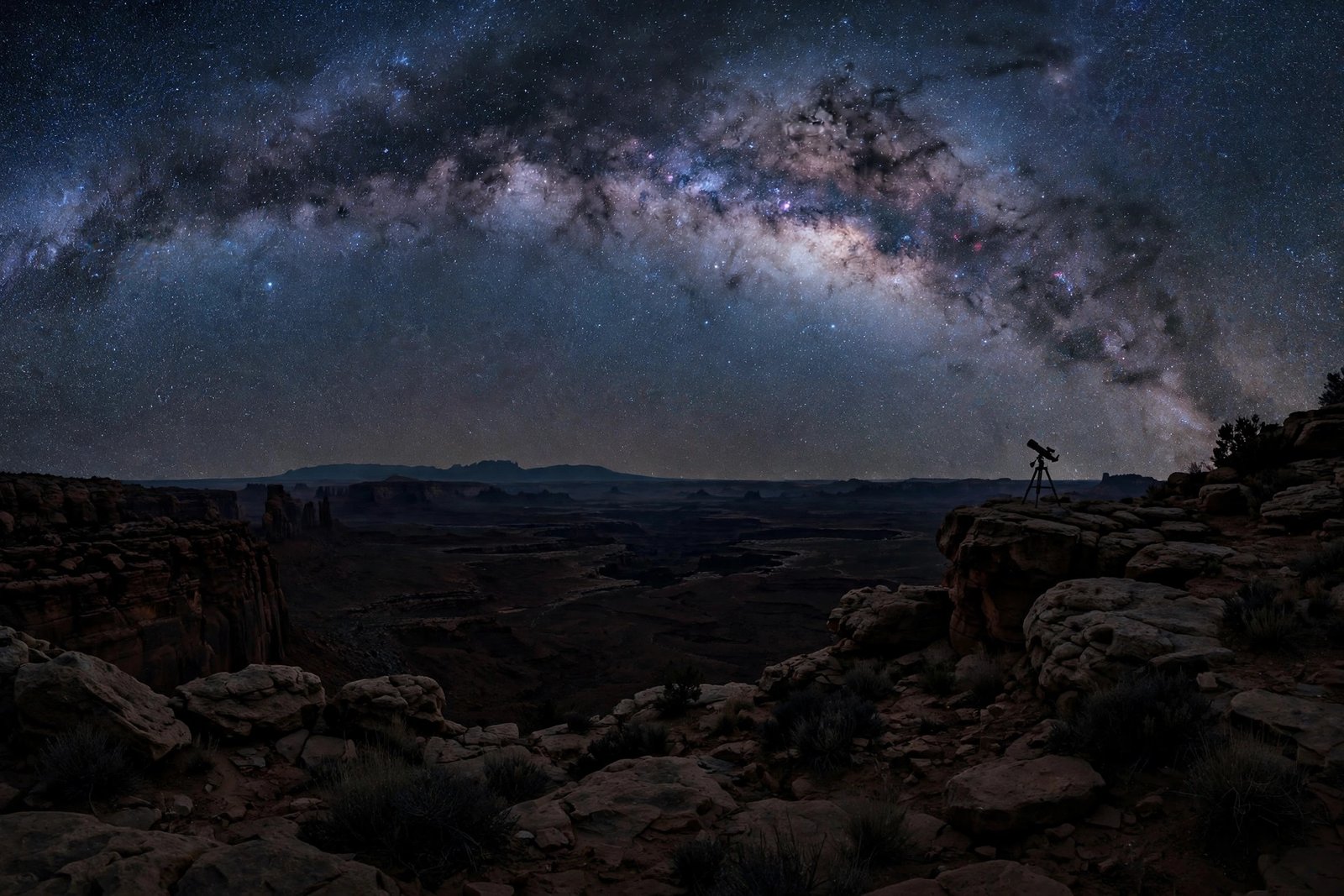
There is a moment, far from the nearest streetlight, when the sky stops looking like a ceiling and starts looking like an ocean. The Milky Way rises as a pale river of light, meteors flash and vanish, and constellations you thought you knew suddenly gain hundreds of faint neighbours. If you have only ever seen the night sky from a city, the best stargazing spots USA travellers return to again and again will feel like a different planet. The good news is that you do not need expensive equipment or a remote expedition to find them — you need a dark sky, a clear night, and a little planning.
America is lucky. It still holds vast stretches of desert, mountain, and coastline where artificial light has barely arrived. Many of these places are protected as International Dark Sky Parks and Sanctuaries, which means the parks themselves work to keep their skies dark. This guide gathers the finest of them, from desert basins to Atlantic headlands, and explains how to make the most of a night under the stars. Whether you are planning your first astronomy trip or adding to a lifetime list, these are the places worth the drive.
What Makes a Great Stargazing Spot
Three things decide whether a night sky is spectacular or merely pleasant: darkness, altitude, and weather. Darkness matters most. Astronomers measure sky brightness on the Bortle scale, but you do not need the numbers — you need distance from cities, and a horizon unbroken by glowing towns. Altitude helps because thinner, drier air holds less haze. And clear, dry weather is what turns a good location into an unforgettable night, which is why deserts dominate most lists of the best stargazing spots USA has to offer.
Timing matters too. The bright core of the Milky Way is most prominent in the Northern Hemisphere from late spring through early autumn, while winter skies offer brilliant stars like Orion and Sirius. A new moon is far better than a full moon, which washes out faint stars much like a streetlight does. Check the moon phase before you book anything, and give yourself at least two nights at each destination so a single cloudy evening cannot ruin the trip.
Best Stargazing Spots USA in the Desert Southwest
The deserts of the American Southwest are the classic stargazing destination, and for good reason. Dry air, high elevation, and enormous tracts of protected land combine to produce some of the darkest skies in the country. Start with Death Valley National Park in California, one of the largest International Dark Sky Parks in the world. Its vast salt flats and empty valleys sit far from major cities, and on a moonless night the Milky Way can appear bright enough to cast a faint shadow. The park runs ranger-led astronomy programs at certain times of year, and the Furnace Creek area makes a convenient base.
Big Bend National Park in Texas is another giant of the dark-sky world. Tucked into a remote bend of the Rio Grande, hours from the nearest city of any size, it is one of the darkest places in the contiguous United States. The Chisos Mountains add elevation and drama, and the park’s sheer remoteness is part of the experience — the drive in is long, the nights are silent, and the sky feels enormous. If you want solitude with your stars, few places in America beat Big Bend.
Natural Bridges National Monument in Utah holds a special place in astronomy history: it was the first place in the world to be certified as an International Dark Sky Park. Its three natural stone bridges frame the sky beautifully, and the monument’s small size makes it easy to explore by day and enjoy by night. Nearby, the wider Utah canyon country — including Bryce Canyon and the area around Moab — offers more dark-sky country than a single trip can cover, so consider combining several stops into one Utah road trip. For a desert night with a touch of the surreal, the deserts of the USA are hard to beat.
Joshua Tree National Park in California pairs its twisted namesake trees with famously accessible dark skies, just a few hours from Los Angeles. It is one of the easiest dark-sky parks to reach, which also means it can be busy on weekends — arrive on a weeknight if you can. Great Sand Dunes National Park in Colorado offers a different kind of magic: the tallest dunes in North America rising against the Sangre de Cristo Mountains, with a dark sky overhead and almost no light pollution in any direction. Standing barefoot on a dune crest under the Milky Way is one of the great simple pleasures of the American West, and it pairs beautifully with a visit to the best sand dunes in the USA.
Best Stargazing Spots USA Beyond the Desert
Dark skies are not only a desert story. In the mountains of the West, Glacier National Park in Montana combines alpine lakes and rugged peaks with genuinely dark skies, and the park and its neighbours have worked together to protect the night. Summer nights are short but the Milky Way is high, and the low light pollution in northwest Montana makes even a casual evening walk a stargazing event. Olympic National Park in Washington offers another coastal-mountain option, where you can watch the sun set over the Pacific and then look up to a sky far darker than most visitors expect from a park so close to Seattle.
In the East, Cherry Springs State Park in Pennsylvania is the place serious amateur astronomers pilgrimage to. Perched on a mountaintop in the Susquehannock State Forest, far from city glow, it was one of the first parks in the East to be recognised for its dark skies, and its astronomy field draws telescope owners from across the region. It proves that you do not need to fly west to find a world-class night sky — you need to get above the haze and away from the lights, and rural Pennsylvania delivers both.
On the Atlantic coast, Acadia National Park in Maine offers dark skies over the ocean, a rare combination. The park’s granite headlands and the famous sunrise spot at Cadillac Mountain are spectacular by day, but stay after dark and you will find a sky full of stars reflected, on calm nights, in the still water of the harbours. Maine’s Down East coast is one of the darkest stretches of shoreline in the eastern United States, and Acadia is its most accessible gateway. For more coastal inspiration, the secret beaches of the USA include several spots where the night sky is just as uncrowded as the sand.
Finally, do not overlook Hawaii. The summit of Mauna Kea on the Big Island sits above most of the atmosphere and hosts some of the world’s great observatories for a reason, while even the island’s beaches and volcanic landscapes offer southern-hemisphere constellations you cannot see from the mainland. If your stargazing ambitions ever stretch beyond the contiguous states, Hawaii is the natural next step.
How to Plan a Stargazing Trip
A great stargazing night takes less gear than most people think, but a little preparation goes a long way. Use this checklist before you go:
- Check the moon phase and pick dates near the new moon for the darkest skies.
- Check the weather forecast for cloud cover, not just temperature — a clear, dry night matters more than a warm one.
- Arrive before sunset so your eyes can adapt to the dark; full dark adaptation takes about 20 to 30 minutes.
- Bring a red flashlight or cover a regular torch with red cellophane — red light preserves your night vision.
- Pack warm layers even in summer; desert and mountain temperatures drop sharply after dark.
- Download a free stargazing app or bring a paper star chart to identify constellations and planets.
Binoculars are the best beginner upgrade — they reveal star clusters, the moons of Jupiter, and the craters of the Moon far better than the naked eye. Leave the telescope at home on your first trip unless you already own one. The naked-eye Milky Way, a few bright planets, and the occasional meteor are more than enough to fill an evening, and you will enjoy the night more if you are not wrestling with unfamiliar equipment in the dark.
Dark Sky Etiquette: Protecting the Night
The darkness that makes these places special is fragile, and every visitor plays a part in keeping it. Use only red lights after dark, keep headlights off in viewing areas where possible, and never shine a torch or phone screen at other stargazers. Avoid camera flashes and the bright screens of phones — if you must check a star chart app, turn the brightness down and use a night mode. Pack out everything you bring in, and respect any quiet hours or designated astronomy areas in the park. The best stargazing spots USA visitors love most are the ones where everyone looks out for the dark together.
It is also worth supporting the places that protect the night. Many dark-sky parks run astronomy festivals and ranger programs, and the International Dark-Sky Association works with communities to reduce light pollution. Choosing certified dark-sky destinations, staying in nearby small towns, and spreading the word about responsible lighting all help keep these skies dark for the next generation of stargazers.
Final Thoughts: Look Up
The most remarkable thing about a truly dark sky is how quickly it changes your sense of scale. Problems shrink, the horizon feels farther away, and the universe stops being an abstraction from a textbook and becomes something you can see. That is why people drive for hours, sleep in cars, and climb mountains in the cold — for a sky like this. Pick one spot from this list, plan around the new moon, and give yourself a night with no agenda beyond looking up. The stars have been waiting far longer than you have. Start planning your own dark-sky adventure, share this guide with a friend who needs a night under the stars, and tell us in the comments which of these places is first on your list.