
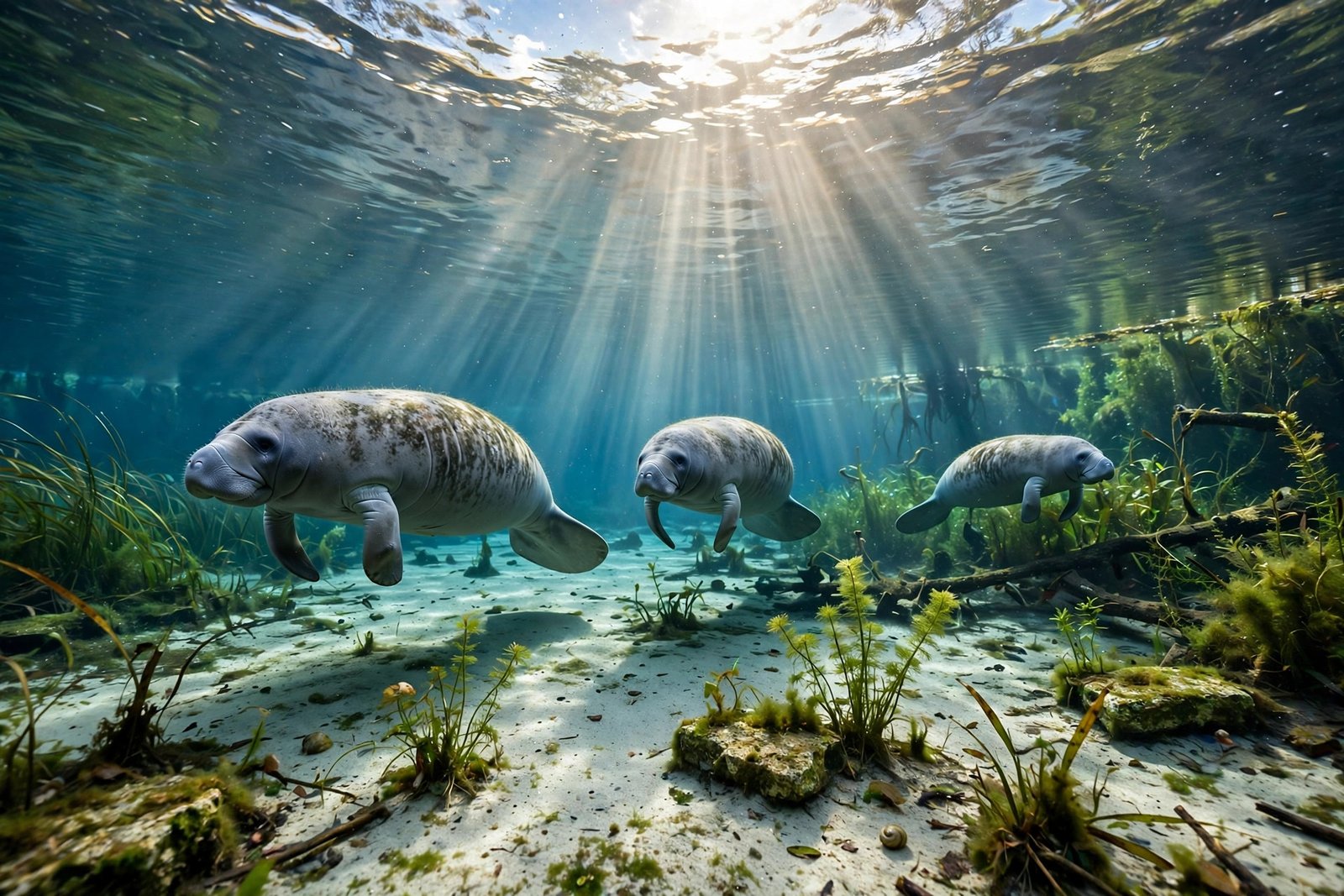
There is nothing quite like locking eyes with a wild manatee. These gentle, slow-moving giants drift through Florida’s spring-fed rivers every winter, and the question of where to see manatees USA travelers ask most has a happy answer: in the right season, they are easier to find than you might think. From the crystal-clear springs of Crystal River to the famous winter refuge at Blue Spring State Park, this guide covers the best places, the best months, and the etiquette that keeps these beloved animals safe.
Manatees are found in warm coastal waters of the southeastern United States, but Florida is by far the best place to see them. Every winter, when ocean and river temperatures drop, hundreds of manatees migrate inland to natural springs that stay a constant 72 degrees Fahrenheit year-round. Knowing where to see manatees USA visitors can reach easily — and when to go — turns a hopeful trip into an unforgettable encounter.
When to See Manatees in the USA: Timing Is Everything
The single most important factor in planning your trip is timing. Manatee season in Florida runs from November through March, with the peak months of December through February offering the largest gatherings. Manatees cannot tolerate cold water for long; when surrounding waters drop below about 68 degrees Fahrenheit, they seek out warm springs and power-plant discharge canals to stay warm.
A strong cold front is your best friend. After a few chilly nights, manatees pour into the springs in remarkable numbers, and a single cold snap can turn a quiet spring run into a gathering of hundreds. Early mornings are generally best for viewing, before the water gets busy with boats and paddlers. Weekdays are quieter than weekends at the most popular springs.
Outside of winter, manatees scatter widely along the coast, and sightings become a matter of luck. You can occasionally spot them in summer in places like the Everglades or along the Atlantic Intracoastal Waterway, but if you want a reliable encounter, plan your visit for the winter months.
Crystal River and Three Sisters Springs: Where to See Manatees USA Up Close
If you want the closest possible encounter, Crystal River on Florida’s Gulf Coast is the answer to where to see manatees USA visitors dream about. Located in Citrus County, about 90 minutes north of Tampa, Crystal River is home to Kings Bay, a vast spring-fed bay where hundreds of manatees gather each winter.
Crystal River holds a unique distinction: it is the only place in the United States where swimming with manatees is legal. But this comes with strict rules. You must go with a licensed tour operator, follow a trained guide, and practice passive observation — meaning you float calmly and let the manatees approach you. Chasing, touching first, or cornering a manatee is against the rules and can result in fines. Several in-water areas are designated as manatee sanctuaries and are closed to swimmers from mid-November through March, giving the animals undisturbed resting zones.
Even if you prefer to stay dry, Crystal River delivers. Three Sisters Springs, part of the Crystal River National Wildlife Refuge, offers a beautiful boardwalk with overlooks where you can watch dozens of manatees gliding through impossibly clear turquoise water. Kayaking is another wonderful option: paddling quietly through Kings Bay at sunrise, with manatees surfacing around your kayak, is one of Florida’s great wildlife experiences. The City of Crystal River manages access to Three Sisters Springs, and during peak season, visitor numbers are limited, so arrive early or book ahead.
Blue Spring State Park: Florida’s Winter Manatee Refuge
For pure, peaceful manatee watching, Blue Spring State Park near Orange City is hard to beat. This designated manatee refuge on the St. Johns River hosts one of the largest winter gatherings of manatees in Florida, with hundreds of animals seeking shelter in the spring run during cold snaps.
Here is the key difference from Crystal River: at Blue Spring, swimming with manatees is prohibited. All water activities are restricted during manatee season to protect the animals, and the park’s boardwalk becomes the viewing platform. The elevated walkway runs along the spring run, offering a clear, top-down view of manatees resting and socializing in the glassy water below. Rangers and volunteers are often on hand to answer questions, making it an excellent spot for families and first-time visitors.
Blue Spring has a remarkable conservation story. Decades ago, only a handful of manatees used the spring; today, thanks to protection and research, the winter count regularly reaches into the hundreds, and the park is a cornerstone of manatee conservation in Florida. Entry is affordable, the setting is beautiful, and on a cold January morning, the sight of a hundred manatees packed into the spring run is something you will never forget.
Where to See Manatees USA: More Great Spots
Beyond the two headline destinations, several other spots deserve a place on your manatee itinerary:
- Homosassa Springs Wildlife State Park: Just south of Crystal River, this park is home to resident manatees that cannot be released into the wild, plus wild manatees that visit in winter. Its famous underwater observatory — often called the “fish bowl” — lets you watch manatees swim past huge viewing windows.
- Tampa Electric’s Manatee Viewing Center, Apollo Beach: When Tampa Bay cools each winter, manatees gather in the warm-water discharge canal of the Big Bend Power Station. The viewing center is free, with boardwalks, educational exhibits, and often hundreds of manatees visible from November through mid-April.
- Merritt Island National Wildlife Refuge: Near the Kennedy Space Center on Florida’s east coast, the Haulover Canal area attracts manatees year-round, and the refuge’s scenic drives offer excellent wildlife watching. This is also a prime spot if you are combining manatees with other Florida wildlife.
- Everglades National Park and the Ten Thousand Islands: For a wilder experience, boat tours through the Everglades and the Ten Thousand Islands regularly encounter manatees in their natural mangrove habitat, especially in the cooler months.
- Wakulla Springs State Park: In Florida’s Panhandle near Tallahassee, one of the world’s largest freshwater springs hosts manatees year-round, along with alligators, turtles, and an astonishing variety of birds. Glass-bottom and river boat tours give you a front-row seat.
Each of these places answers the where to see manatees USA question in its own way — from free power-plant viewing platforms to remote wilderness boat tours. If you love planning wildlife trips, you might also enjoy our guides on where to see grizzly bears in the USA and where to see bald eagles in the USA.
Viewing Tips for a Perfect Manatee Encounter
A little preparation goes a long way. Follow these tips to make the most of your manatee trip:
- Go on a cold morning: After a cold front, arrive as early as the park opens. Manatees are most concentrated in the springs before midday.
- Visit on weekdays: Popular springs like Three Sisters and Blue Spring draw crowds on winter weekends. Weekday mornings are calmer for both you and the animals.
- Bring polarized sunglasses: They cut surface glare and make it dramatically easier to spot manatees below the surface.
- Choose quiet transport: Kayaks, canoes, and paddleboards let you glide near manatees without engine noise. If you take a boat tour, pick operators known for slow, respectful wildlife viewing.
- Book Crystal River tours in advance: Licensed swim-with-manatee tours sell out during peak cold snaps. Reserve your spot days ahead when a front is forecast.
- Check park webcams and hotlines: Several parks post manatee counts and conditions online. A quick check before you drive can save a disappointing trip on a warm week.
- Pack for the weather: The best manatee viewing happens on the coldest days, so bring layers, a warm hat, and hot drinks.
Manatee Etiquette: Watching Without Harming Them
Manatees are protected under federal and Florida state law, and the rules exist for good reason. These animals face real threats: boat strikes are the leading cause of human-related manatee deaths, and you can see propeller scars on the backs of many wild manatees. Cold stress, red tide, and the loss of seagrass beds — their main food — have also caused serious die-offs in recent years, including a widely reported unusual mortality event along Florida’s east coast. In 2017, the Florida manatee was reclassified from endangered to threatened, a sign of progress, but they remain fully protected and vulnerable.
Whether you are swimming, paddling, or watching from a boardwalk, follow these etiquette rules:
- Look, don’t touch: Never chase, poke, ride, or try to feed a manatee. In the water at Crystal River, float passively and let curious manatees come to you.
- Give them space: Do not separate a mother from her calf, and never corner a manatee against a bank or dock.
- Respect sanctuary boundaries: Roped-off refuge areas are closed for a reason. Stay outside the lines, even if the viewing looks better inside.
- Slow down on the water: Observe posted idle-speed and slow-speed manatee zones, wear polarized sunglasses to spot them, and keep a lookout for the circular “footprint” swirls they leave on the surface.
- Keep the water clean: Never discard fishing line, hooks, or plastic. Monofilament line entangles manatees every year; use recycling bins at boat ramps.
- Report trouble: If you see an injured, entangled, or distressed manatee, call the Florida Fish and Wildlife Conservation Commission’s Wildlife Alert hotline at 1-888-404-3922.
Responsible viewing is what keeps these encounters possible. The manatees that visit Florida’s springs each winter are wild animals choosing to share their refuge with us — treating them with quiet respect ensures they keep coming back.
So, where to see manatees USA travelers will remember forever? Start with Crystal River for the closest encounters, add Blue Spring for peaceful boardwalk viewing, and round out your trip with Homosassa, Apollo Beach, or the Everglades. Go in winter, go early, go quietly — and you will witness one of America’s most heartwarming wildlife spectacles. If this guide helped you plan your trip, share it with a fellow wildlife lover, and explore more of America’s amazing animals right here on ENG Post.