
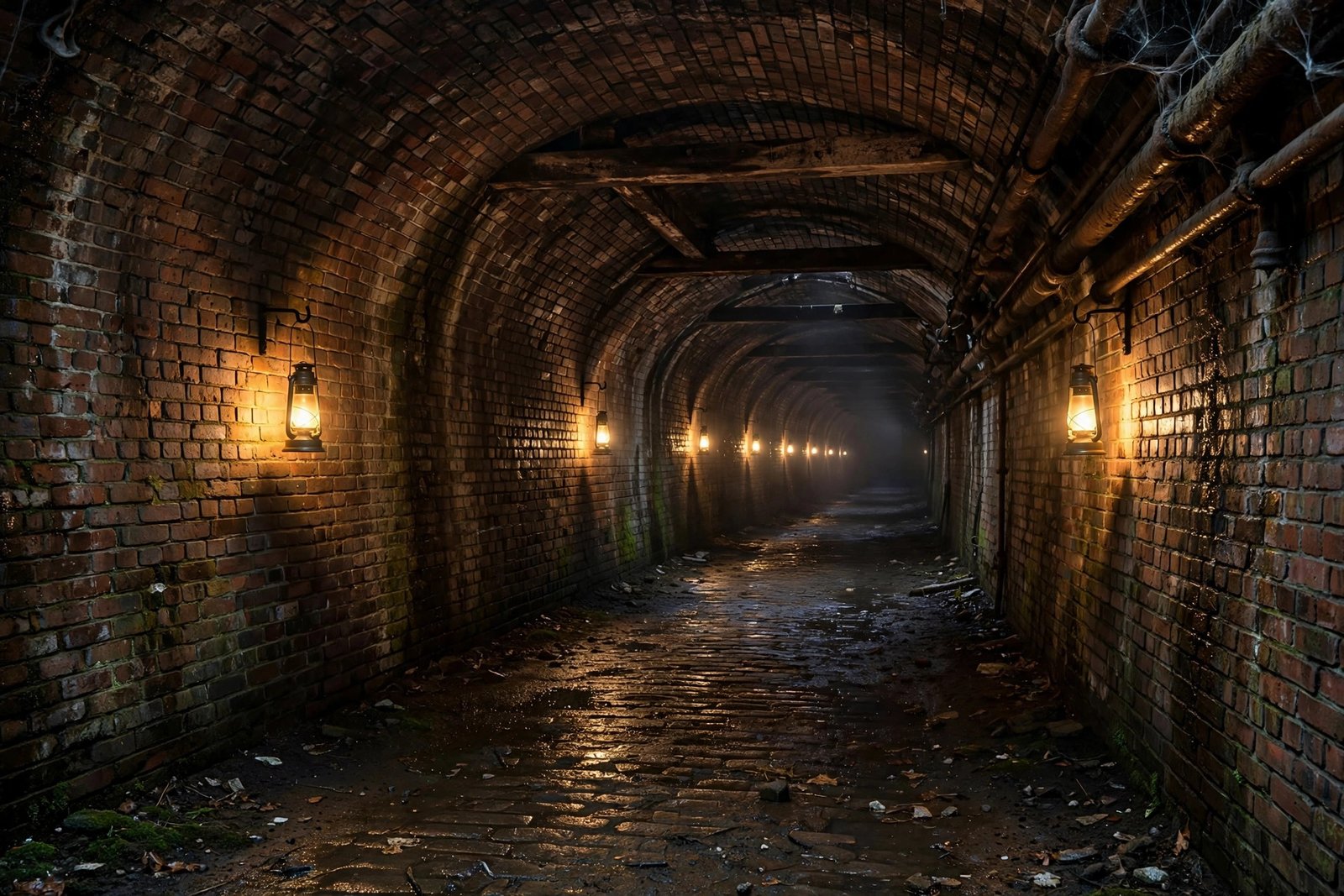
Beneath the sidewalks of some of America’s most familiar cities lies a second, forgotten world. The secret tunnels USA travelers can actually explore include buried 19th-century storefronts, Prohibition-era passages, abandoned subway stations, and freight networks that most residents walk over every day without knowing they exist. Some of these underground spaces are open to the public through guided tours; others survive only as legends, told and retold until the truth is hard to separate from the story. This guide covers the tunnels you can really visit, what the history actually says, and where legend takes over from fact.
Secret Tunnels USA: Why They Exist Under American Cities
Underground passages were rarely built to be mysterious. Most exist because cities changed around them. When Seattle rebuilt after its great fire, the new streets rose a story or more above the old sidewalks, leaving the original storefronts buried. When Cincinnati abandoned its subway project, miles of finished tunnel were simply sealed off. Chicago’s freight tunnels were a marvel of early-1900s engineering until trucks made them obsolete. Time, economics, and changing technology turned working infrastructure into hidden history.
Other passages were deliberately secret. During Prohibition, hidden rooms and tunnels helped move illegal liquor, and in port cities like Portland, the waterfront’s rough reputation gave rise to enduring stories of sailors being smuggled through underground passages. As you read through the sites below, watch for the line between documented history and legend — where the evidence is thin, we say so.
1. The Seattle Underground, Washington
The most famous underground tour in America starts with a disaster. On June 6, 1889, the Great Seattle Fire destroyed the city’s downtown business district. When Seattle rebuilt, it did so in more fire-resistant brick and stone, and over the following years the city regraded its steep streets, raising them one to two stories above their original level in places. The old sidewalks and ground floors of the rebuilt buildings were left below the new street level, creating a network of underground passages and abandoned storefronts.
For decades the underground was simply forgotten, used as storage or left to decay. In 1965, local historian and columnist Bill Speidel began leading tours through the passages beneath Pioneer Square, and the Seattle Underground has been a beloved attraction ever since. Today’s guided tours walk visitors through restored sections of the old streets, past skylights that once lit the buried sidewalks, old bank vaults, and the remnants of 1890s storefronts. Tour guides mix documented history with the neighborhood’s colorful lore, which makes it worth asking which stories are verified — the fire, the regrade, and the buried storefronts are all well documented.
Tours run year-round in Pioneer Square and typically last about 75 minutes, and it remains the best-known of the secret tunnels USA travelers can tour. The route involves stairs and uneven surfaces, so wear sturdy shoes. Combine your visit with the neighborhood’s historic pubs and galleries for a full day in Seattle’s oldest district.
2. Portland’s Shanghai Tunnels, Oregon
Portland’s Old Town holds one of the most atmospheric — and most debated — underground attractions in the country. Guided tours, often called the Portland Underground tours, lead visitors through a series of basement tunnels and vaulted chambers beneath the historic district, telling the story of “shanghaiing”: the 19th-century practice of kidnapping or tricking men into forced labor aboard sailing ships.
Here is where honesty matters. That sailors were shanghaied out of Portland is documented history — the practice was real, and Portland’s waterfront had a rough reputation in the late 1800s. But historians have long debated how much of the popular tunnel lore is actually true. Claims that victims were dropped through trapdoors in saloons and held in underground cells before being smuggled to waiting ships make for a great tour story, but the physical evidence tying the specific basement passages to shanghaiing is limited, and several historians have questioned the details. Think of it this way: the tunnels are real, the shanghaiing was real, but the connection between the two sits somewhere between history and legend, which makes Portland’s story the most mysterious of the secret tunnels USA visitors can explore.
None of that makes the tour less worth taking. The vaulted brick basements, the stories of the old waterfront, and the sheer atmosphere of the underground chambers make for a memorable evening, especially on the haunted-history versions of the tour. Just enjoy the tales for what they are — part history, part folklore — and you will have the right experience.
3. Chicago’s Abandoned Freight Tunnels, Illinois
One of the strangest infrastructure stories in American history lies beneath downtown Chicago. In the early 1900s, the Illinois Tunnel Company built roughly 60 miles of narrow-gauge freight tunnels about 40 feet below street level, carrying coal, ash, and merchandise between downtown buildings and railroad stations. The system was an engineering marvel of its day — and then trucks and changing freight patterns made it obsolete. The tunnels were largely abandoned and forgotten.
They made headlines again in 1992, when a construction crew driving pilings into the Chicago River accidentally punctured one of the old tunnels. Water poured into the system and flooded basements across the Loop, in what became known as the Chicago flood — damage estimates ran into the billions of dollars. The flood forced the city to finally map and seal the forgotten network, and most of it is now closed off.
Can you visit? Not really — the tunnels are not open to the public and remain sealed. But the story is worth knowing, because it is a perfect example of how much hidden infrastructure sits under American cities. Chicago history tours and river cruises often tell the tale from above ground, and the city’s architecture boat tours are an excellent companion experience.
4. Cincinnati’s Never-Finished Subway, Ohio
Cincinnati built a subway and never ran a single train on it. Construction began in 1920 on an ambitious rapid-transit loop, but the project stalled amid postwar inflation, political fights, and the rise of the automobile. By the late 1920s work had stopped for good, leaving miles of completed tunnel and several finished stations buried beneath Central Parkway and other streets — the largest abandoned subway system in the United States.
The tunnels have survived remarkably intact, and they remain a fascination for urban explorers and transit historians. Occasional guided tours have offered rare glimpses inside, though access is limited and tours are infrequent — check with local historical organizations for the latest opportunities. Even from the surface, you can spot traces of the project: ventilation structures and the wide median of Central Parkway, which was designed to carry the subway line. It is a monument to big plans and changing times, hidden in plain sight.
5. Old Sacramento’s Underground, California
Seattle was not the only city to bury its original street level. In the 1850s and 1860s, Sacramento suffered devastating floods and fires, and the city responded by raising its streets — in some areas by as much as 10 to 15 feet. Building owners jacked up their structures or simply built new first floors on top of the old ones, leaving the original storefronts below ground. The result is an underground layer of hollow sidewalks, brick corridors, and old shopfronts beneath the Old Sacramento Waterfront district.
Guided underground tours take visitors down into these spaces, where you can see the original building foundations, old doorways that now open onto dirt walls, and the massive effort it took to lift an entire commercial district. Unlike some underground attractions, Sacramento’s story is thoroughly documented in city records and photographs. The tours are a highlight of the Old Sacramento Waterfront, which also offers riverboat cruises, the California State Railroad Museum, and Gold Rush-era streetscapes.
6. Prohibition-Era Tunnels: History and Legend
No era produced more underground legends than Prohibition. From 1920 to 1933, the ban on alcohol created a vast illegal economy, and stories of hidden tunnels multiplied in every city with a speakeasy. Some are grounded in fact: basements connected to hidden rooms, passages between buildings, and concealed storage were genuinely common in the bootlegging trade, and law enforcement records document many such finds.
But the grander claims deserve skepticism. Detroit’s rumored tunnels to Canada, supposedly used by bootleggers to move whiskey across the Detroit River, are a staple of local lore — and most historians treat them as legend rather than established fact, since no verified tunnel has ever been found. Bootlegging across the river certainly happened, by boat and over the winter ice, but the tunnel stories remain unproven. Similar tales attach to Chicago, Cleveland, Louisville, and dozens of other cities: dramatic, fun, and largely unverifiable, yet they remain a beloved part of secret tunnels USA folklore.
The honest way to enjoy Prohibition tunnel lore is to treat it as folklore with a kernel of truth. Hidden speakeasy rooms you can genuinely visit do exist in several cities, often as part of bar and history tours. For more on the strange legal world that made Prohibition possible, see our roundup of strange USA laws still on the books.
How to Explore the Secret Tunnels USA Cities Keep Underground
Underground spaces are fascinating, but they demand respect. Follow these rules:
- Take guided tours only. Legitimate underground sites are visited through licensed tour operators. Never enter sealed tunnels, construction sites, or abandoned passages on your own — it is dangerous and often illegal.
- Wear the right shoes. Underground routes mean stairs, uneven brick, low ceilings, and sometimes damp floors. Sturdy closed-toe shoes are a must.
- Check access before you go. Some sites, like Cincinnati’s subway, offer only rare or seasonal tours. Confirm schedules in advance so you are not disappointed.
- Respect private property. Many rumored tunnel entrances sit in private basements. Do not trespass to chase a legend.
- Ask about the history. The best guides distinguish documented fact from folklore. Do not be shy about asking which parts of a story are verified.
The secret tunnels USA cities hide beneath their streets are a reminder that American history has layers — literally. Some passages are engineering marvels, some are monuments to abandoned ambitions, and some are legends that grew in the telling. The real ones are remarkable enough: buried storefronts in Seattle, raised streets in Sacramento, a subway that never ran in Cincinnati. Book a tour, wear good shoes, keep an open mind about the stories, and enjoy the view from below. If you love hidden underground worlds, do not miss our guide to secret underground caves in the USA for the natural wonders beneath the surface.